




Venetian Landscape Painting
Venetian landscape painting captures the luminous canals, historic palazzos and iconic lagoons of Italy, bringing centuries of artistic fascination into a room.
Venetian Landscape Painting
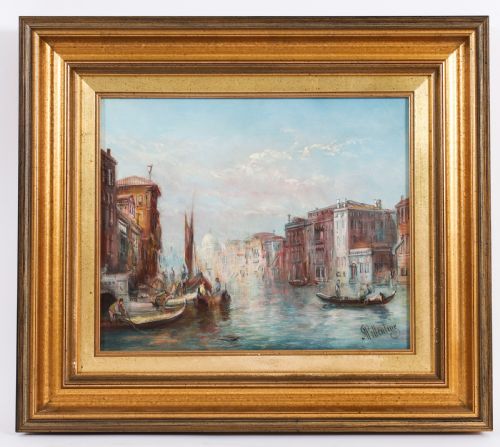
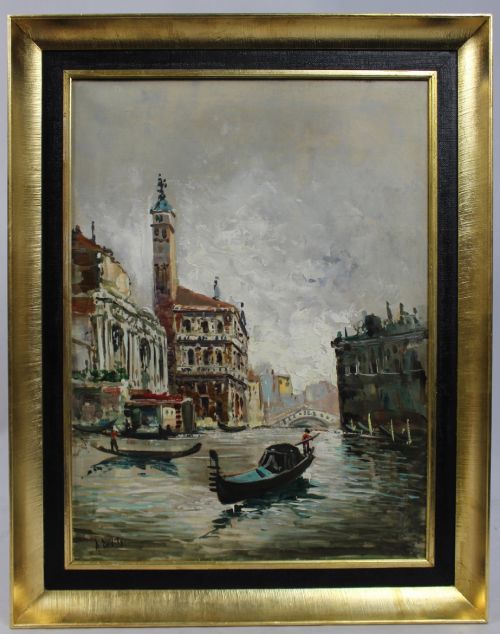
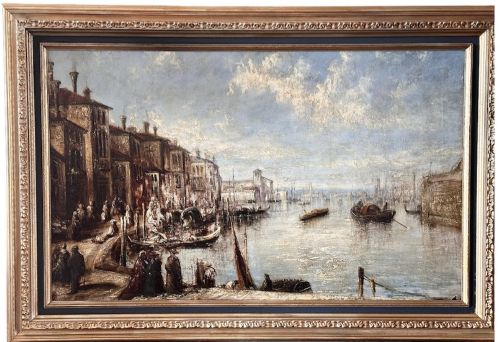
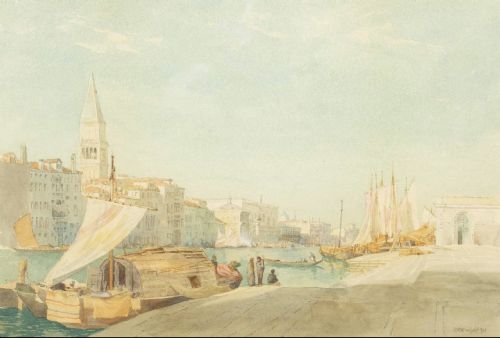
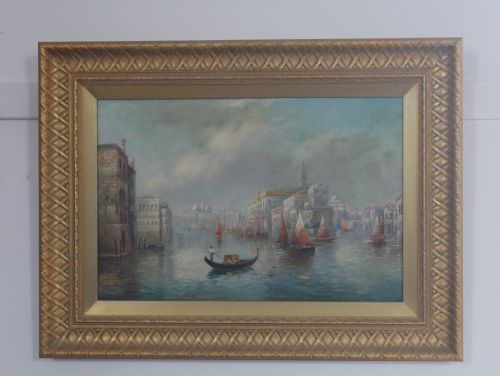
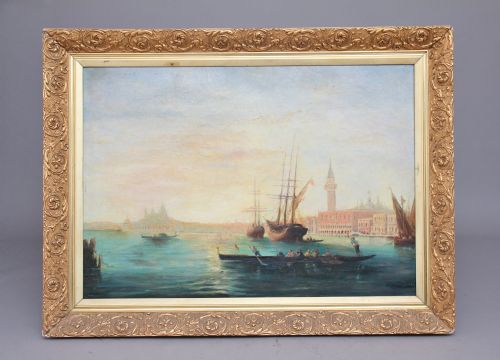
A venetian landscape painting represents the unique architecture, waterways and atmosphere of Venice, recorded through centuries of British and continental observation. Buyers exploring this category encounter townscapes and lagoon views rendered with distinct regional character.
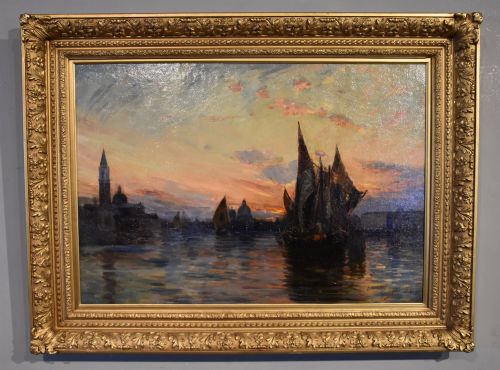
The selections span Victorian, Edwardian and mid-century eras, reflecting shifts in artistic interpretation from detailed nineteenth-century topographical records to looser impressionistic applications. Works commonly depict famous landmarks such as the Grand Canal, the Doge's Palace and the Church of Santa Maria della Salute.
Mediums vary widely across the available selections, encompassing traditional oils on canvas or board alongside delicate watercolours on paper. Certain examples incorporate mixed media, pastel, gouache and ink to portray the shifting light across the Venetian water.
Materials and Techniques
Artists utilise oil paint on canvas or wooden boards to build rich textures and deep chromatic layers, capturing the play of sunlight and shadow on stone and water. Watercolours on paper offer a lighter, translucent approach, favoured for swift studies of atmospheric lagoon conditions.
Framing often involves gilded wood and giltwood surrounds that complement the tonal warmth of the painted composition. Support materials range from heavy woven canvas to prepared paper and board, each suiting the specific demands of the painter's hand.
Several artists clearly painted Venice so often they probably started dreaming in canal water and pigeon feathers.
Quality and Execution
The distinction between standard works and exceptional pieces lies in the handling of light and perspective, where masterly brushwork brings the Venetian atmosphere to life. Superior paintings demonstrate confident command over architectural proportions and water reflections rather than relying on formulaic repetition.
The depth of provenance and the reputation of the artist significantly influence the standing of a piece within the genre. Works by documented nineteenth and twentieth-century painters exhibit a sharper sensitivity to the specific quality of the Venetian lagoon light.
Alfred Pollentine·Jane Vivian·Antonietta Brandeis·Antoine Bouvard Senior·Hercules Brabazon Brabazon
The Venetian Landscape Painting Glossary
- Giltwood
- Wood carved and covered with a thin layer of gold leaf or gold powder. This material frequently appears in the ornate frames surrounding nineteenth-century canvases.
- Gouache
- An opaque watercolour paint mixed with a white pigment to create a heavier, denser finish. It provides stronger highlights in works depicting moonlit canals.
- Impressionism
- An art style characterised by relatively small, thin yet visible brush strokes and an open composition. Mid-century examples on this page apply this approach to Italian townscapes.
- Provenance
- The chronology of the ownership of a work of art. Documented attribution adds historical context to signed canvases.
Venetian Landscape Painting: Frequently Asked Questions
What subjects appear in a venetian landscape painting?
These works primarily depict iconic Venetian sites including the Grand Canal, the Doge's Palace, the Rialto, and surrounding lagoon waters. Artists focus on architectural landmarks and bustling waterways.
Scenes also capture quieter canals, local gondolas, and atmospheric evening or moonlight views across the historic city.
How do watercolours differ from oils in these works?
Watercolours on paper offer a translucent, swift quality that captures bright, airy effects of light on the water. They are typically lighter in scale and tone.
Oil paintings on canvas allow for richer textures, deeper colour saturation, and heavier layering to define stone palazzos and dramatic skies.
Which periods are represented in these paintings?
The selection spans from the nineteenth century through the Edwardian era and into mid-century modern interpretations. Victorian and late nineteenth-century views are particularly common.
Later twentieth-century examples demonstrate impressionistic approaches to the same historic Italian cityscapes.
How should I hang a venetian landscape painting?
Consider placing these works in spaces with controlled natural light to prevent fading on watercolours or glare on oil varnishes. Matching the frame's gilding to existing room decor enhances the display.
Ensure pieces are hung securely away from direct heat sources to protect canvas tension and paper integrity.