

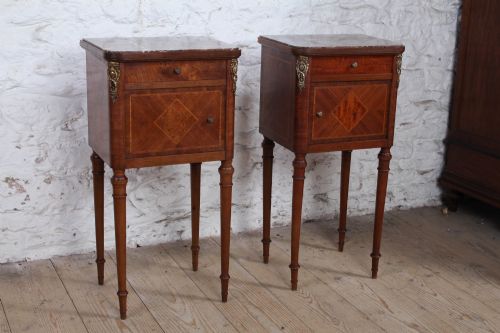


Veneered Bedside Cabinet
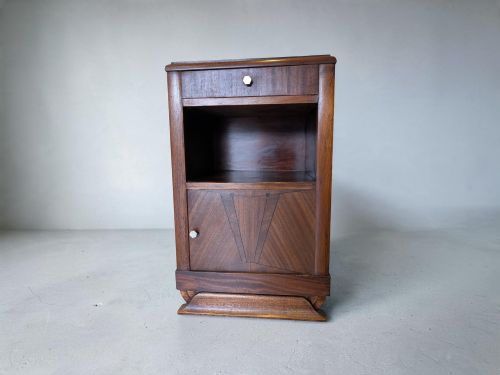
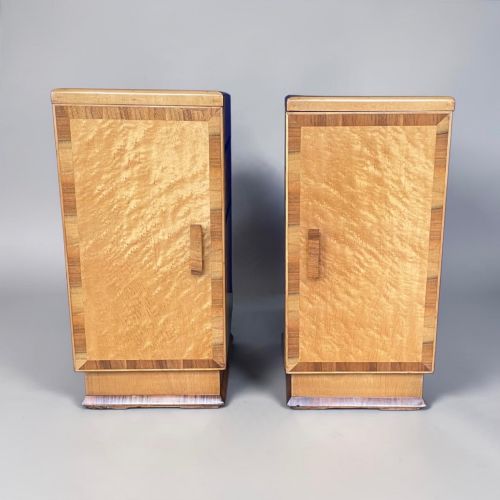
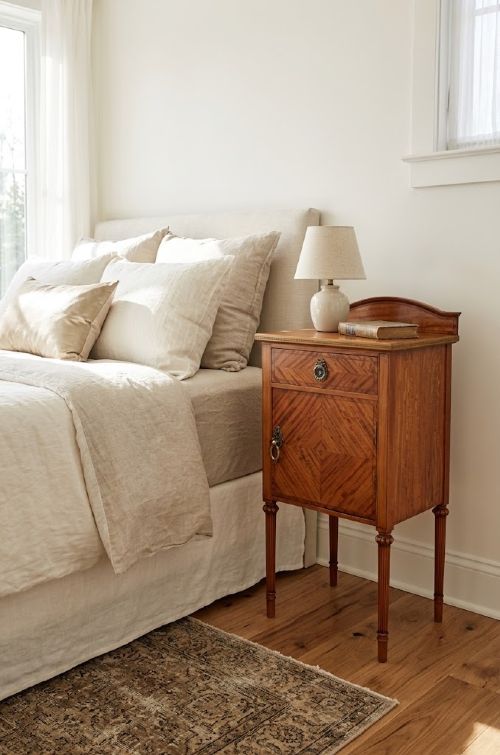
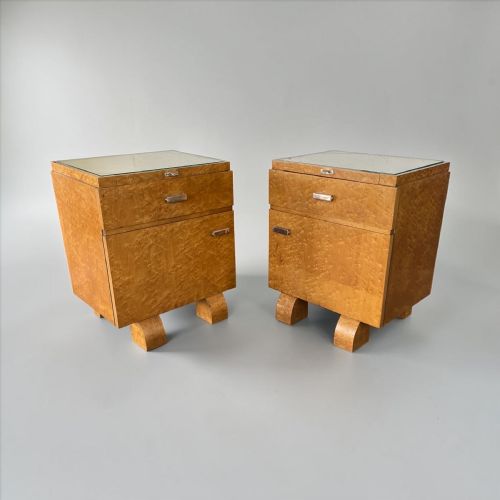
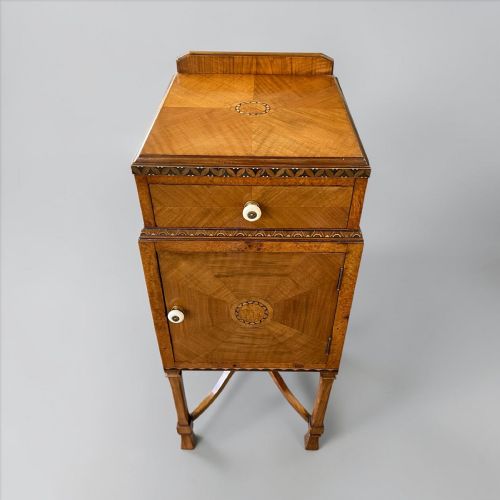
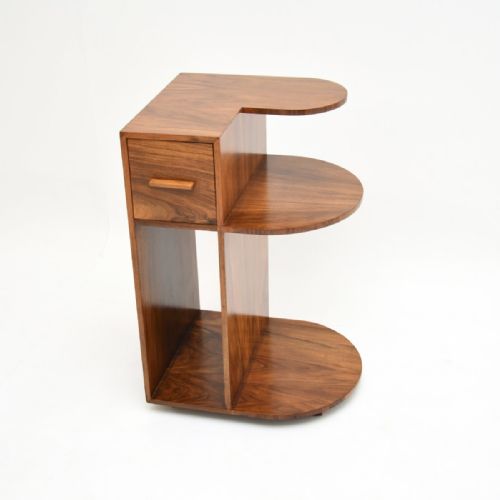
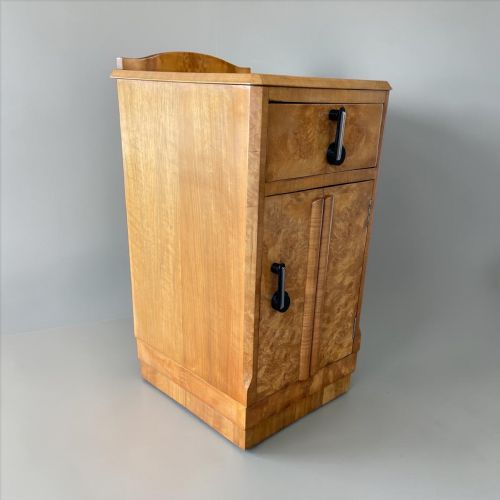
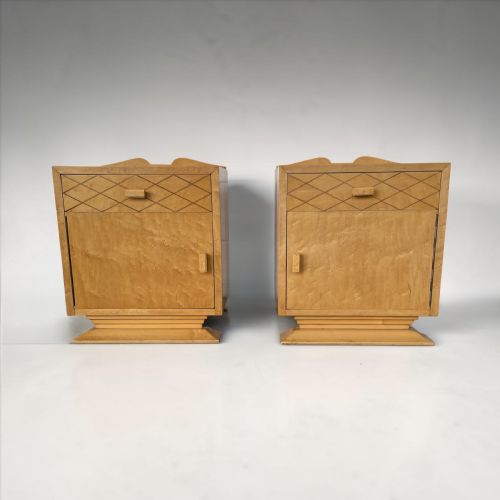
These veneered bedside cabinet examples bring practical surface space and rich grain patterns directly to the bedside.
Veneered Bedside Cabinet
A veneered bedside cabinet serves as a compact storage piece beside a bed, offering surface space for lamps and personal items. These pieces frequently appear in forms such as bedside tables, side cabinets, and nightstands across various twentieth-century and earlier periods.
Object types span from simple side tables to cabinets featuring marble tops and parquetry work. Each variation reflects the prevailing interior tastes of its manufacturing era, from clean Scandinavian lines to elaborate revival styles.
How they were made
Cabinetmakers applied thin decorative wood veneers such as walnut, burr walnut, satinwood, and fruitwood over secondary timber carcases. This technique allowed craftsmen to display dramatic grain patterns, including quarter-veneered and parquetry arrangements, that solid timber could not achieve economically.
Metal elements like brass and chrome appeared as handles, trims, or structural supports, particularly in Art Deco iterations. Marble and mirror glass were also utilised as upper surfaces on specific French and English models to provide durability and reflective light.
Veneered Bedside Cabinet Retail Price Guide 2026
Typical asking prices for veneered bedside cabinet among the pieces listed under this phrase on Sellingantiques today, from the lower quarter to the upper quarter. They describe what is for sale here now, not the wider market.
Some French bedside cabinets arrive with secret marble tops that lift off, perhaps once hiding midnight snacks from polite Victorian society.
What varies in quality
The grade of the surface veneer dictates much of the visual success of the piece, with figured grains and symmetrical matching commanding attention. Superior examples exhibit seamless application without lifting or splitting across the curved and flat surfaces.
Construction methods and hardware integration separate standard production items from finer workshop pieces. Well-fitted doors, stable marble slabs, and original brass or chrome mounts elevate the overall integrity of the cabinet.
Maurice Adams
The Veneered Bedside Cabinet Glossary
- Veneer
- A thin slice of decorative wood applied to a foundational timber carcase. This method highlights striking grain patterns while maintaining structural stability.
- Parquetry
- Geometric wood mosaics applied to a surface to create decorative patterns. It frequently appears on tabletops and cabinet fronts.
- Art Deco
- A design style dominant in the 1930s characterised by sleek lines, geometric shapes, and modern materials. It produced many of the walnut and chrome pieces seen here.
- Satinwood
- A durable hardwood with a lustrous, golden-yellow sheen used heavily in Edwardian furniture. It takes a fine polish and contrasts well with darker timbers.
Veneered Bedside Cabinet: Frequently Asked Questions
Are pairs common to find?
Many listings feature matching pairs to flank a larger bed frame. These matched sets were often produced together in Art Deco or Edwardian workshops.
Single cabinets also appear frequently for tighter spaces or eclectic interior schemes. Mixed pairings can work well if heights and wood tones complement each other.
What is burr walnut?
Burr walnut comes from a tree growth or deformity that creates intricate, swirling grain patterns. Cabinetmakers prize this timber for its decorative impact on prominent surfaces.
Pieces utilising burr veneer usually date from the Edwardian period or the 1930s Art Deco era. The unique figuring ensures no two panels look identical.
How do I date a cabinet?
Examine the overall silhouette, secondary woods, and decorative motifs such as geometric inlay or revival styling. Edwardian pieces often utilise satinwood, whereas 1930s examples lean towards figured walnut and chrome.
Hardware styles and construction joints inside the drawers also provide clear chronological clues. Comparing the form against known period styles helps narrow down the decade.