

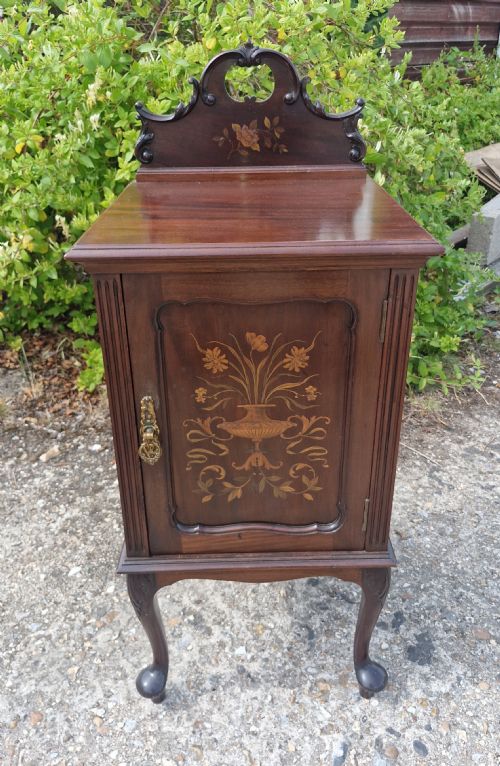


Inlaid Wood Pot Cupboard
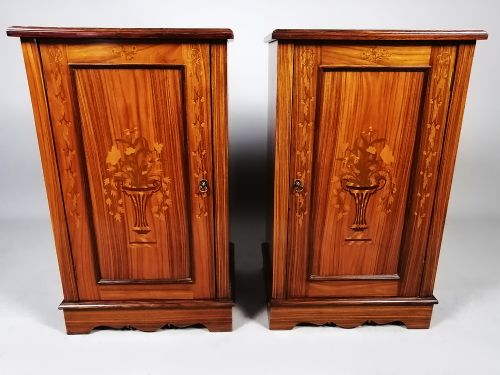
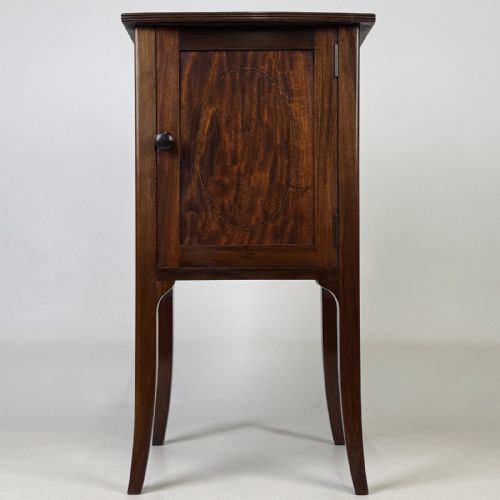
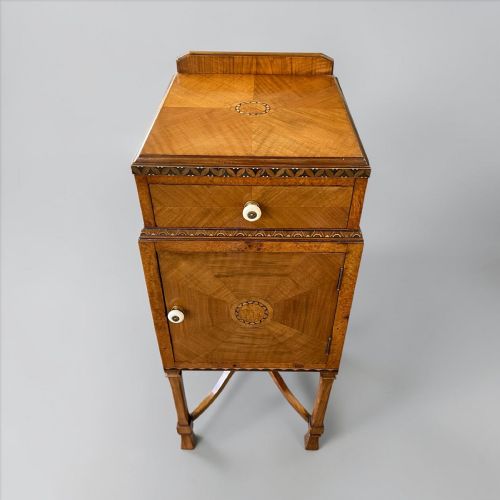
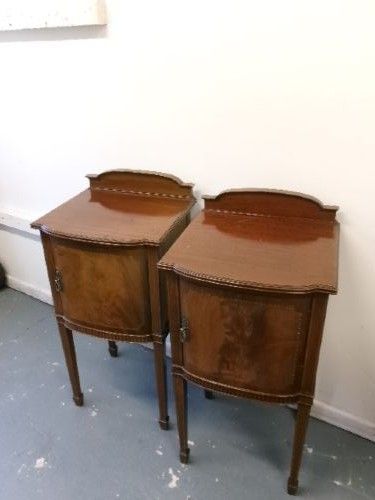
These inlaid wood pot cupboard examples offer neat bedside storage, bringing useful period character and fine surface detail to a bedroom.
Inlaid Wood Pot Cupboard
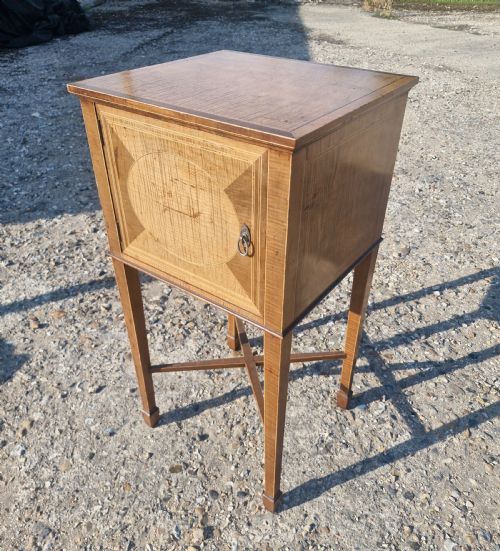
An inlaid wood pot cupboard is a compact bedside cabinet designed to hold a chamber pot behind a single door while providing a small surface for a lamp or night water. The pieces found here span the Victorian, Edwardian, and Art Deco periods, alongside Georgian and nineteenth-century examples.
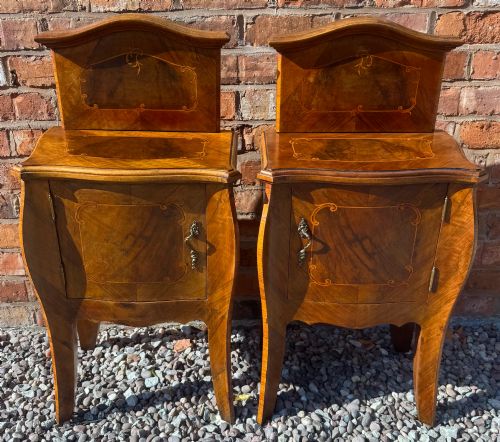
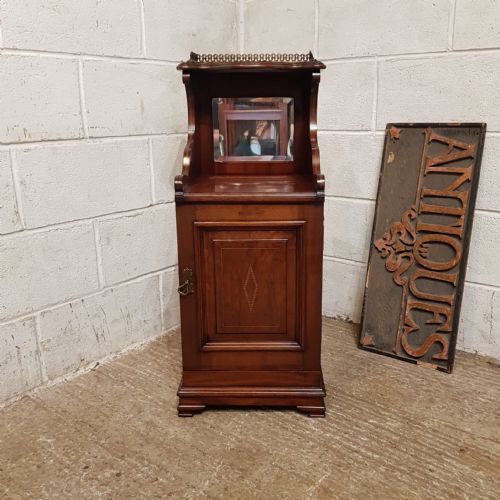
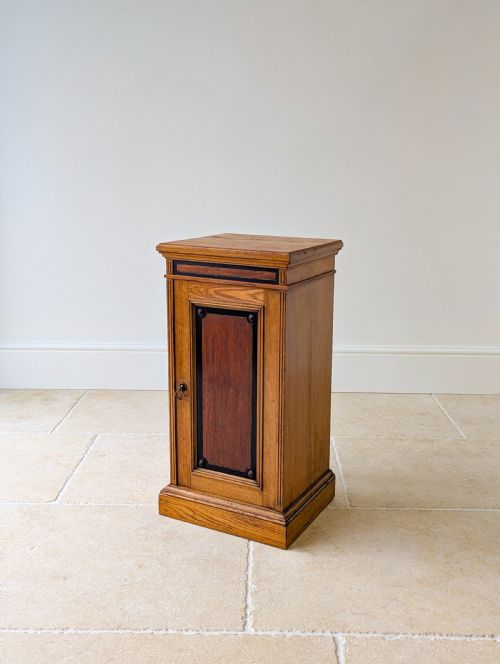
The predominant form on this page is the mahogany or satinwood bedside cabinet, often decorated with marquetry inlay or boxwood stringing. Makers drew on styles such as Sheraton Revival, Aesthetic Movement, and Louis XV Revival to shape these small functional items.
How they were made
Cabinet makers utilised dense timber carcases of mahogany, satinwood, walnut, and rosewood, applying contrasting veneers and marquetry inlay to the doors and top surfaces. Boxwood and brass frequently appear as stringing accents and hardware details.
Some variations incorporate marble tops or glass elements, combining traditional joinery with decorative surface treatments suited to nineteenth-century and early twentieth-century bedchambers.
Inlaid Wood Pot Cupboard Retail Price Guide 2026
Typical asking prices for inlaid wood pot cupboard among the pieces listed under this phrase on Sellingantiques today, from the lower quarter to the upper quarter. They describe what is for sale here now, not the wider market.
A discreet cupboard door once kept chamber pots hidden away in polite Victorian company.
What varies in quality
Quality rests upon the crispness of the marquetry inlay and the selection of cabinet timbers, where finely figured mahogany or satinwood elevates a simple bedside cupboard. The integration of brass fittings and the precision of boxwood stringing show the hand of skilled workshops.
Proportion and structural integrity distinguish standard bedroom utility pieces from finer revival items, particularly where shaped fronts or specialised woods like coromandel and amboyna are employed.
Morant And Co London·Gillows
The Inlaid Wood Pot Cupboard Glossary
- Marquetry Inlay
- The art of forming decorative patterns on a wooden carcase using fitted pieces of different coloured veneers. This technique defines the ornamentation on many period bedside cabinets.
- Pot Cupboard
- A small bedside cabinet originally constructed with an enclosed compartment to conceal a chamber pot. They double today as compact lamp tables and nightstands.
- Sheraton Revival
- A late nineteenth-century design movement replicating the lighter, neoclassical furniture forms of the eighteenth century. Pieces in this style frequently display delicate satinwood and mahogany banding.
- Boxwood
- A pale, hard timber utilised for fine stringing lines and contrasting inlay details on dark cabinet woods. It provides sharp linear definition to panel borders.
- Aesthetic Movement
- A late Victorian design approach emphasising visual beauty and artistic craftsmanship over heavy historicism. Cabinets from this context often incorporate simpler oak or varied timber surfaces.
Inlaid Wood Pot Cupboard: Frequently Asked Questions
What is a pot cupboard?
A pot cupboard is a small bedside cabinet designed to house a chamber pot behind a closed door. These pieces were standard bedroom furniture before indoor plumbing became universal.
Today, buyers use them as compact bedside tables or lamp stands while retaining the historic enclosed storage space.
How do I date an inlaid bedside cabinet?
Dating relies on identifying the primary timbers, hardware, and prevailing decorative style, such as Sheraton Revival or Aesthetic Movement. Victorian and Edwardian examples often combine mahogany carcases with contrasting boxwood stringing.
Examining construction methods inside the drawer and cabinet carcase confirms whether a piece originates from the nineteenth or early twentieth century.
Are these cabinets sold as pairs?
Many listings feature individual bedside cupboards, while others are offered as matched pairs for placement on both sides of a bed. Pairs typically share identical dimensions, timber grain, and inlay motifs.
Single cabinets work equally well as standalone lamp tables in smaller rooms or hallways.
What woods were used for these cupboards?
Cabinet makers predominantly utilised mahogany and satinwood, occasionally incorporating walnut, rosewood, coromandel, or amboyna. Details were enhanced using lighter timbers like boxwood for stringing.
Some variations also feature imported marble inset tops or brass handles.