
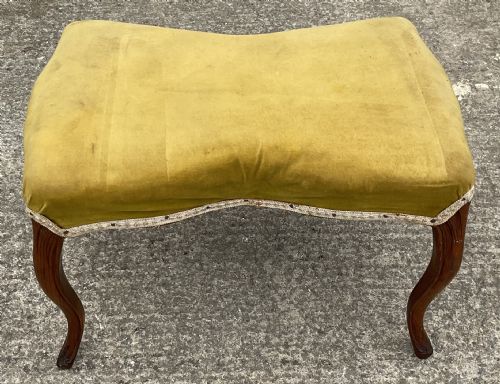
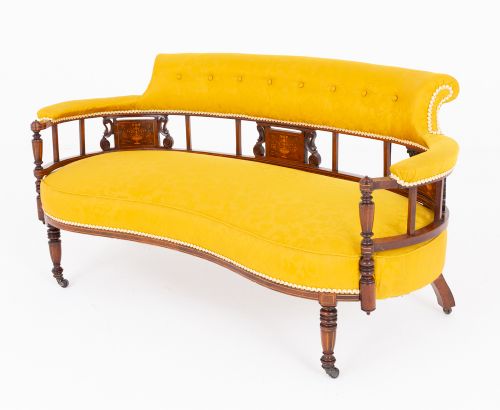
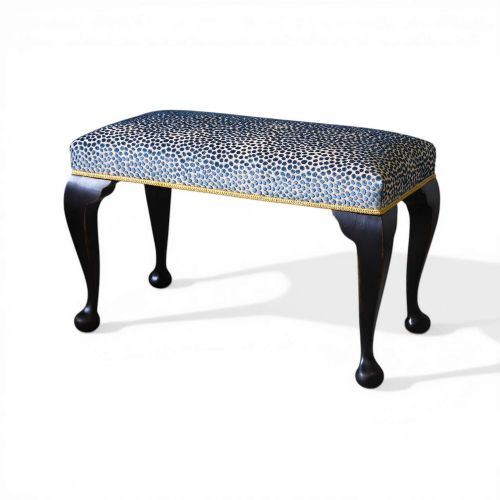


Velvet Upholstered Bench
A velvet upholstered bench brings tactile warmth and period form to a hallway or drawing room.
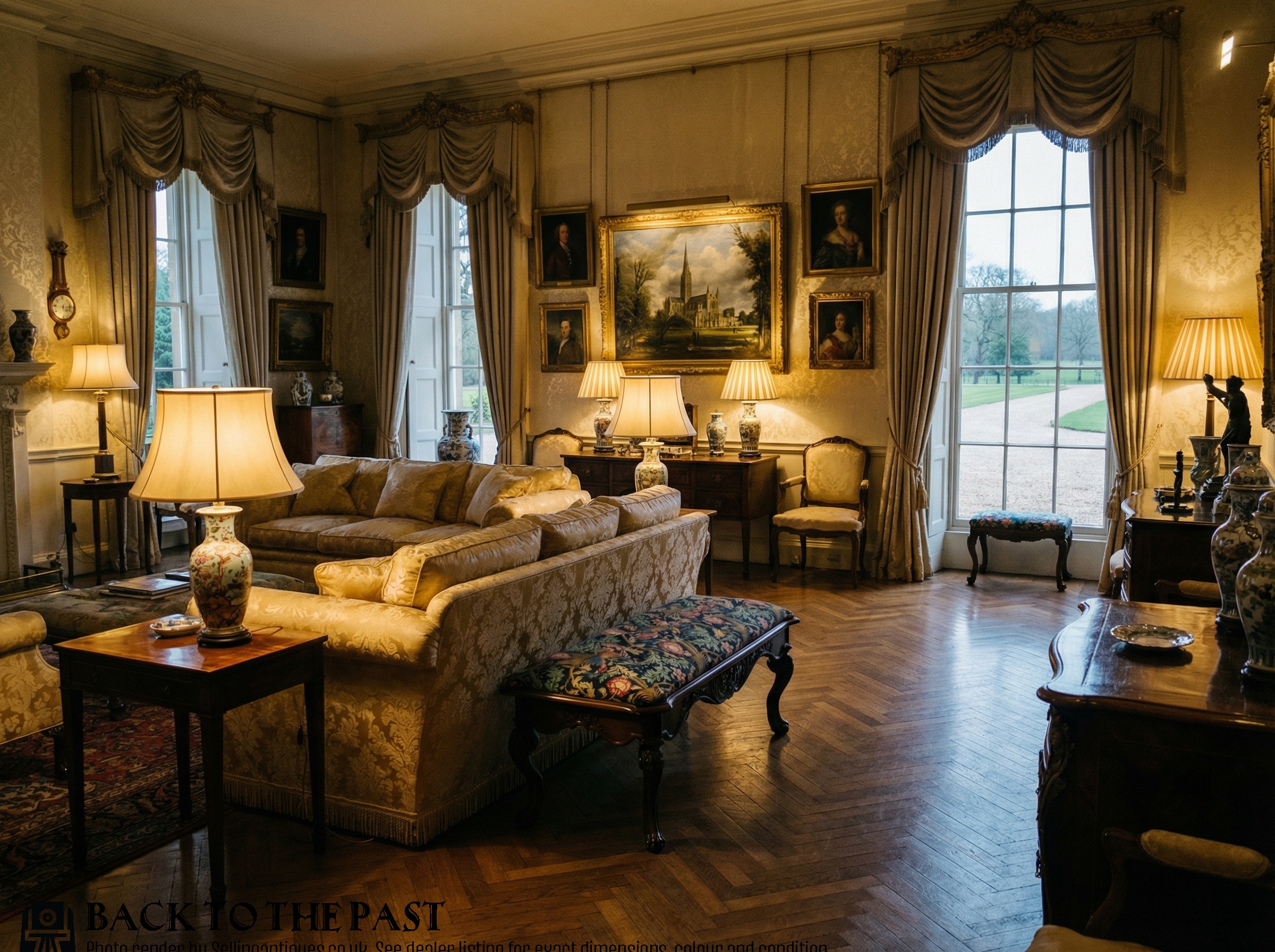
Velvet Upholstered Bench
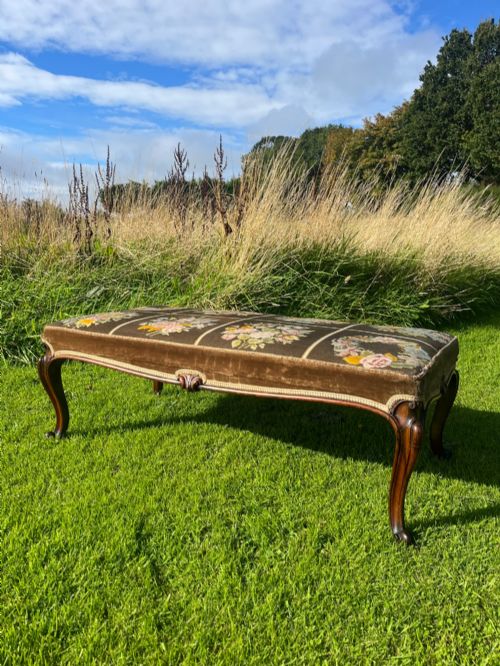
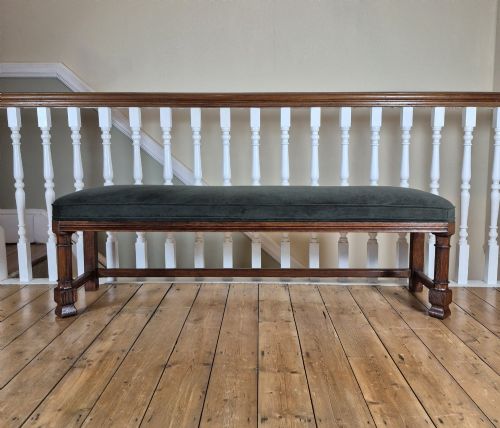
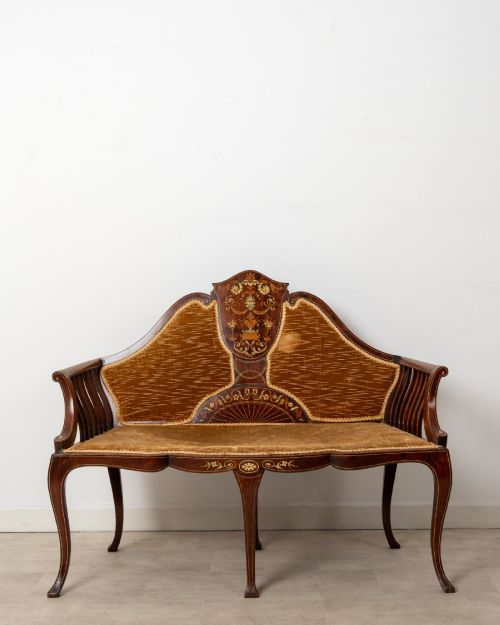
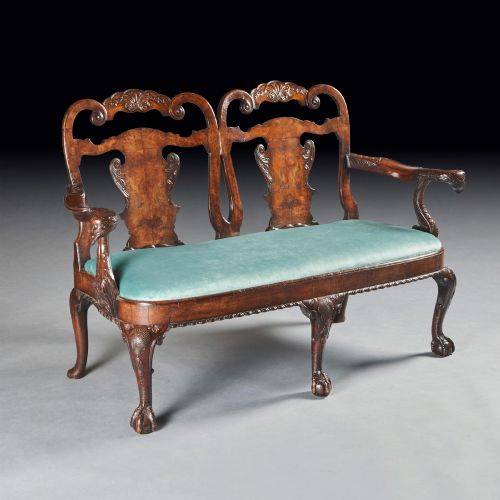
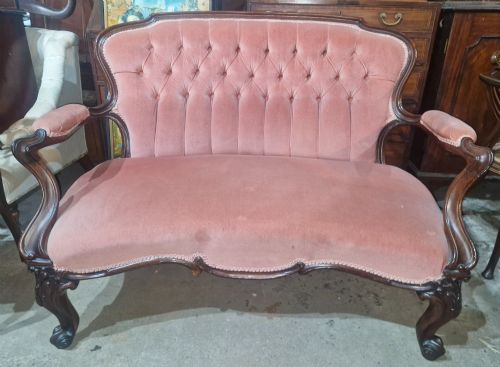
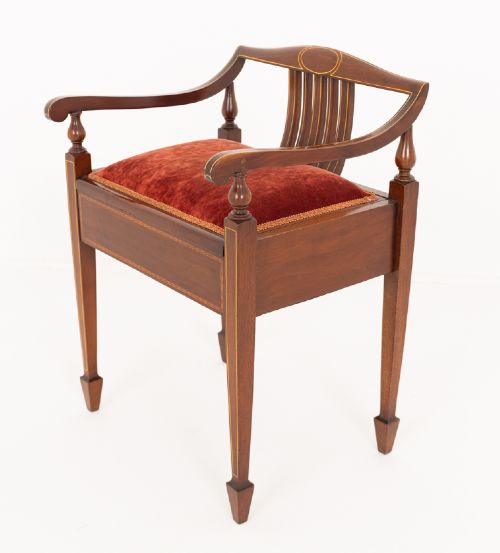
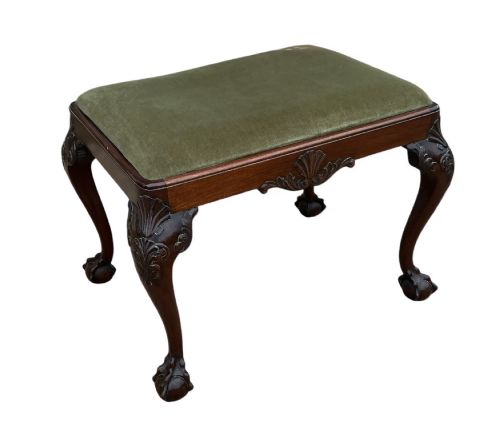
A velvet upholstered bench encompasses a range of seating forms designed for domestic interiors across the nineteenth and early twentieth centuries. When searching for a velvet upholstered bench, buyers encounter various formats including long salon stools, window seats, piano stools, and small settees. The pieces originate from Victorian, Edwardian, and Art Deco periods, drawing upon revival styles like Gothic, Georgian, and Louis XVI.
The selection on this page relies heavily on nineteenth century craftsmanship, featuring walnut, mahogany, rosewood, and oak frames. Stools and window seats dominate the forms, alongside compact settees and conversation seats upholstered in plush textiles. Each piece reflects the interior taste of its decade, from elaborate carved rosewood to clean lined walnut.
How they were made
Makers built these frames using traditional timbers such as walnut, mahogany, rosewood, oak, and ebonised wood, often combining carved ornamentation with structural joinery. Giltwood and painted finishes also appear on French and revival pieces from the late nineteenth and early twentieth centuries. Brass details supplement the woodwork on fenders and specific frame mounts.
Upholstery forms the primary visual element, utilising velvet alongside fabric, leather, and tassel trims applied to springs, webbing, and stuffing. Frames exhibit stylistic details from carved foliage on Victorian rosewood to inlay on Edwardian mahogany and geometric curves on Art Deco walnut.
Listings feature walnut, mahogany, rosewood, and oak frames spanning the Victorian, Edwardian, and Art Deco periods.
What varies in quality
Quality rests in the precision of the timber carving and the architectural balance of the frame proportions. A superior piece demonstrates crisp detail in the woodwork, whether dealing with a Georgian revival mahogany moulding or a French rococo walnut curve.
The integrity of the construction and the fidelity to historical design dictate the tier of a piece. Better examples maintain rigid joinery and use dense hardwoods, while revival styles succeed through accurate interpretation of earlier proportions.
Hallett And Sons
The Velvet Upholstered Bench Glossary
- Window seat
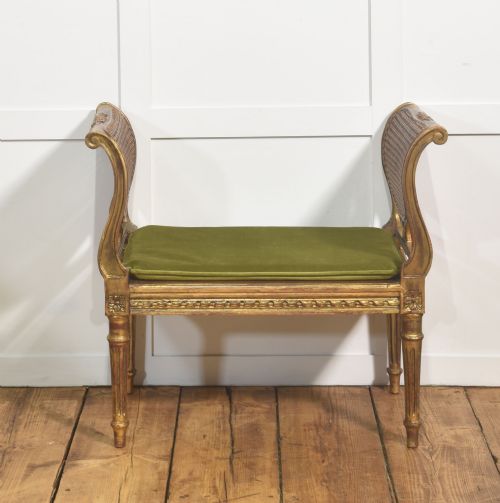
- A long, narrow form of stool or bench traditionally placed in the recess of a bay window. These pieces often feature upholstered seats and open ends or carved arms.
- Centre stool
- A large freestanding stool designed to sit in the middle of a room rather than against a wall. They frequently employ substantial walnut or rosewood frames with elaborate upholstery.
- Giltwood
- Timber that has been coated with a thin layer of gold leaf or gesso preparation. This finish appears frequently on French revival and decorative nineteenth century frames.
- Settee
- A small upholstered sofa designed for two or more occupants. They appear in various revival styles including George II and Louis XVI designs.
Velvet Upholstered Bench: Frequently Asked Questions
Where should I place a velvet bench?
These pieces suit placement at the foot of a bed, beneath a window, or alongside a hallway wall. Their compact proportions allow them to function as auxiliary seating without dominating the room.
They bridge the gap between decorative furniture and practical seating, adding texture through their velvet upholstery while maintaining a low profile.
How do I identify Victorian pieces?
Victorian examples typically utilise walnut, rosewood, or mahogany with heavy carving and dark finishes. The design vocabulary often incorporates rich upholstery and elaborate structural turning.
Look for deep buttoning or tassel trims which frequently accompany nineteenth century seating. The substantial weight of the timber frame also points toward this era.
What is the difference between a stool and a settee?
Stools provide seat surfaces without backs, ranging from small piano stools to large salon benches designed for multiple people. Settees incorporate structural backs and sometimes armrests for upright sitting.
Both categories utilise velvet upholstery, but settees offer higher back support while benches and stools remain open on all sides.
How do I care for velvet upholstery?
Velvet requires gentle brushing to maintain the pile and prevent flattening over time. Avoid placing antique pieces in direct sunlight to protect the colour of the textile.
Professional cleaning preserves the integrity of the fabric and the underlying padding without damaging the antique wooden frame.