


Velvet Parlour Chair
A velvet parlour chair brings tactile warmth and carved timber frames to a nineteenth-century room.
Velvet Parlour Chair
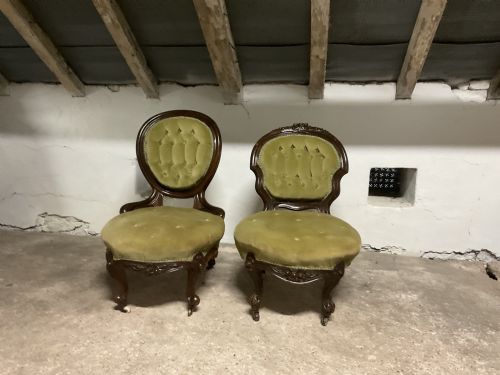
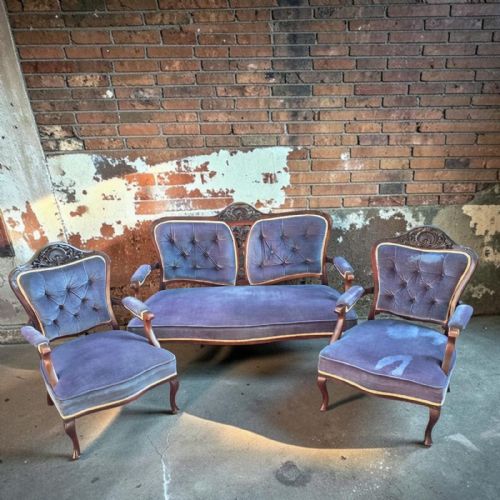
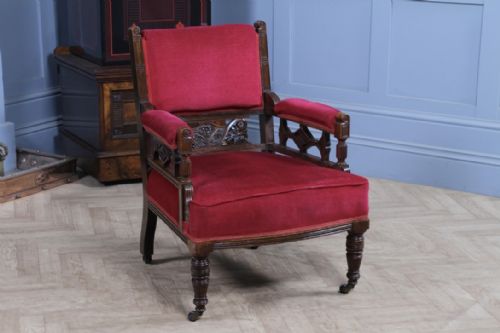
A velvet parlour chair is typically a nineteenth-century or early twentieth-century seat designed for reception rooms, drawing rooms and bedrooms. These pieces encompass various forms including single open armchairs, nursing chairs, side chairs and matching salon suites.
The most common examples on this page date from the Victorian and Edwardian periods, constructed in dense hardwoods and upholstered in rich pile fabrics. They served as comfortable, decorative seating for intimate gatherings and formal entertaining in the home.
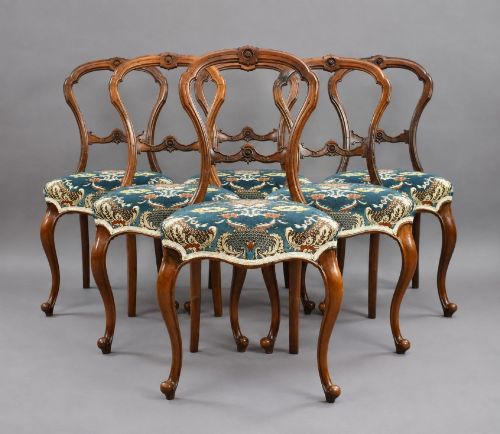
Makers utilised resilient frame constructions to support sprung upholstery and deep textile coverings. The selection ranges from simple balloon back side chairs to elaborately carved walnut and rosewood open armchairs.
Materials and construction
Frames rely on solid timbers such as mahogany, walnut and rosewood, chosen for their strength and ability to take fine carved details. Cabinet makers shaped these woods into curved backs, cabriole legs and serpentine seat rails.
Upholstery techniques combined traditional coil springs with durable textile covers including velvet, brocade and fabric. Brass castors and decorative nailing often completed the lower framework of larger armchairs and settees.
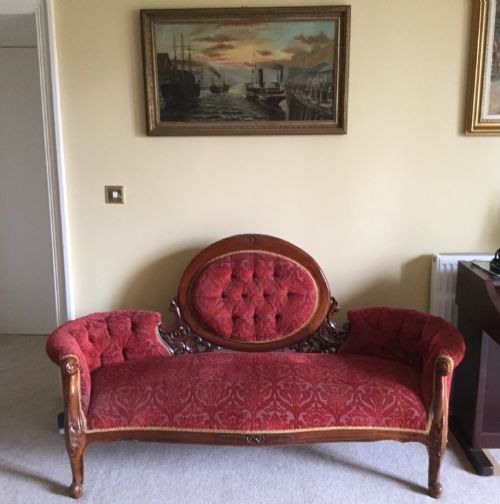
His and her matching sofa chairs allowed Victorian couples to sit side by side while maintaining strict postural decorum.
Assessing quality
Quality rests in the crispness of the hand-carved woodwork and the density of the primary timber frame. Superior examples display deeply sculpted floral or scroll motifs integrated directly into the structural mahogany or walnut.
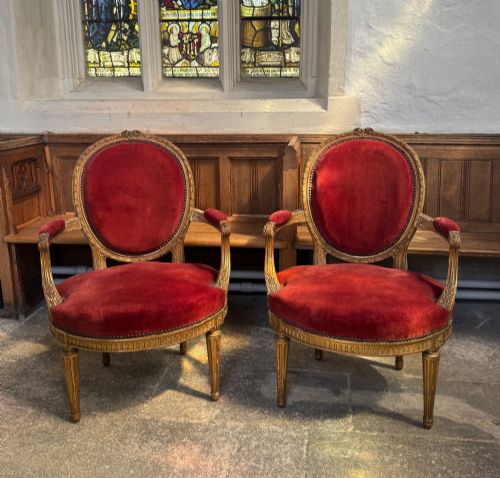
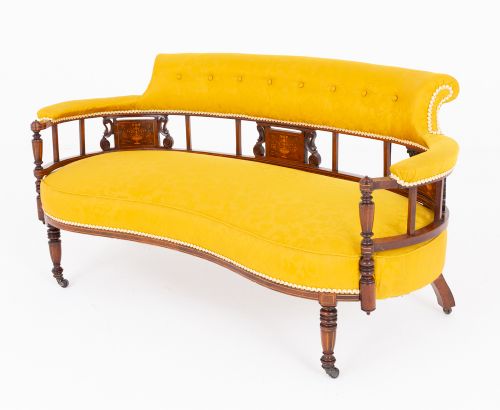
The sophistication of the upholstery work and the integrity of the internal sprung base separate standard production from finer seating. Intricate marquetry inlay and the choice of premium rosewood or giltwood indicate high-status workshop origin.
Jas James Shoolbred·Jenks & Wood
The Velvet Parlour Chair Glossary
- Balloon back
- A chair back shaped in a continuous oval or curved loop resembling an inflated balloon. This form is frequently found on mid-nineteenth-century dining and parlour seating.
- Giltwood
- Timber coated with a thin layer of gold leaf or gesso finish. This decorative treatment appears on revival armchairs influenced by French court styles.
- Marquetry
- The art of applying decorative veneer pieces in geometric or floral patterns onto a solid wood surface. It requires precise craftsmanship to fit contrasting wood tones together.
- Salon suite
- A matched set of seating furniture comprising a settee and multiple armchairs or side chairs intended for a formal drawing room. These suites share identical carved frames and upholstery.
- Nursing chair
- A low-seated upholstered chair designed for comfort and ease near a hearth or in a bedroom. The reduced height allowed sitters to tend to infants or engage in needlework.
Velvet Parlour Chair: Frequently Asked Questions
How do I clean antique velvet?
Velvet pile requires gentle brushing with a soft-bristled brush to remove dust and restore the direction of the fibres. Avoid using water or chemical solvents directly on old fabric.
Professional textile conservation is recommended for deep cleaning to protect the original nineteenth-century backing materials and underlying padding.
Can I use these in modern rooms?
These compact seats fit easily into contemporary living rooms, bedrooms and studies as accent seating. Their rich textile surfaces introduce texture and contrast against neutral walls and modern furnishings.
Ensure the chair placement avoids direct sunlight to prevent fading of the delicate velvet pile and dry timber.
Were these chairs used for dining?
Parlour chairs and nursing chairs were primarily designed for sitting, reading and social conversation rather than formal dining tables. Dining variants feature firmer seats and upright backs suited for table use.
Low parlour models prioritise relaxed posture over upright dining support.
How do I date a Victorian chair?
Dating relies on stylistic shifts from early nineteenth-century mahogany forms through mid-century rosewood balloon backs to late Victorian walnut revival designs. Construction marks, screw types and timber choices offer further chronological clues.
Comparing carved details against dated pattern books helps narrow down the decade of manufacture.