




Vanity Table Spray Bottle
A vanity table spray bottle brings dressing room glamour, offering a sleek way to dispense scent with period flair.
Vanity Table Spray Bottle
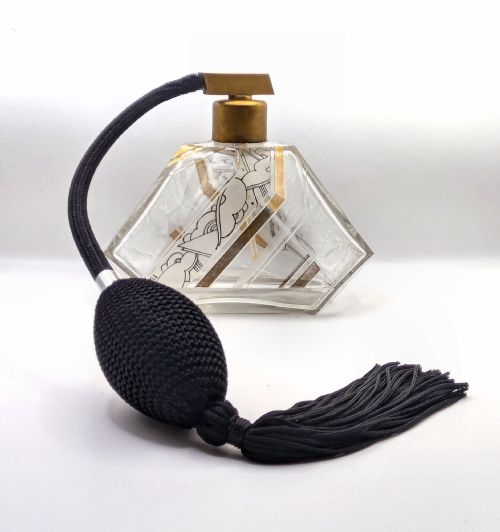
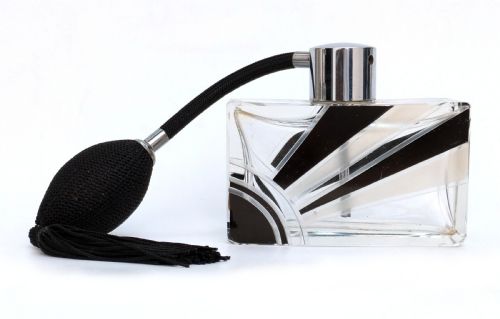
A vanity table spray bottle is a dressing room accessory designed to hold and mist fragrance. The pieces seen here sit firmly in the Art Deco period, typically originating from the 1930s.
Most examples take the form of perfume atomisers or scent bottles. You will frequently encounter glass and crystal bodies paired with metal hardware.
Originating largely from makers in Bohemia and the Czech region, these objects often feature geometric cuts or enamel decoration. They capture the distinct design language of the interwar years.
How they were made
Makers utilised heavy glass and cut crystal to form the main bodies, often shaping them into striking geometric or sunray patterns. These glass reservoirs were then combined with metal mounts, typically utilising chrome or brass.
Some pieces incorporate enamel and delicate fabric elements to add colour and texture to the design. Gold leaf highlights appear on certain items, applied by hand to accent the moulded facets of the glass.
The atomiser mechanism required precision engineering to mount onto the glass neck, connecting a squeeze bulb and tubing to an internal siphon. This hardware allowed the liquid to be released in a fine mist.
What varies in quality
Quality rests upon the weight and clarity of the glass or crystal body. Superior examples display deep, sharp cutting and substantial heft, while simpler pieces rely on basic moulded forms.
The sophistication of the metal hardware and secondary decorations alters the character of the object. Finely applied enamel and intricate chrome or brass mounts distinguish more ambitious works from standard production.
Attribution also plays a role in distinction. Pieces carrying the mark of a known designer or maker command greater interest than unsigned equivalents.
Karl Palda·Rudolf Hlousek·Hermanova
The Vanity Table Spray Bottle Glossary
- Atomiser
- A device designed to turn liquid perfume into a fine mist through the use of air pressure. It typically consists of a squeeze bulb connected to a metal spray top.
- Art Deco
- A design style of the 1920s and 1930s characterised by streamlined geometric shapes, stylised motifs and industrial materials. It dominates the aesthetic of these dressing table items.
- Cut Crystal
- Glass with a high lead content that has been cut and polished on a wheel to create brilliant facets. This material catches the light sharply on display.
- Enamel
- A decorative glassy substance fused to metal or glass surfaces through firing. It introduces vibrant colour and pattern to the composition.
Vanity Table Spray Bottle: Frequently Asked Questions
What is a vanity table spray bottle?
A vanity table spray bottle is a decorative container fitted with a pump mechanism for dispensing perfume. These items were standard accessories on dressing tables during the early twentieth century.
They combine functional liquid storage with ornamental glasswork. Their primary role was to apply a fine mist of scent before stepping out.
How do these atomisers work?
An atomiser operates by forcing air across the top of a small tube submerged in the perfume. Squeezing the bulb creates a low-pressure zone that draws the liquid up and disperses it.
This mechanical system relies on a secure seal around the bottle neck. The metal collar holds the internal siphon assembly in place.
How do I date a 1930s spray bottle?
Dating these objects relies on recognising the characteristic geometric lines and materials of the Art Deco period. The presence of specific Czech glass manufacturing techniques helps narrow the timeline.
Design motifs such as sunray patterns and heavy crystal cutting are typical of this exact decade. Maker signatures, where present, provide further historical confirmation.
Can I still use these perfume bottles?
Many of these pieces remain functional, though older rubber bulbs and internal tubing often require replacement due to age. Collectors generally test the hardware carefully before adding fragrance.
Modern use requires gentle handling of vintage metal collars and delicate glass bodies. Most owners choose to display them as decorative objects on dressing furniture.