


Uzbekistan Floral Suzani
These uzbekistan floral suzani textiles are hand-embroidered wall hangings and covers that bring rich Central Asian colour and pattern into a room.
Uzbekistan Floral Suzani
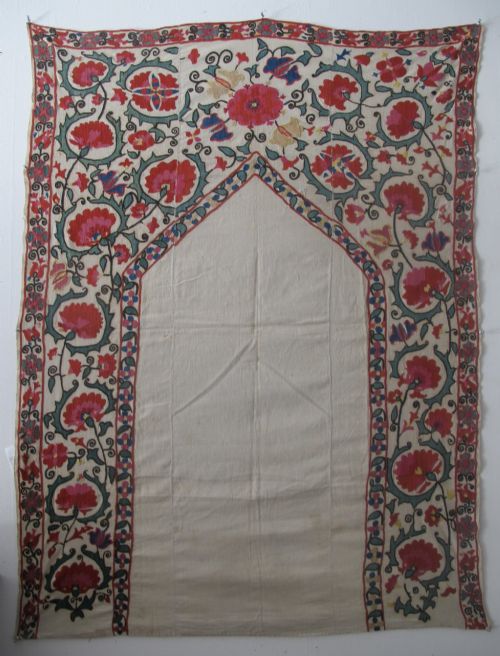
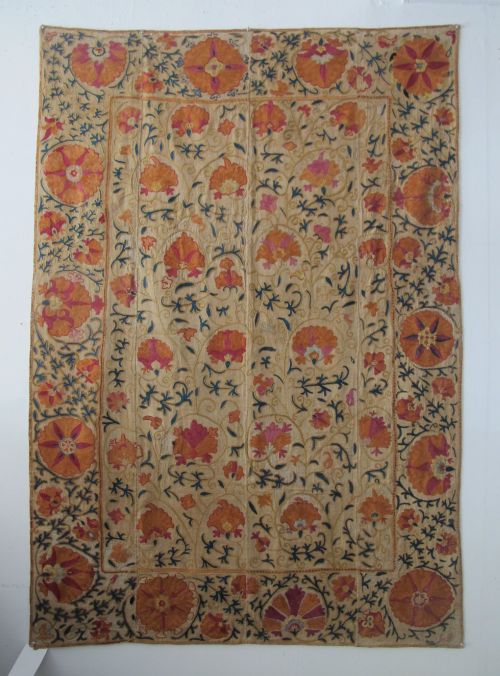
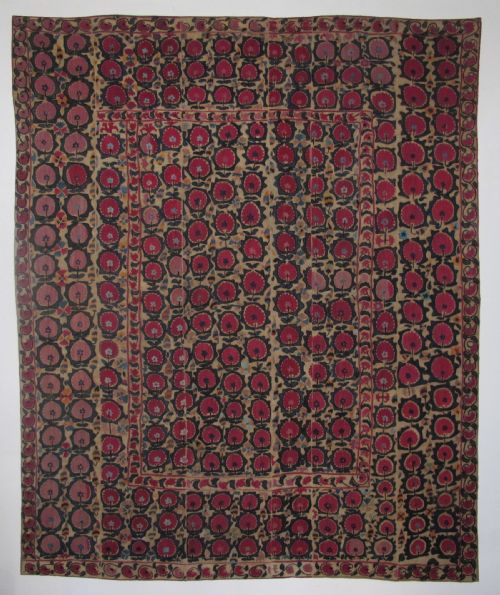
An uzbekistan floral suzani is a traditional embroidered textile originating from Central Asia, often taking the form of large wall hangings, panels, or covers. These pieces frequently showcase regional designs from places such as Bokhara, Nurata, Shahrisabz, and Uratube.
The objects seen here span from the mid-nineteenth century to the early twentieth century, encompassing periods around 1850, 1860, 1880, 1900, 1910, and 1920. Buyers will encounter both large format panels and smaller mounted needlework pieces.
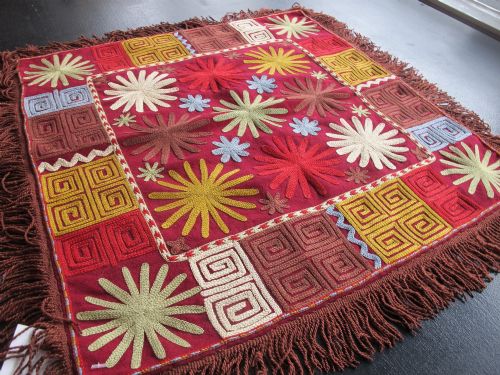
Forms vary from full-sized decorative wall hangings to smaller Nim suzanis and tribal Lakai embroideries. Each piece reflects the traditional textile arts of Uzbekistan through floral motifs and geometric compositions.
Materials and construction
These textiles are constructed primarily using silk embroidery thread worked onto a base foundation fabric. The supporting grounds consist of cotton, linen, or wool depending on the specific piece and regional workshop.
Needlework techniques involve intricate hand embroidery to build up dense botanical and architectural patterns. Silk thread provides the lustrous surface sheen characteristic of these Central Asian works.
Many suzanis were started by mothers to celebrate a daughter's wedding, sometimes taking years of collaborative needlework to finish.
Distinctions in quality
Quality in an uzbekistan floral suzani rests upon the precision and density of the silk embroidery work. Finer examples display meticulous needle control and complex compositional detail across the botanical motifs.
The choice and preservation of the dyed silk threads also influence the character of the piece. Intact grounds and vibrant, stable colours elevate the visual impact of the textile.
The Uzbekistan Floral Suzani Glossary
- Suzani
- A traditional embroidered tribal textile from Central Asia. The word derives from the Persian term for needle.
- Nim suzani
- A half-sized or smaller variant of the standard suzani hanging. These smaller formats were often utilised for specific domestic furnishings or covers.
- Lakai
- A distinct style of Central Asian tribal embroidery associated with the Lakai people. These pieces often feature bold, dynamic geometric and floral configurations.
- Bokhara
- A historic centre of textile production in Uzbekistan. Pieces from this region are known for specific architectural and floral design layouts.
- Nurata
- A regional style known for delicate, naturalistic floral sprays and intricate garden layouts. Embroideries from this origin display refined botanical drawing.
Uzbekistan Floral Suzani: Frequently Asked Questions
How were suzanis used originally?
These embroidered textiles served multiple domestic purposes within Central Asian households, functioning primarily as wall hangings, decorative covers, and marriage furnishings.
Families displayed them on interior walls to demonstrate status and prosperity, while smaller examples functioned as bed covers or ceremonial cloths.
What is a Nim suzani?
A Nim suzani is simply a smaller version of the standard full-sized textile panel. The term designates a half-scale format.
These compact pieces provide the same rich embroidery and floral patterns in dimensions that suit modern interior display spaces.
How do I care for a textile?
Protect antique embroidery from direct sunlight to prevent the natural silk dyes from fading over time. Mount the textile safely to distribute its weight evenly.
Professional conservation cleaning is advised if dust accumulation requires attention, avoiding standard household washing methods entirely.
How are regional styles told apart?
Regional attribution relies upon specific design vocabulary, such as the architectural elements found in Bokhara pieces or the naturalistic sprays characteristic of Nurata work.
Tribal pieces like those attributed to Lakai present different compositional rhythms compared to urban workshop panels from Shahrisabz.