


Uzbek Lakai Embroidery
Uzbek lakai embroidery delivers dense geometric patterns and vibrant nomadic textiles originating from Central Asian tribal traditions.
Uzbek Lakai Embroidery
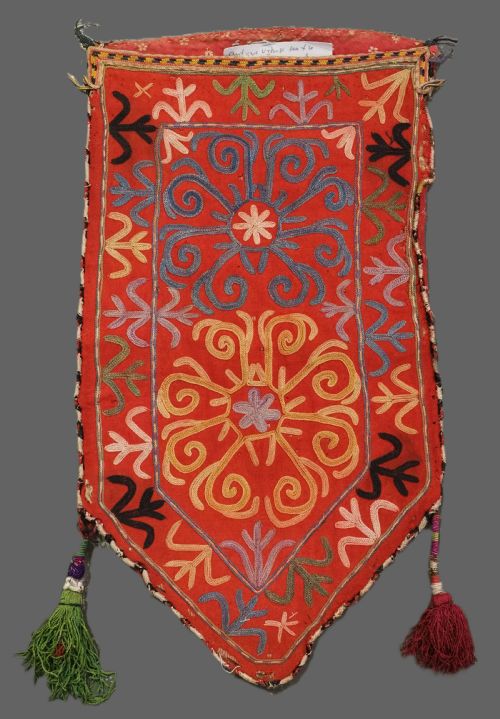
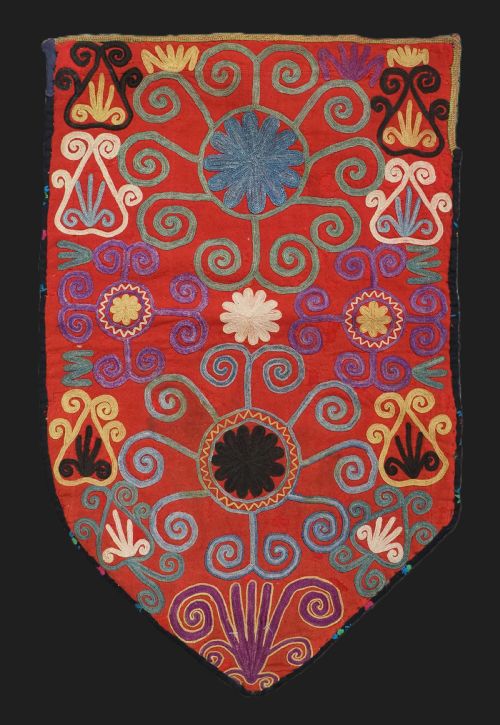
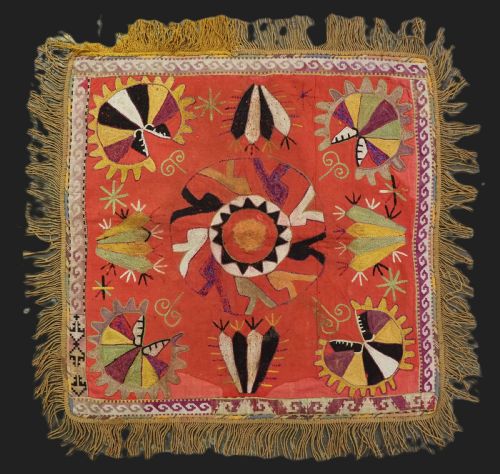
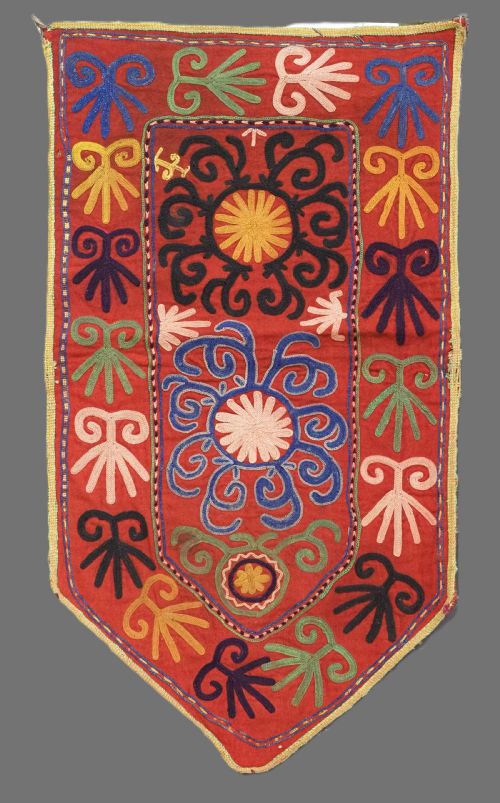
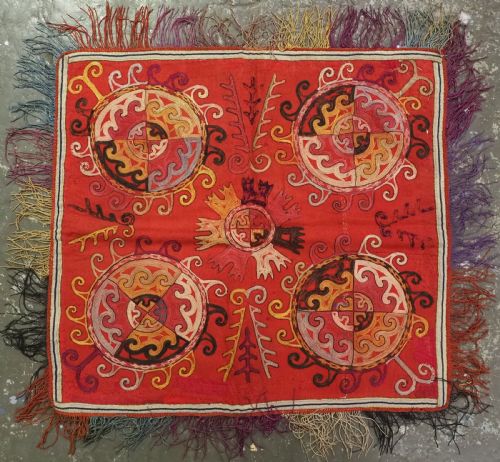
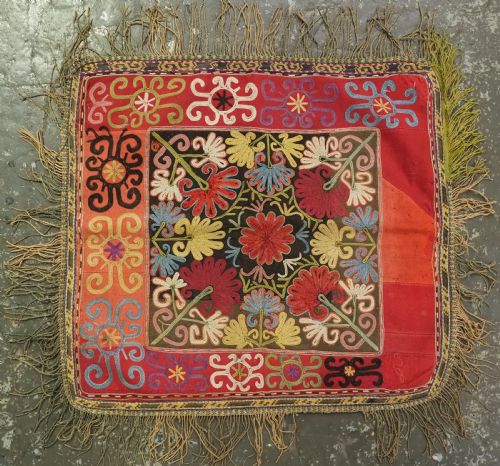
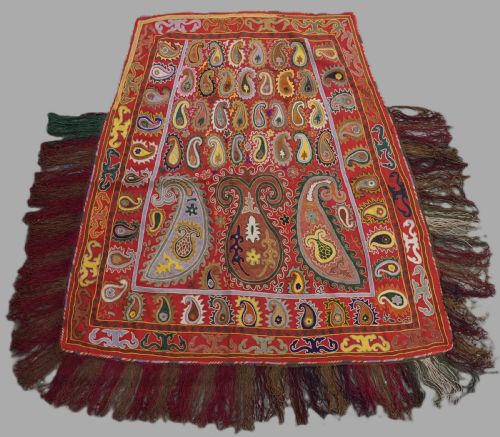
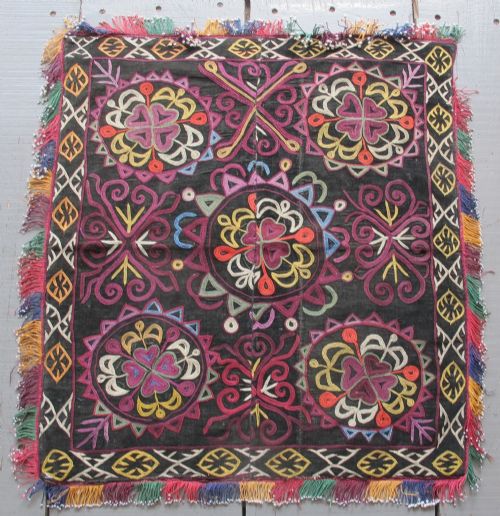
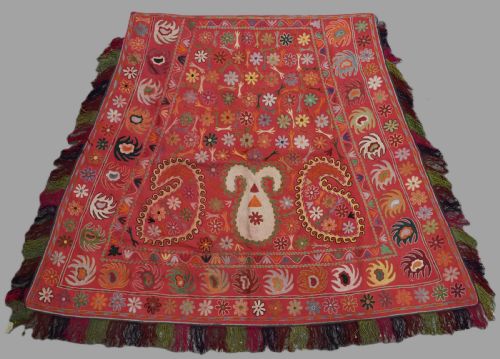
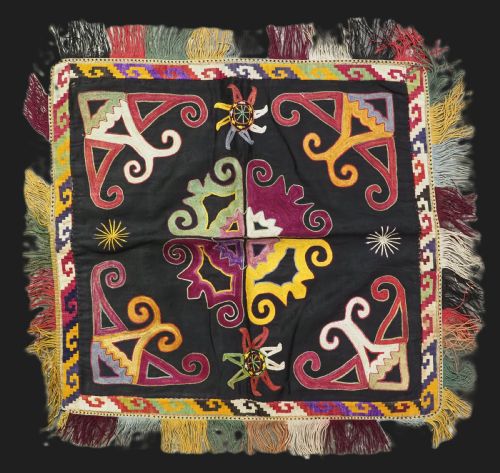
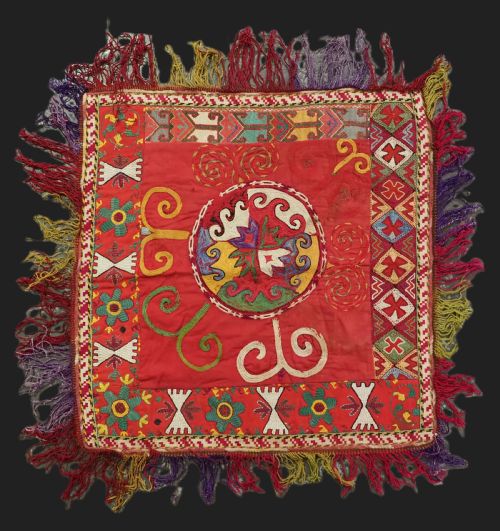
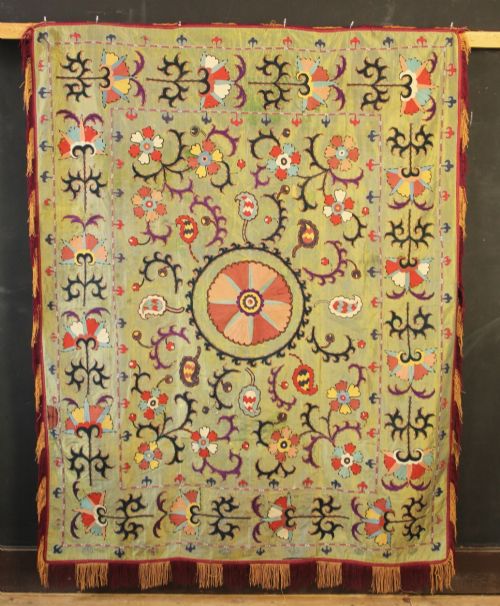
The most common forms on this page includeilgich wall hangings, ceremonial horse covers, saddle rugs, and nim suzanis. These textiles represent traditional nomadic craft traditions from regions including Shakrisabz in Uzbekistan.
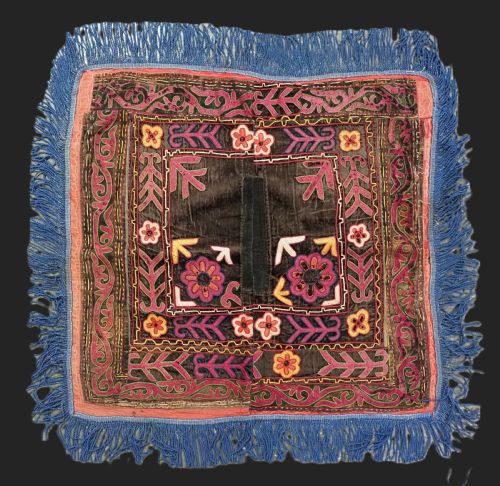
Pieces frequently take the form of functional household or ceremonial items repurposed as textile art. Examples range from small mirror covers and amulet holders to larger bed decorations and wall panels.
How they were made
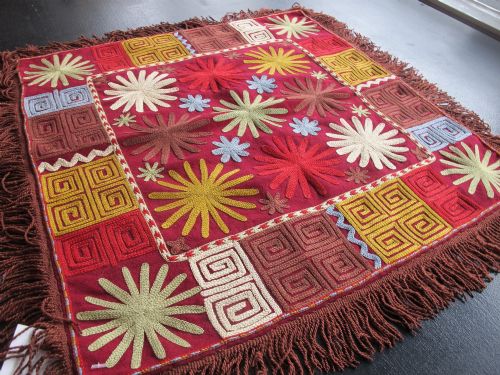
Artisans constructed these works primarily using silk thread applied to supportive grounds of cotton or wool. Some compositions incorporate velvet foundations or wool fringe for textural contrast.
Makers embellished many surfaces with glass beads alongside detailed needlework. These materials combine to create the characteristic heavy ornamentation associated with Central Asian folk art.
Nomadic makers sometimes incorporated shiny glass beads into their heavy silk embroidery to ward off the evil eye.
What varies in quality
Execution of the needlework and complexity of the geometric motifs determine the upper tier of these textiles. Finer pieces demonstrate precise control over the silk thread and harmonious colour placement across the ground fabric.
The integrity of the base material and survival of delicate additions such as glass beads or fringe influence overall appeal. Items retaining double-faced work or complete original borders represent finer examples of the craft.
The Uzbek Lakai Embroidery Glossary
- Ilgich
- A traditional embroidered wall hanging or dowry piece produced by Central Asian tribes. These textiles frequently served decorative functions within traditional homes.
- Suzani
- An embroidered textile panel originating from Central Asia. Nim suzani refers to a half-sized version of these decorative covers.
- At torba
- A specific form of horse cover or saddle bag associated with regional nomadic groups. These items served ceremonial purposes during tribal events.
- Uut kap
- A storage bag or hanging panel traditionally used within a yurt. These objects display intricate needlework characteristic of tribal domestic items.
- Saye gosha
- A type of bed decoration utilised in traditional Central Asian households. These textiles feature characteristic regional embroidery styles.
Uzbek Lakai Embroidery: Frequently Asked Questions
What is uzbek lakai embroidery?
Uzbek lakai embroidery encompasses traditional needlework created by the Lakai tribe in Central Asia. These textiles feature silk thread worked onto cotton, wool, or velvet grounds.
Items range from ceremonial horse covers to wall hangings and dowry pieces produced around the late nineteenth and early twentieth centuries.
How were these textiles used?
Nomadic communities utilised these embroidered pieces primarily for domestic decoration and ceremonial occasions. Many function as wall hangings, bed decorations, or mirror covers.
Other examples served as ceremonial horse covers and saddle rugs during important tribal events and processions.
How do I date these embroideries?
Dating relies on analysing the materials, colour palettes, and traditional design motifs present in the textile. Pieces on this page originate primarily from the period between eighteen eighty and nineteen thirty.
Examining the base fabric, such as hand-woven cotton or red wool grounds, helps establish the era of production.
How do I care for antique textiles?
Preserving these antique embroideries requires mounting them away from direct sunlight to protect the silk threads and natural dyes. Gentle vacuuming through a mesh screen helps remove surface dust without damaging the fabric.
Professional textile conservators should handle any major cleaning or mounting requirements for delicate pieces.