

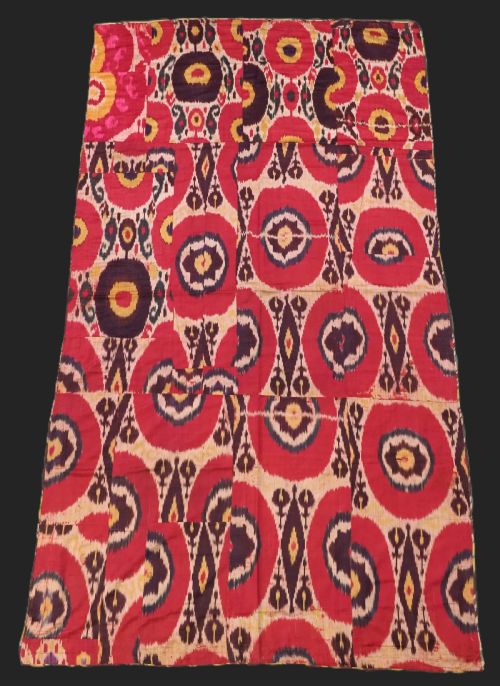
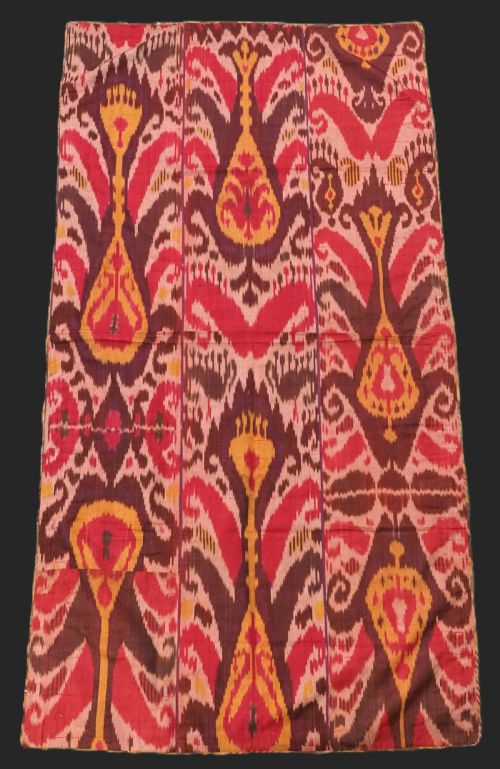
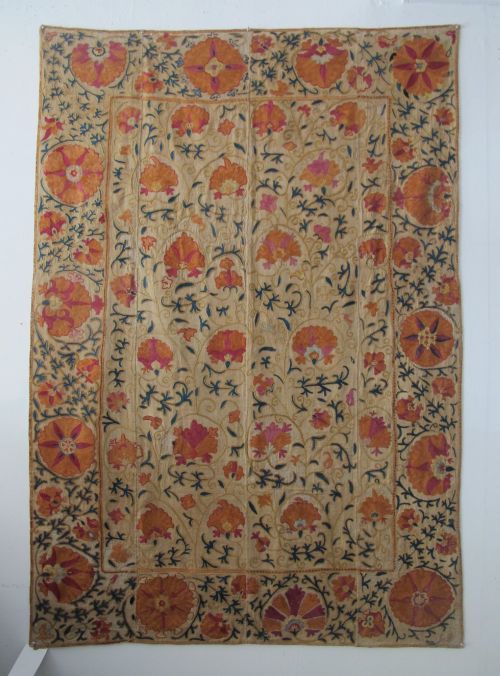
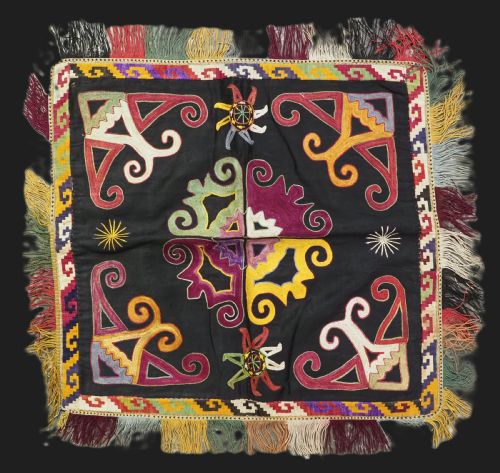
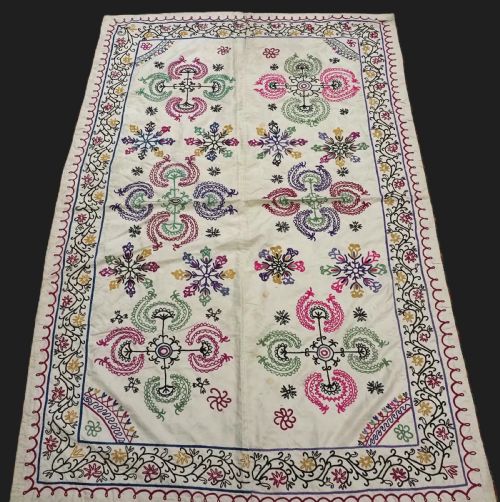


Uzbek Hanging Panel
An uzbek hanging panel brings tactile warmth and vibrant Central Asian geometry into a room.
Uzbek Hanging Panel
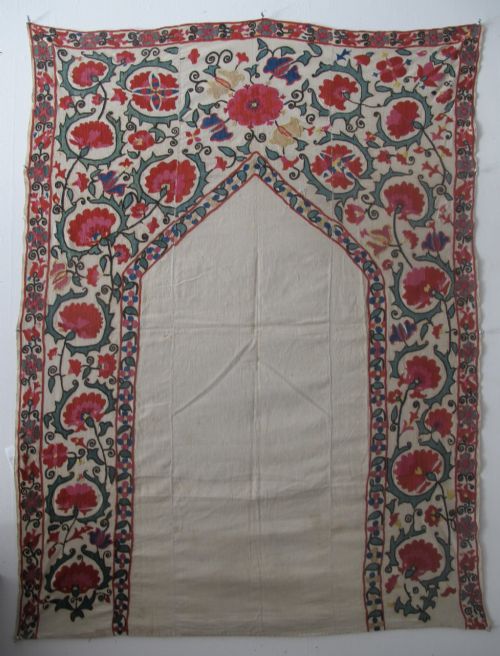
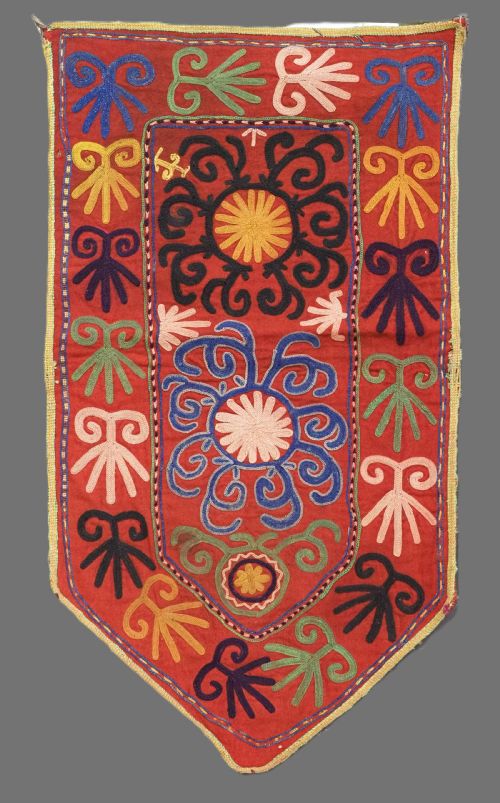
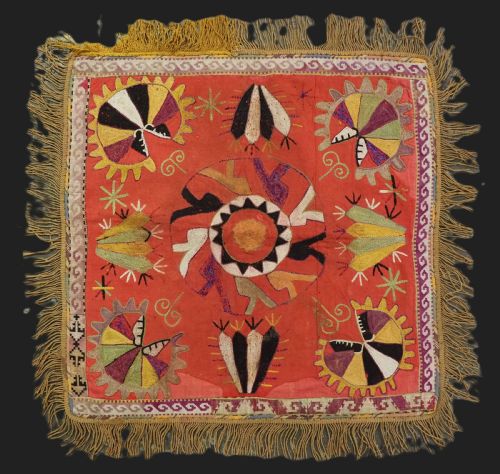
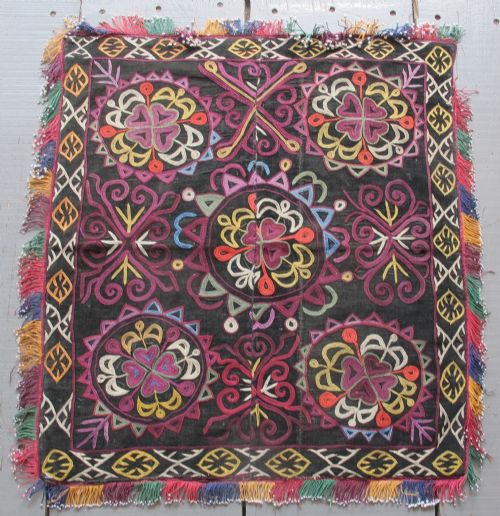
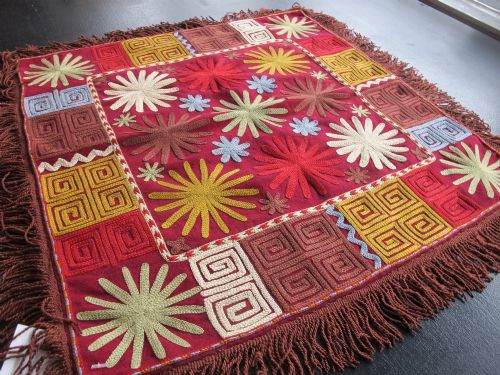
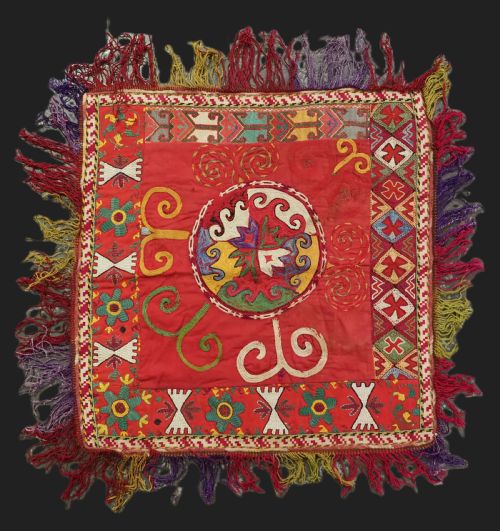
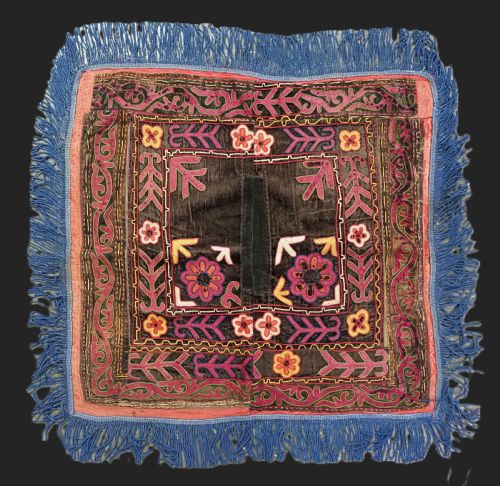
An uzbek hanging panel encompasses traditional textiles, suzanis, and embroidered dowry hangings originating from Central Asia. These textiles take forms such as large wall hangings, small mirror covers, and saddle bag faces dating from the mid nineteenth century to the early twentieth century.
Makers include nomadic and settled groups such as the Lakai tribe, Tajik artisans, and regional workshops in Bokhara, Shakrisabz, and Tashkent. Buyers encounter pieces worked with architectural motifs, central stars, and bold floral arrangements on woven grounds.
The format serves primarily as domestic decoration, ceremonial covers, or dowry items designed to adorn the interior of a traditional yurt or home. Each textile reflects the specific heritage of regional centres like Samarkand and Tashkent.
Materials and Construction
Artisans constructed these textiles using natural fibres including silk thread, cotton, wool, and semi silk adras cloth. Grounds consist of woven cotton, wool, or silk fabrics dyed in varied shades, sometimes incorporating glass beads for added texture.
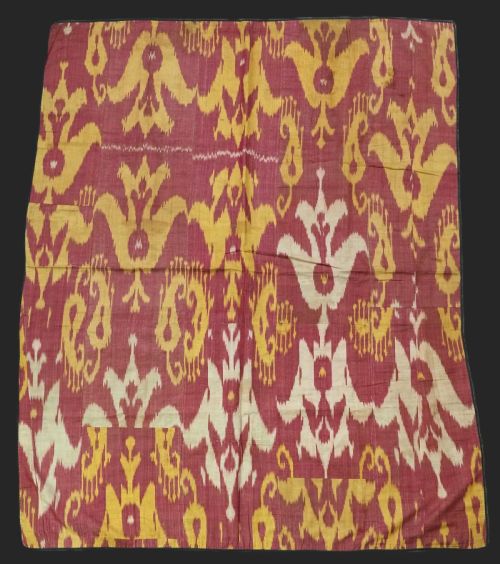
Needlework techniques rely heavily on silk embroidery executed upon sturdy foundation layers of cotton or wool. Ikat fabric panels utilise resist dyeing methods on warp threads prior to weaving, producing blurred patterns across the textile surface.
Uzbek Hanging Panel Retail Price Guide 2026
Typical asking prices for uzbek hanging panel among the pieces listed under this phrase on Sellingantiques today, from the lower quarter to the upper quarter. They describe what is for sale here now, not the wider market.
Current listings span from eighteen fifty to nineteen thirty, incorporating cotton, silk, wool, and velvet across multiple Central Asian regions.
Assessing Quality and Execution
Quality rests upon the density of the embroidery stitchwork and the complexity of the compositional layout. Fully embroidered palak suzanis demonstrate superior labour investment compared to sparsely decorated grounds.
The vibrancy and condition of the natural and silk threads dictate visual impact. Intricacy in tribal motifs, precise geometry, and structural integrity across joined panels distinguish finer examples.
The Uzbek Hanging Panel Glossary
- Suzani
- An embroidered textile from Central Asia. These large decorative hangings typically feature floral or geometric designs worked in silk thread.
- Ikat
- A dyeing and weaving technique where threads are resist dyed prior to weaving. This process creates characteristic feathered pattern edges.
- Adras
- A traditional hybrid fabric woven with a silk warp and a cotton weft. It combines the lustre of silk with the durability of cotton.
- Ilgich
- A small embroidered wall hanging or dowry piece. These are frequently associated with Lakai tribal work.
- Palak
- A fully embroidered suzani variant. The design usually incorporates a central star motif surrounded by dense foliage.
Uzbek Hanging Panel: Frequently Asked Questions
How were uzbek hanging panels used?
Families utilised these textiles as interior wall decorations, wedding dowry items, and ceremonial coverings within nomadic or settled homes.
They also served practical functions as protective covers for household goods or mirrors.
What is the difference between a suzani and an ikat panel?
A suzani is defined by hand embroidery stitched onto a woven ground fabric, usually in silk on cotton or wool.
An ikat panel is patterned through the warp dyeing process before the textile is woven on a loom.
How do I care for an antique textile panel?
Protect the piece from direct sunlight to prevent silk threads and dyed grounds from fading over time.
Mount the hanging using non damaging support methods that distribute the weight evenly across the top edge.
How can I tell regional styles apart?
Tashkent palak suzanis often feature dense embroidery with central star motifs on large formats.
Lakai tribal pieces display smaller geometric or hooked ilgich formats with distinct nomadic coloration.