




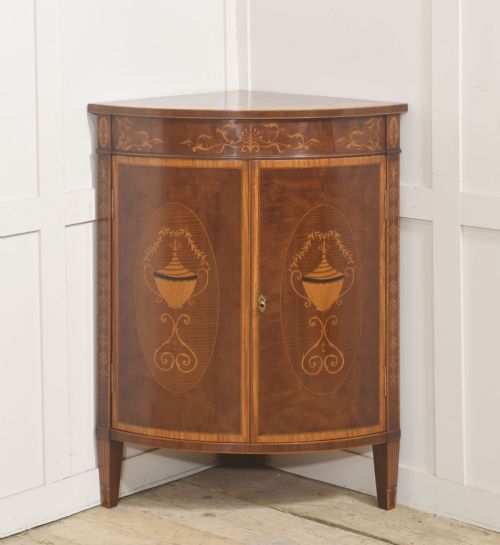
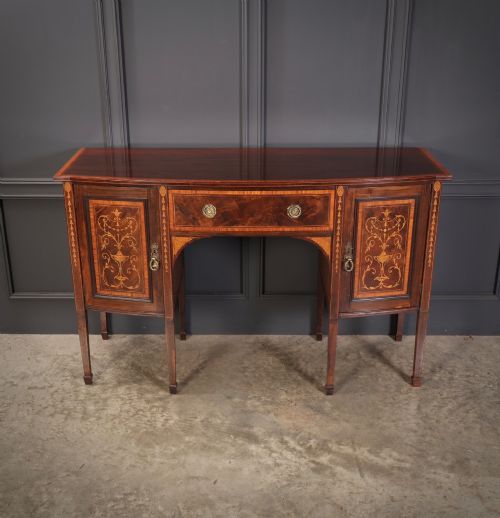


Urn Inlay Cabinet
An urn inlay cabinet brings classical proportion and refined woodwork into a room, offering both practical storage and decorative grace.
Urn Inlay Cabinet
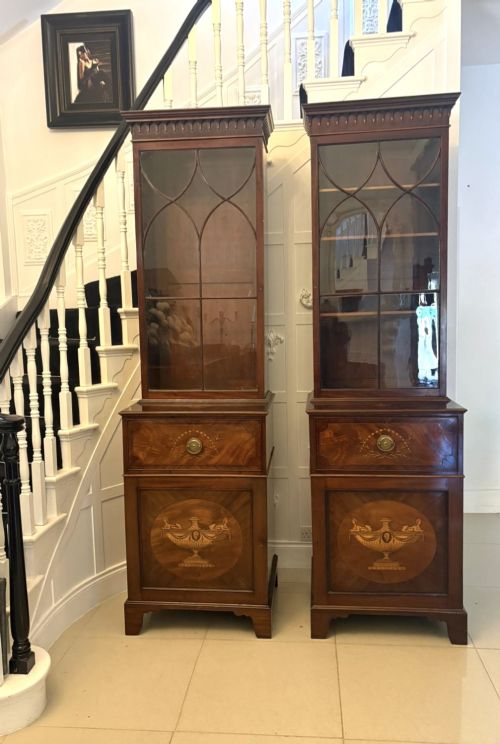
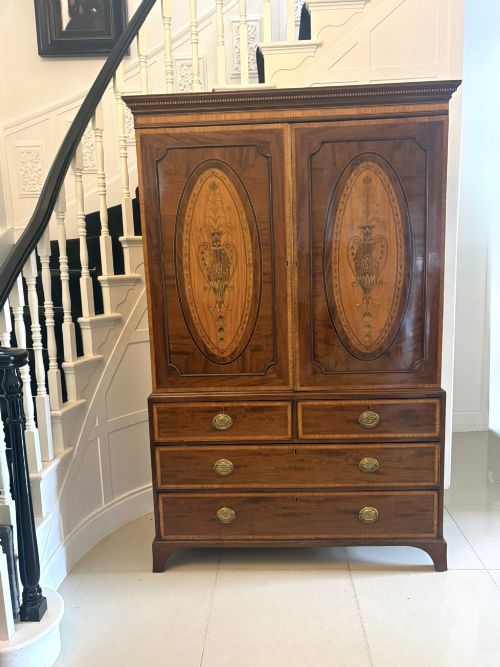
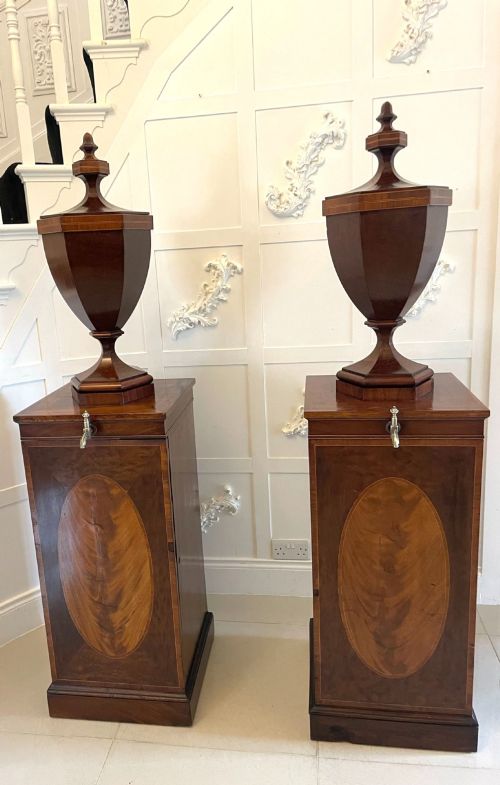
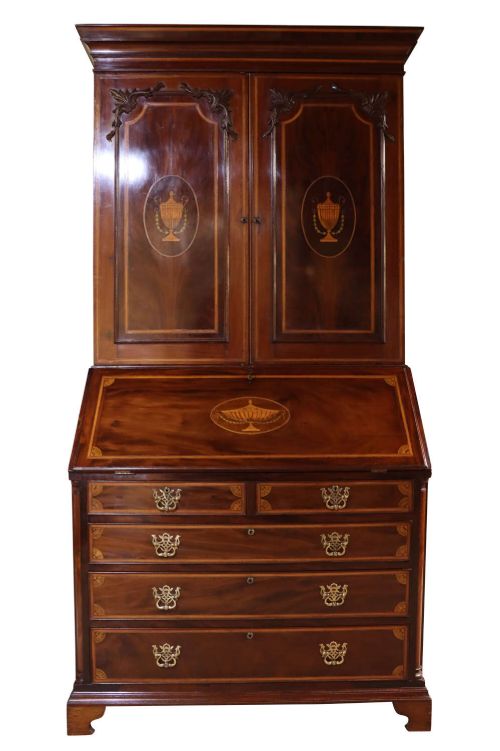
An urn inlay cabinet unites fine cabinetry with classical decorative motifs, drawing upon Georgian, Victorian, and Edwardian traditions. When searching for an urn inlay cabinet, a buyer encounters forms ranging from corner cupboards and side cabinets to bureau bookcases and bedside pieces.
These pieces primarily emerge from the eighteenth, nineteenth, and early twentieth centuries, reflecting styles such as Sheraton Revival and George III Neoclassical. Mahogany forms the main structural timber across the selection, enriched with contrasting details.
The integration of classical urn motifs sets these items apart from plain storage furniture, providing a focal point in a traditional or modern interior. Cabinets of this nature serve distinct functions, whether positioned in a library, bedroom, or principal reception room.
How they were made
Cabinet makers utilised dense hardwoods such as mahogany and rosewood for the primary carcass and structural elements. These timbers provided a stable, durable base capable of supporting intricate decorative work over generations.
Satinwood, boxwood, and fruitwood were employed for contrasting marquetry and inlay work to form the characteristic urn motifs. Skilled artisans cut and fitted these lighter veneers into precise recesses within the darker background timber.
Brass fittings, glass panels, and mother-of-pearl accents frequently supplemented the woodwork on specific forms like bookcases and display cabinets. Surface finishing involved polishing to accentuate the natural grain patterns and protect the delicate inlay.
Urn Inlay Cabinet Retail Price Guide 2026
Typical asking prices for urn inlay cabinet among the pieces listed under this phrase on Sellingantiques today, from the lower quarter to the upper quarter. They describe what is for sale here now, not the wider market.
Materials recorded across the selection include mahogany, satinwood, rosewood, brass, glass, boxwood, and marquetry inlay.
What varies in quality
The precision and complexity of the marquetry define the visual standard of the piece, particularly regarding the crispness of the urn motif. Superior examples display seamless integration of contrasting timbers without noticeable gaps or filler around the delicate stems and handles.
The choice of primary timber and the selection of figured veneers dictate the underlying substance of the cabinet. Finer specimens utilise richly grained mahogany or carefully matched satinwood that enhances the overall composition.
The integrity of the construction, from the dovetailing of drawers to the fit of cupboard doors, separates standard production from exceptional craftsmanship. Maker attribution, where recorded, often corresponds with a higher degree of finishing refinement.
Keeble London·Edwards and Roberts
The Urn Inlay Cabinet Glossary
- Marquetry inlay
- Decorative patterns formed by fitting contrasting veneers into a prepared wooden surface. This technique allows intricate pictorial designs like urns and swags to be rendered across cabinet doors and tabletops.
- Astragal glazed
- A window or cabinet door divided into smaller panes by wooden or brass bars called astragals. This construction is frequently seen on nineteenth-century library bookcases.
- Sheraton Revival
- A late nineteenth and early twentieth-century design movement inspired by the neoclassical furniture of Thomas Sheraton. Pieces from this period often feature satinwood and delicate urn inlay.
- Satinwood
- A durable, lustrous yellowish timber native to Ceylon and India, used extensively for contrasting veneers and stringing. It provides a bright background that makes darker inlay stand out.
- Demi-lune
- Half-moon in shape, describing tables and cabinets designed to fit flat against a wall. This form was popular during the Georgian and later revival periods.
Urn Inlay Cabinet: Frequently Asked Questions
What periods do these cabinets come from?
The listings span from the eighteenth century through the Victorian era up to the Edwardian period. Georgian and George III examples represent the earlier neoclassical influence.
Later pieces often date from the Sheraton Revival around nineteen hundred, reproducing earlier classical motifs using refined marquetry techniques.
How were these cabinets used originally?
These cabinets served multiple domestic purposes depending on their specific form within the home. Corner cupboards and side cabinets held china, linens, or glassware in reception rooms.
Bedside cabinets and night stands provided concealed storage in sleeping quarters, while bureau bookcases combined writing surfaces with enclosed shelving.
How do I identify Sheraton Revival pieces?
Sheraton Revival pieces typically date from the late nineteenth or early twentieth century and draw inspiration from eighteenth-century designs. They frequently incorporate satinwood panels, delicate boxwood stringing, and classical urn or floral marquetry.
These items often exhibit lighter framing and refined proportions compared to heavier Victorian furniture.
What woods are commonly found?
Mahogany forms the primary structural timber for the majority of these cabinets, offering strength and a rich dark tone. Rosewood also appears in specific tables and side cabinets.
Satinwood, boxwood, and fruitwood are utilised specifically for the contrasting inlays and decorative details that create the urn motifs.