


Upholstered Wingback Seat
An upholstered wingback seat brings draught-free comfort and traditional presence to a room, drawing on centuries of robust framing and deep textile work.
Upholstered Wingback Seat
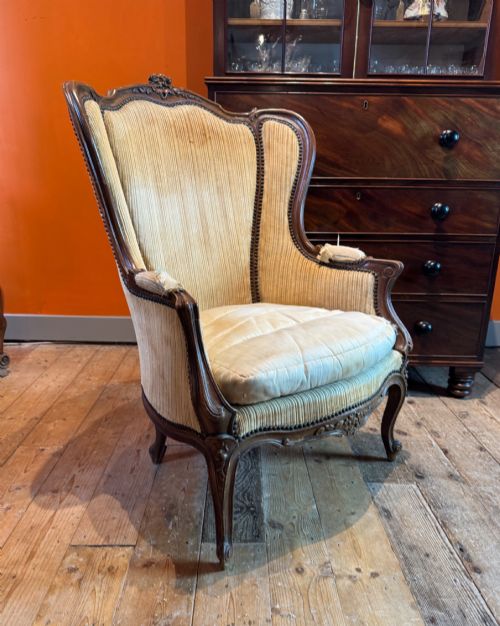
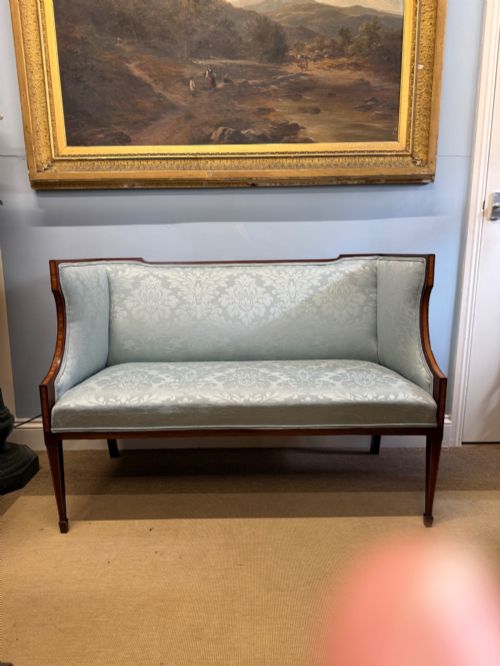
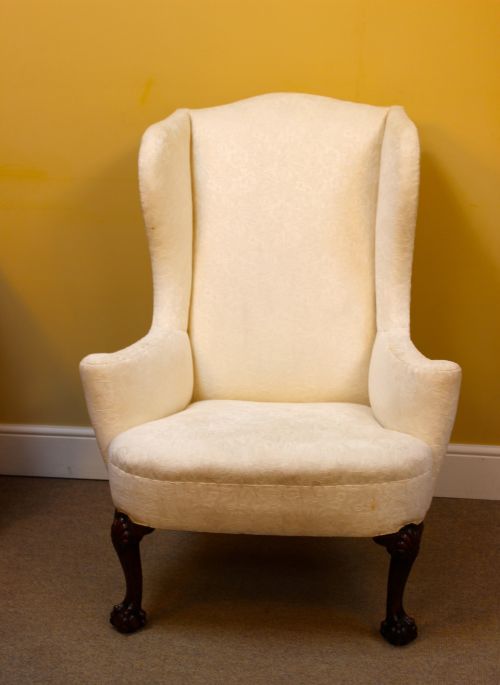
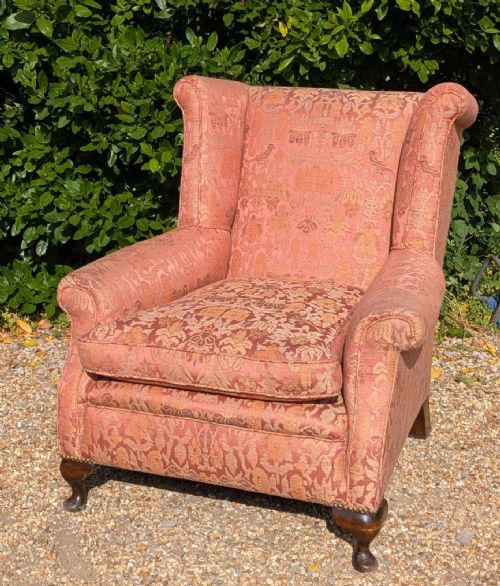
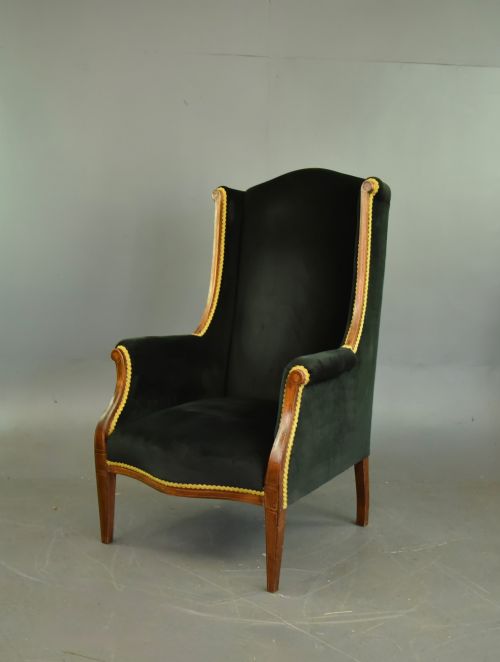
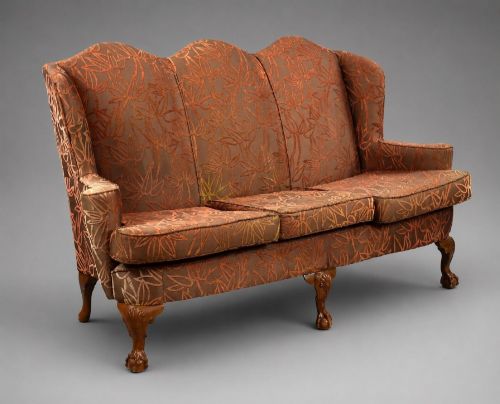
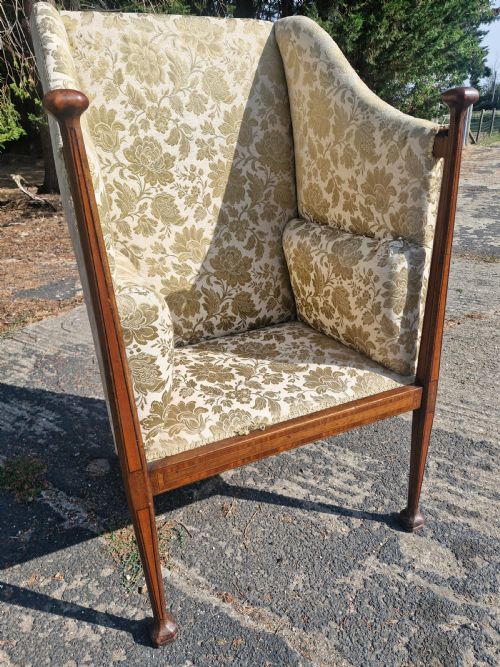
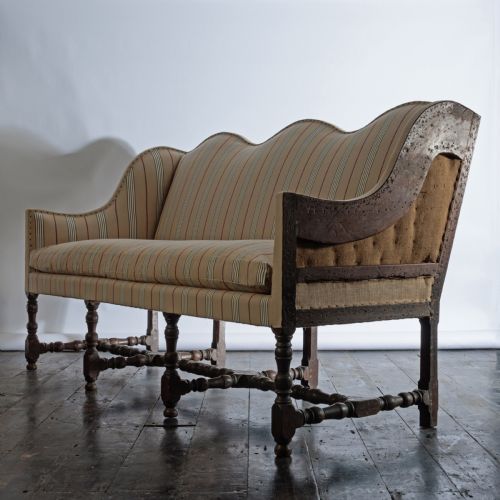
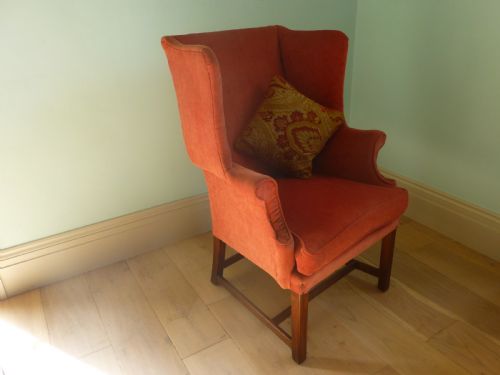
An upholstered wingback seat takes several distinct forms, ranging from single library armchairs and barrel backs to wider two and three-seater settees. You will frequently encounter nineteenth-century walnut and mahogany examples alongside Edwardian and 1930s pieces.
The selection includes specific regional items, such as Scottish chairs alongside Continental and French styles, reflecting diverse workshop traditions. Many items adopt earlier aesthetic cues, appearing in Queen Anne style, Georgian style, and Jacobean walnut interpretations.
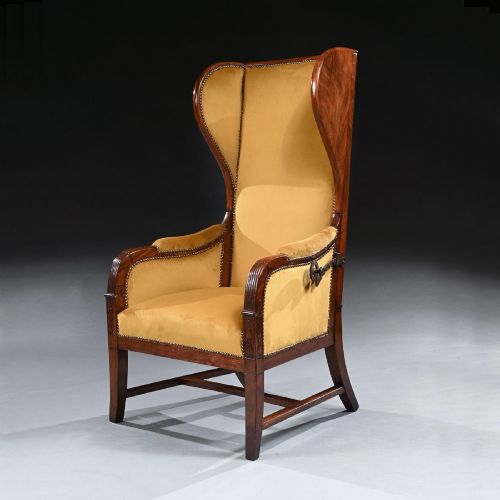
Makers adapted the basic wingback silhouette across different eras, applying inlaid mahogany, exposed timber frames, and various modern or traditional textile coverings. These seating options serve equally as fireside reading chairs and principal drawing room sofas.
Materials and construction
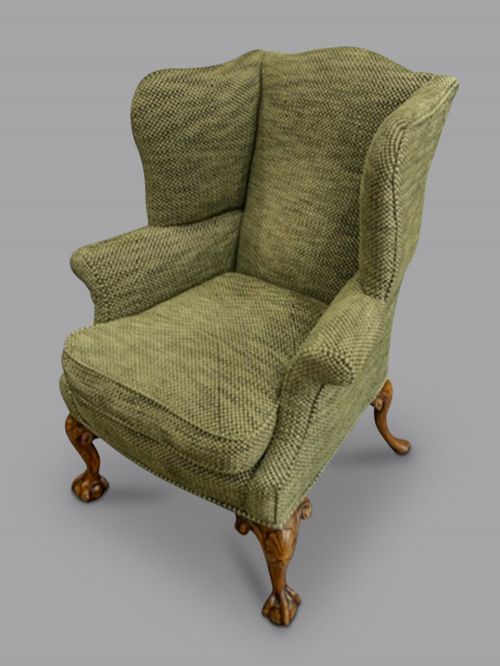
Craftsmen built the underlying framework using solid hardwoods such as mahogany, walnut, and general timber, often incorporating brass details for castors or structural mounts. These sturdy frames support deep stuffing and sprung interiors designed for sustained daily use.
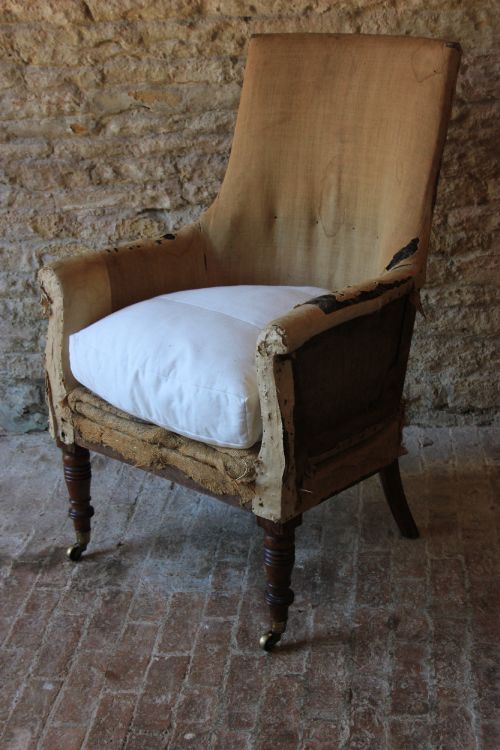
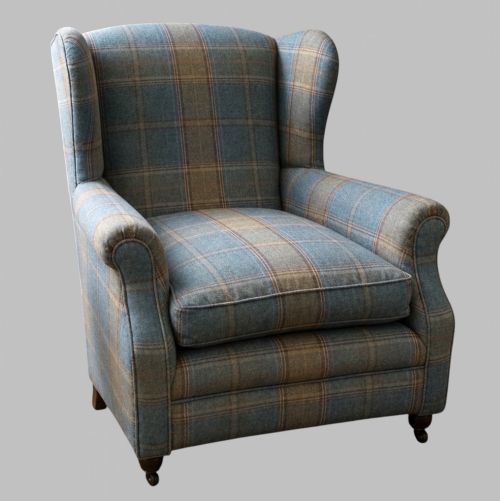
Upholstery relies on a diverse range of textiles, spanning historic damask fabric and velvet to contemporary wool plaids, cottons, chenille twill, and leather. Many pieces arrive freshly recovered in calico or specialist fabrics, preserving the underlying antique frame.
Coverings span traditional velvet and damask fabric alongside Shetland plaid and recycled cotton.
Judging the standard
Quality rests in the integrity of the wooden frame, the crispness of any hand-carved mahogany or walnut details, and the proportion of the protective wings. Superior examples exhibit balanced joinery and timber selected for rich grain and colour.
The standard also depends on the standard of upholstery work, from hand-stitched traditional interiors to the precision of pattern matching across patterned textiles and velvet.
Whytock and Reid·Sopwith
The Upholstered Wingback Seat Glossary
- Wingback
- A chair or sofa featuring characteristic side panels attached to the arms to deflect draughts and retain heat from a fire. These projections define the classic fireside silhouette.
- Barrel back
- A seating form where the upholstered back curves continuously around into the arms in a circular enclosure. This design offers a particularly enveloping sit.
- Bergere
- An enclosed armchair with upholstered sides and back, typically featuring an exposed wooden frame. French examples often follow eighteenth-century design canons.
- Settee
- A medium-length upholstered bench with a back and arms, designed to seat two or more people. They share the same padded construction as matching armchairs.
- Inlay
- A decorative technique where contrasting woods or other materials are inserted into recesses in the primary timber surface. Edwardian makers frequently applied this to mahogany framing.
- Chenille
- A fuzzy woven fabric utilised for upholstery, providing a textured pile and tactile finish. It appears across nineteenth-century and later pieces.
Upholstered Wingback Seat: Frequently Asked Questions
What is an upholstered wingback seat?
An upholstered wingback seat is a traditional armchair or settee featuring high padded sides designed originally to shield the sitter from draughts. These pieces combine a rigid wooden skeleton with soft padding and textile coverings.
Over the centuries, cabinetmakers and upholsterers adapted the form across Georgian, Victorian, and later periods, introducing various timber frames and fabric choices.
How do I date a wingback chair?
Dating relies on examining the timber species, leg architecture, stretchers, and the construction methods visible beneath the upholstery. Georgian examples often display solid mahogany frames with specific cabriole or straight leg forms, while later pieces show Edwardian or 1930s stylistic traits.
Comparing the stylistic details against known period characteristics helps establish the likely decade of manufacture.
Where should I place a wingback sofa?
These sofas suit principal reception rooms, libraries, or large studies where their substantial frames and high backs create a distinct focal point. They work well positioned near fireplaces or away from walls to showcase the upholstered back and wings.
Their generous proportions require adequate floor space to allow the design to breathe within a room.
Can I reupholster an antique armchair?
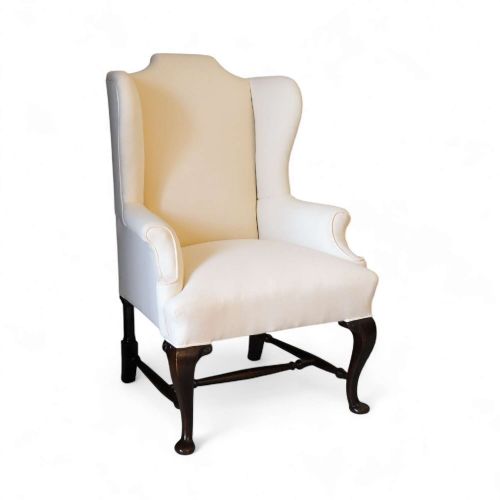
Reupholstering is a common practice that preserves the antique wooden frame while updating the fabric to suit modern interiors. Many pieces arrive in calico precisely to allow buyers to select their own preferred top cloth.
Traditional upholsterers use appropriate webbing, springs, and stuffing techniques to maintain the historic integrity of the piece.