


Beige Wing Chair
A beige wing chair offers deep-seated comfort and draught-excluding side panels, drawing on centuries of library and fireside tradition.
Beige Wing Chair
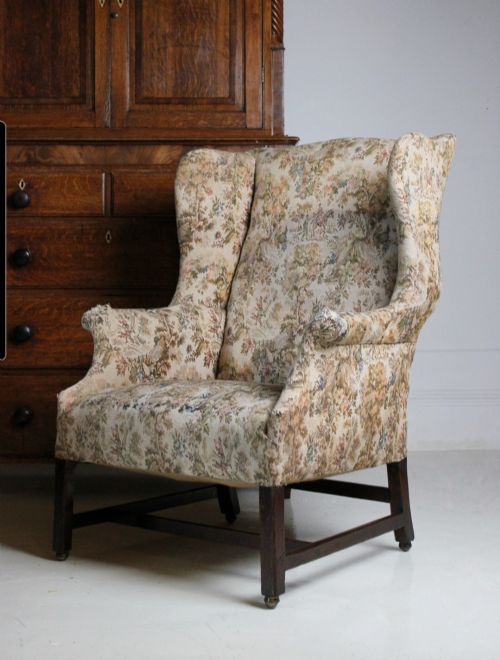
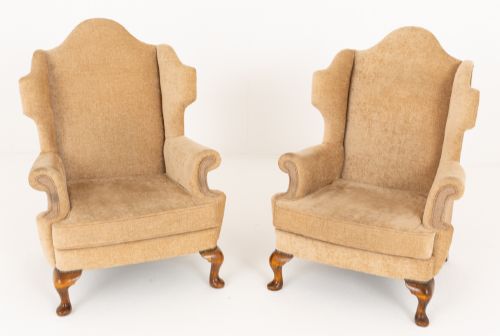
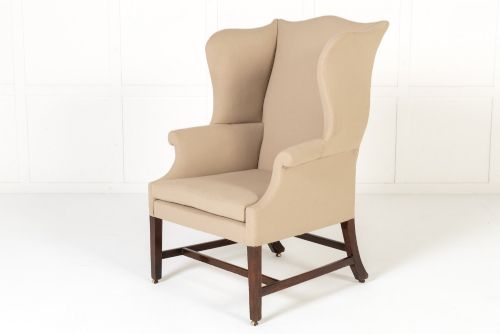
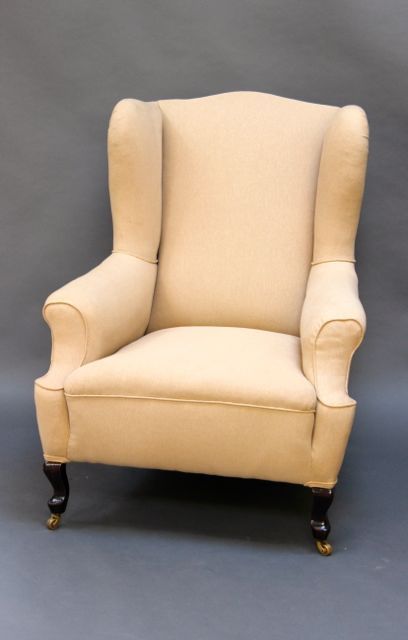
A beige wing chair is a high-backed armchair designed to shield the sitter from draughts, appearing here in forms from the 18th century through to the early 20th century. These pieces include early examples as well as later revivals built in the Georgian and Queen Anne styles.
The selection on this page centres on sturdy timber frames paired with neutral textile coverings, ranging from barrel-backed armchairs to large-scale library seating and reclining variants. Many pieces display traditional proportions with prominent side wings designed to trap heat around the head and shoulders.
Materials and construction
The foundational frames of these chairs rely on dense hardwoods such as mahogany and walnut, providing structural integrity for the high backs and projecting wings. Joinery techniques from these periods ensure stability across centuries of heavy domestic use.
Upholstery methods incorporate traditional textile coverings like linen, Hessian, and tapestry fastened over supportive stuffing. Brass accents appear on specific structural or decorative elements depending on the period.
The site listings feature mahogany, walnut, and brass alongside textiles including linen, Hessian, and tapestry across the 18th and 19th centuries.
Assessing quality
Quality in these chairs rests upon the proportion and line of the wooden frame, particularly the sweep of the wings and the stance of the cabriole or straight legs. Finer examples maintain crisp carving along the mahogany or walnut woodwork without softening of detail.
The integration of the upholstery dictates the overall finish, where tightly fitted linen or tapestry enhances the architectural silhouette of the chair. Superior pieces retain balanced padding that supports the sitter without distorting the original proportions of the back.
The Beige Wing Chair Glossary
- Wingback
- An armchair featuring projecting side panels designed originally to deflect draughts from the fireplace. These wings form a distinctive profile characteristic of traditional library and reading chairs.
- Cabriole leg
- A furniture leg that curves out and then in, mimicking an animal's limb. This form frequently terminates in a pad or claw foot on period seating.
- Mahogany
- A durable tropical hardwood prized for its rich grain and structural strength. Eighteenth-century cabinet makers used this material extensively for high-end chair frames.
- Hessian
- A coarse woven fabric typically utilised as a sturdy foundation material beneath top upholstery. It provides essential support within traditional layering techniques.
Beige Wing Chair: Frequently Asked Questions
What is a wing chair?
A wing chair is an upholstered armchair featuring high side panels attached to the arms and back. These panels were originally designed to protect sitters from cold draughts in unheated rooms.
Over time, the form evolved into a staple piece for libraries and drawing rooms, valued for privacy and ergonomic support.
How do I date a wing chair?
Dating relies on examining the timber frame, leg style, and construction methods underneath the upholstery. Eighteenth-century pieces typically feature hand-carved mahogany or walnut with specific stretcher arrangements.
Later Victorian and 1920s revivals often adopt heavier proportions or machine-assisted joinery while imitating earlier Georgian or Queen Anne aesthetics.
Where should I place a wing chair?
These chairs suit quiet corners, reading spaces, or beside a fireplace where their high backs and wings can serve their original purpose. Their substantial presence also makes them effective anchor pieces in larger living rooms.
Neutral upholstery allows them to integrate easily alongside diverse interior colour schemes and period or modern furnishings.
What fabrics are used on these chairs?
Traditional upholstery materials include heavy linen, tapestry, and woven textiles paired with Hessian internal foundations. These fabrics offer durability while complementing the timber framework.
Many surviving pieces have been recovered in later textiles that reflect the tastes of subsequent generations while preserving the original internal build.