
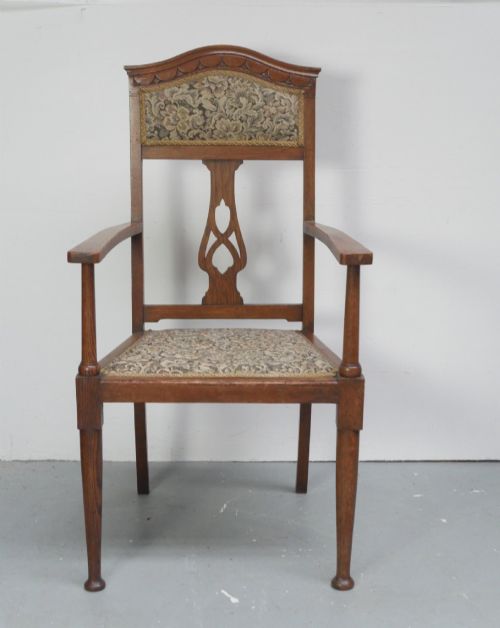
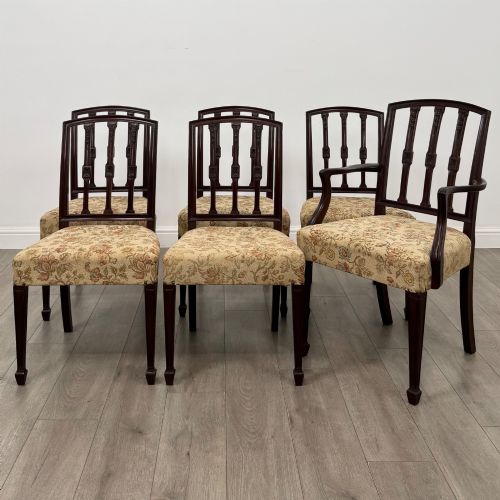
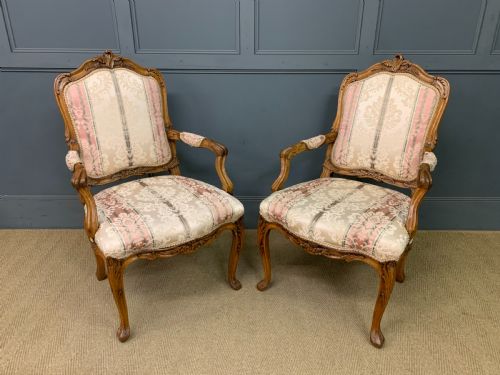
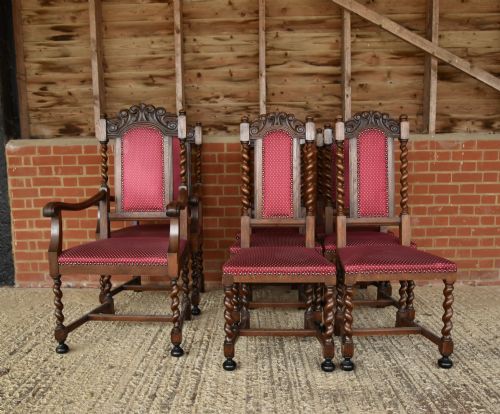
Upholstered Seat Carver Chairs
These upholstered seat carver chairs bring proper presence to a room, offering sturdy elbow support and a comfortable seat for long dining sessions.
Upholstered Seat Carver Chairs
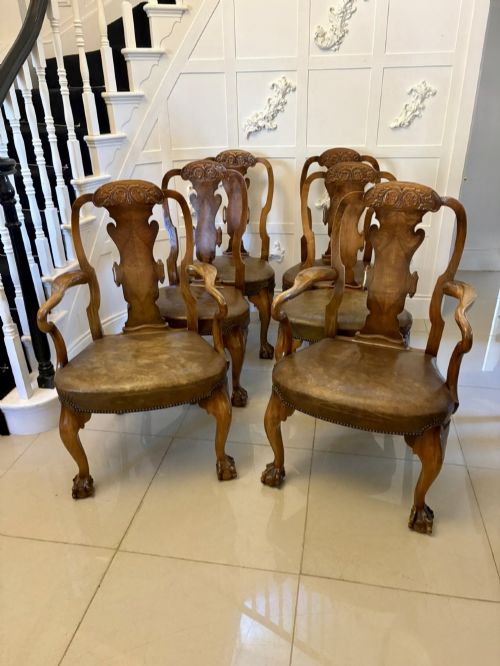
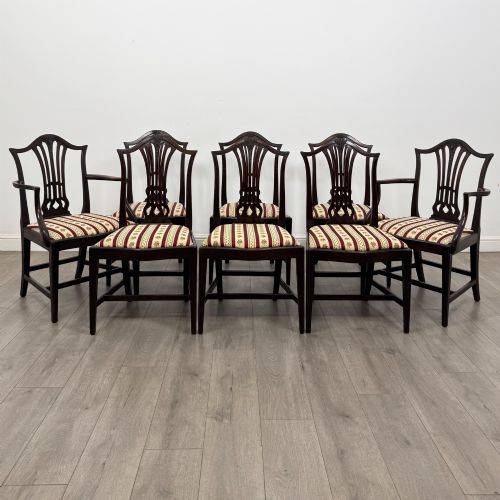
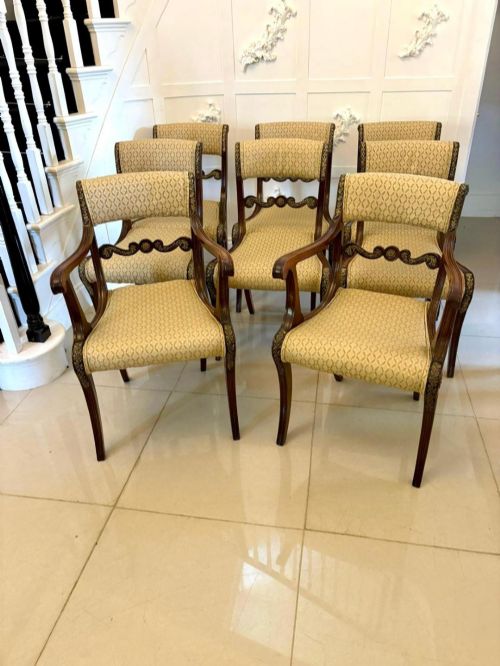
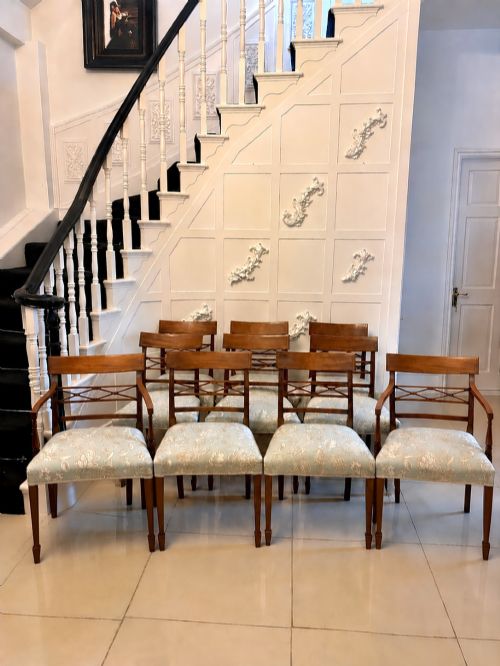
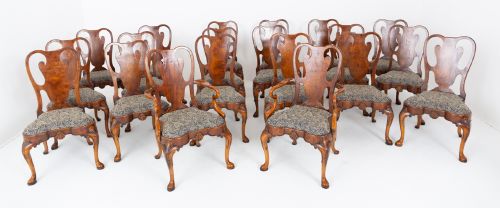
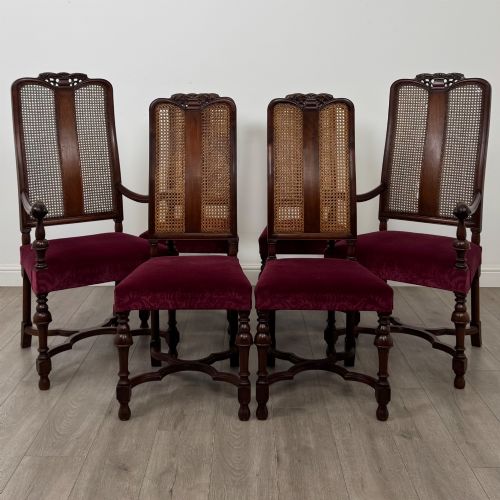
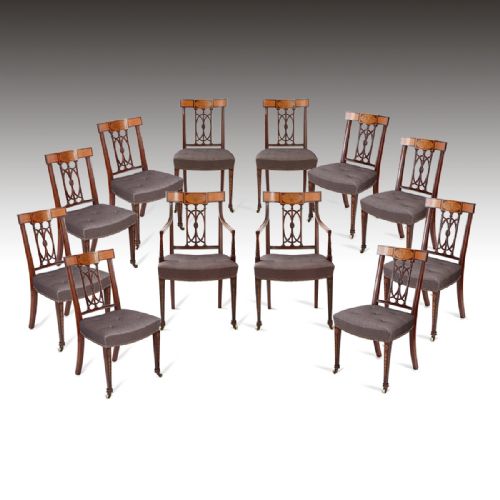
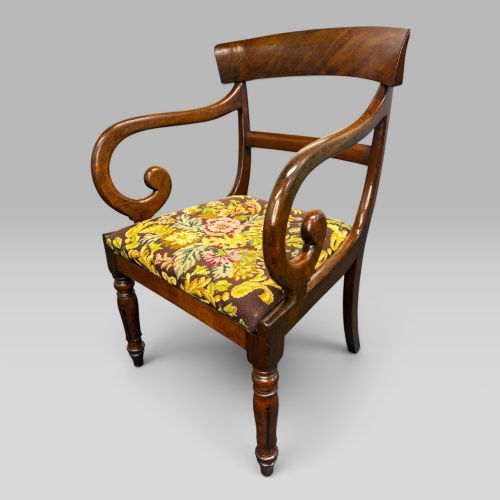
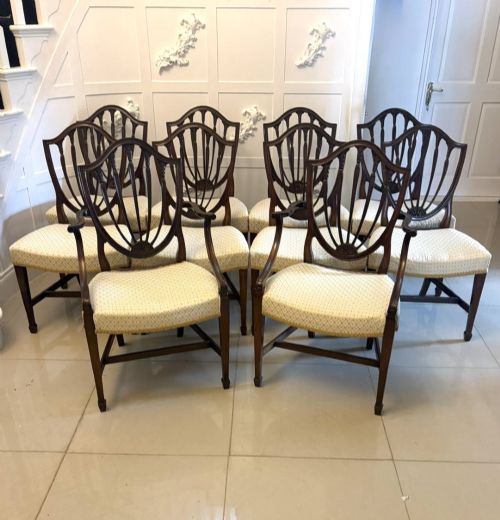
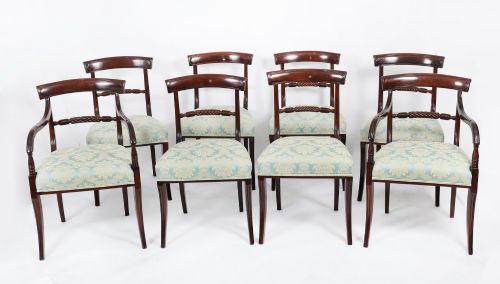
Upholstered seat carver chairs serve as the larger armchairs that traditionally anchor either end of a dining table. When exploring this selection, buyers encounter single pieces alongside larger sets that include matching armchairs paired with standard dining chairs. The forms span multiple decades and stylistic revivals, giving rooms a structured and traditional layout.
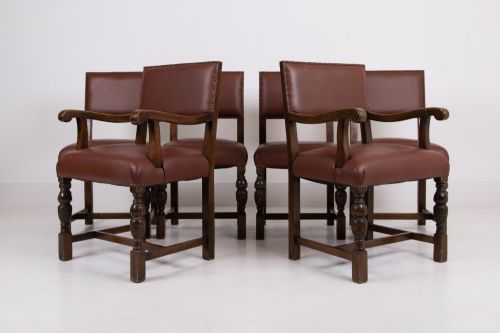
The materials and periods represented here reach from the nineteenth century into the twentieth century. Mahogany and walnut appear frequently as primary timbers, alongside oak, maple, satinwood and elm. Workshops employed styles ranging from Regency and Victorian to Georgian Revival, Hepplewhite style, and Chippendale style.
These armchairs range from single reading seats to expansive dining sets numbering up to twenty pieces. Buyers often select them to complement existing dining furniture or to use independently as statement armchairs in a study or hallway.
Construction and Materials
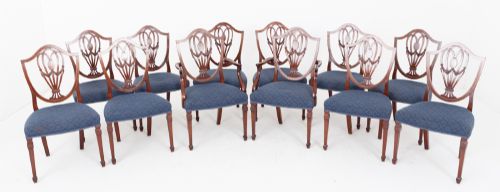
Cabinetmakers constructed these frames using dense hardwoods such as mahogany, walnut, and oak, often shaping the timber into shield backs, curved rails, and supportive armrests. Joinery relied on traditional mortise and tenon techniques to ensure stability under daily use.
Seat pads and elbow rests incorporated various textiles, ranging from standard upholstery fabric and leather to patterned coverings. Brass accents occasionally reinforced structural points or decorated the framework.
Listings feature mahogany, walnut, and oak across Victorian, Edwardian, and Regency periods.
Assessing Quality
The distinction between standard examples and superior pieces rests on the precision of the timber carving and the integrity of the frame construction. Solid hardwoods with well-defined grain patterns and crisp carving along the back splats and arm supports command greater attention.
Proportion and balance dictate the overall success of the piece, particularly in revival styles where the execution of traditional forms must remain harmonious. Original elements and sound structural joinery preserve the longevity of the armchair.
Maple and Co·Wheelers of Arncroach
The Upholstered Seat Carver Chairs Glossary
- Carver chair
- An armchair designed to sit at the head of a dining table, featuring supportive arms. These pieces match or complement the side chairs in a larger dining set.
- Shield back
- A chair back shaped like a heraldic shield, popularised in the eighteenth century and revisited in later revival periods. This form often includes carved vertical splats.
- Elbow armchair
- An alternative term for a carver chair, highlighting the low resting position for the arms. Such chairs provide additional comfort during extended seating.
- Satinwood
- A durable hardwood featuring a lustrous, golden grain often utilised for fine cabinetwork and decorative dining furniture. It brings a bright finish to the piece.
Upholstered Seat Carver Chairs: Frequently Asked Questions
How do I use carver chairs?
Carver chairs typically sit at the head and foot of a dining table to frame the seating arrangement. They also function independently as reading or desk chairs in a study.
The supportive arms provide extra comfort, making them suitable for prolonged seating during dinner parties or daily meals.
What periods do these chairs cover?
The listings span from the nineteenth century into the early twentieth century. Pieces include Victorian, Edwardian, and Regency examples, alongside later revival styles.
Craftsmen during these eras drew inspiration from earlier Georgian designs, producing both formal dining suites and individual armchairs.
Are these chairs sold in sets?
Many listings offer sets that combine standard dining chairs with a pair of carver armchairs. Other entries feature individual armchairs or pairs intended for secondary rooms.
Reviewing the specific breakdown in each listing reveals the exact configuration of dining chairs and carvers available.
What timbers were commonly used?
Mahogany and walnut appear most frequently across the furniture frames, offering durable and rich surfaces. Oak, elm, satinwood, and maple also feature in various regional and revival pieces.
Timbers were often polished to highlight the natural grain, while some examples incorporate painted finishes.