




Upholstered Painted Dining Chairs
Upholstered painted dining chairs bring pattern and colour to a room, combining comfortable seats with decorative wooden frames.
Upholstered Painted Dining Chairs
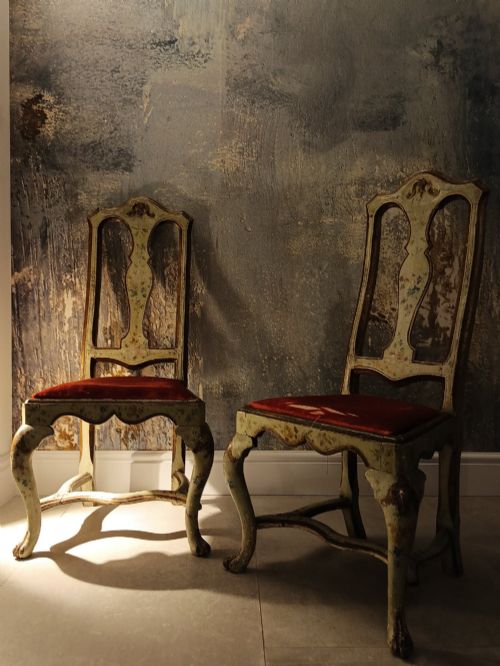
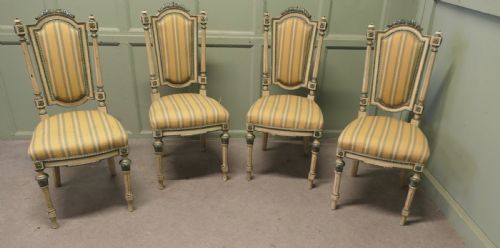
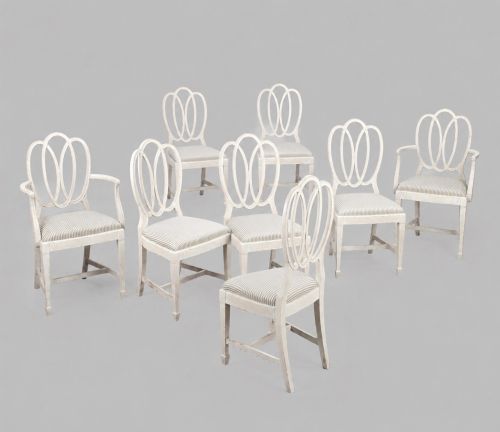
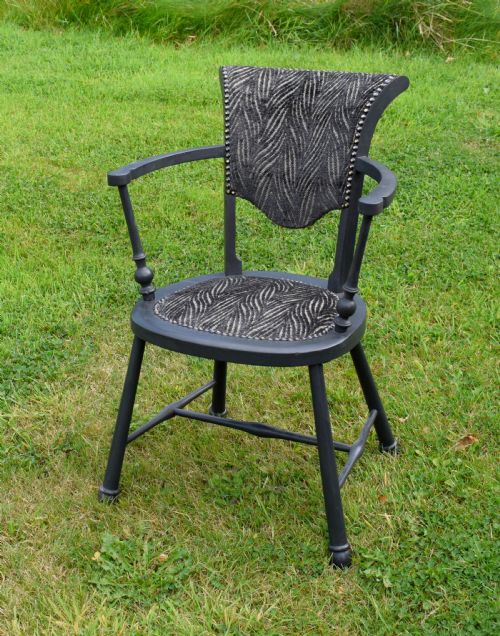
When you search for upholstered painted dining chairs, you encounter seating ranging from eighteenth century Italian designs to twentieth century revival pieces. The selection includes sets of chairs alongside pairs and individual salon or elbow chairs.
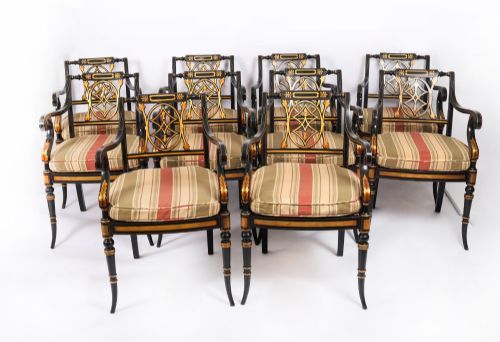
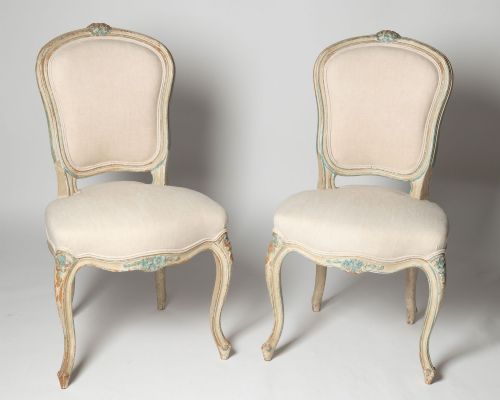
French and Gustavian influences appear frequently among the listings, alongside Regency styles and Queen Anne influences. Makers utilised beech and carved wood, applying painted, decorated, ebonised, or lacquered finishes.
The upholstered elements feature various textiles and fabrics, sometimes incorporating cane panels. These dining chairs serve both formal dining spaces and occasional seating needs.
Construction and Surface Finish
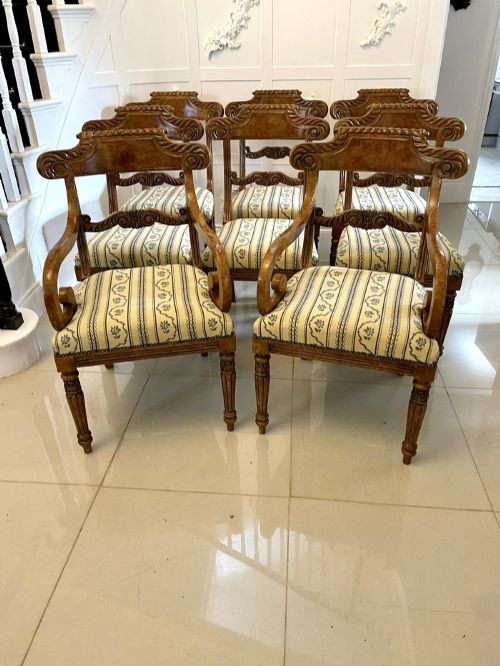
Craftsmen shaped frames from woods such as beech, employing carved wood techniques to achieve classical profiles like Louis XVI and Regency forms. Surface decoration involved applied paint, lacquer, or Japanning, sometimes mimicking faux birds-eye maple.
Upholstery work secured textiles and fabrics to the seats, occasionally integrating cane work into the wooden structures. Decorative detailing included floral painted motifs and gilded highlights.
Upholstered Painted Dining Chairs Retail Price Guide 2026
Typical asking prices for upholstered painted dining chairs among the pieces listed under this phrase on Sellingantiques today, from the lower quarter to the upper quarter. They describe what is for sale here now, not the wider market.
Faux birds-eye maple paintwork lets you enjoy exotic wood grain without a single actual tree leaving the European workshop.
Distinguishing Quality
The sophistication of the painted or lacquered decoration separates standard examples from finer pieces, particularly where hand-painted motifs or faux finishes show careful execution. The crispness of the carved wood details on frames like those in the Louis XVI or Regency styles indicates the maker's skill.
Cohesion within larger sets of chairs impacts desirability, as matching sets require uniform frames and consistent upholstery execution across multiple pieces.
The Upholstered Painted Dining Chairs Glossary
- Gustavian
- A Swedish adaptation of French neoclassical styles, characterised by pale painted finishes and restrained classical carving. This aesthetic brings a bright, orderly appearance to seating.
- Japanned
- A European imitation of East Asian lacquerwork, created using layered varnishes and often featuring metallic decoration. It provides a glossy, dark surface finish.
- Ebonised
- Wood treated to imitate ebony, usually through dark staining or painting. This finish creates a stark, formal look popular in Regency design.
- Elbow chair
- An armchair designed with low arms that accommodate a dining table. These pieces often sit at the head of a dining table.
- Faux birds-eye maple
- A painted finish designed to replicate the distinctive dotted grain of maple wood. Artisans applied this technique to decorative wooden frames.
Upholstered Painted Dining Chairs: Frequently Asked Questions
How do I clean the painted frames?
Dust the wooden surfaces gently with a soft, dry cloth to prevent accumulation. Avoid harsh chemical cleaners that might damage the painted or lacquered finish.
Test any mild cleaning solution on an inconspicuous area first. Keep moisture away from the joins and upholstered sections.
Are these chairs suitable for daily use?
Many of these chairs function well for everyday dining, provided the frame joints remain sturdy. Heavier use suits sturdier beech or hardwood frames better than delicate salon seating.
Check the stability of the legs and upholstery support periodically. Lighter occasional chairs suit sitting rooms or bedrooms rather than heavy family meals.
How do I identify French revival styles?
French revival pieces incorporate design elements from Louis XV or Louis XVI periods, such as fluted legs and carved floral motifs. Makers in the nineteenth and twentieth centuries reproduced these classical forms.
The use of gold paint or specific neoclassical symmetry often points to these later revival interpretations. Examine the wood ageing and construction methods to gauge the actual production era.
What is the difference between side chairs and elbow chairs?
Side chairs are built without arms, allowing them to tuck neatly under dining tables and save space. They make up the majority of standard dining sets.
Elbow chairs feature short arms for added support while seated. Pairs or individual elbow chairs often accompany larger sets of side chairs at a dining table.