






Vase Back Carved Chairs
Vase back carved chairs are seating with shaped splats, and you want them for their classic proportions and supportive timber forms.
Vase Back Carved Chairs
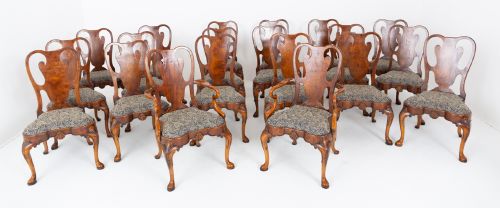
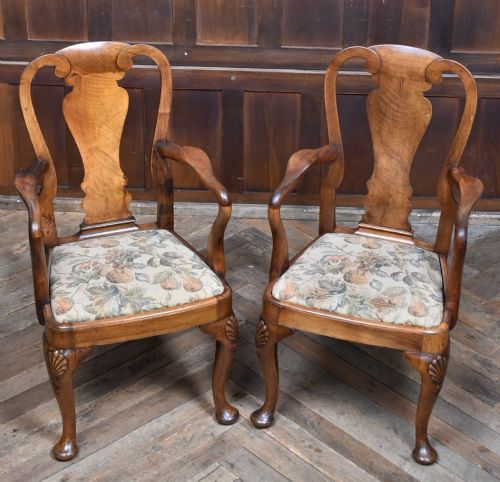
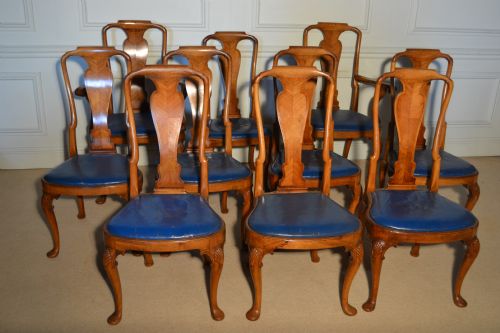
Vase back carved chairs are timber seats defined by a central vertical splat shaped like an earthenware vessel. When you search for vase back carved chairs on this page, you encounter dining chairs, armchairs, side chairs, settees, and desk chairs spanning multiple centuries.
The selections range from eighteenth-century examples to nineteenth-century and nineteen-twenties revivals. You will frequently find walnut and elm structures, often paired with fabric, textile, or leather upholstery on the seats.
Stylistic influences vary widely across the inventory, drawing heavily on Queen Anne, George I, George II, and Dutch Rococo design vocabularies. These pieces bring historical presence and structured wooden framing to a dining room or study.
Materials and construction
Makers relied primarily on walnut, burr walnut, elm, oak, and mahogany to build these robust frames. Timber selection dictated the structural integrity of the curved splats and legs.
Upholstery materials such as fabric, textile, and leather were integrated into seat pads to provide comfort. Painted wood surfaces also appear on selected revival examples from the twentieth century.
Vase Back Carved Chairs Retail Price Guide 2026
Typical asking prices for vase back carved chairs among the pieces listed under this phrase on Sellingantiques today, from the lower quarter to the upper quarter. They describe what is for sale here now, not the wider market.
Listings feature walnut, elm, oak, and mahogany timbers across pieces dated from the eighteenth century to the nineteen-twenties.
Assessing quality and execution
Quality rests in the fluidity of the timber carving along the vase-shaped splat and the precision of the joinery. Superior examples exhibit harmonious grain patterns and crisp execution of period details like cabriole legs.
The integration of the upholstery with the wooden frame marks another tier of distinction. Finer pieces maintain balanced proportions between the supportive backrest and the underframe.
Charles Tozer
The Vase Back Carved Chairs Glossary
- Splat
- The vertical wooden strip down the centre of a chair back. In these pieces, it takes the characteristic outline of a vase.
- Cabriole leg
- A furniture leg that curves out and then in, resembling the leg of an animal. This form appears frequently on walnut and mahogany examples.
- Marquetry
- Decorative inlay work using various woods to create intricate patterns. This technique surfaces on eighteenth-century Dutch items.
- Settee
- A long wooden seat with a back and arms, accommodating multiple people. Several listings include chairback variations of this form.
Vase Back Carved Chairs: Frequently Asked Questions
How do I date these chairs?
Dating relies on timber choice, construction methods, and stylistic cues like cabriole legs or marquetry. Eighteenth-century pieces display different joinery traditions compared to nineteen-twenties revivals.
Examining the underside and the wear on the wood helps clarify the period of origin.
Are these chairs comfortable for dining?
Many of these chairs incorporate upholstered seats covered in fabric, textile, or leather. The curved vase splat is ergonomically shaped to support the spine during extended seating.
Armchair and settee variations offer additional support for relaxed dining or parlour use.
How do I care for antique wood?
Maintain walnut and mahogany surfaces by keeping them away from direct sunlight and sudden temperature shifts. Regular dusting with a soft cloth preserves the original polish.
Avoid chemical polishes that can degrade historical finishes over time.