






Upholstered Ottoman Box
An upholstered ottoman box offers hidden storage beneath a padded seat, combining utility with period charm.
Upholstered Ottoman Box
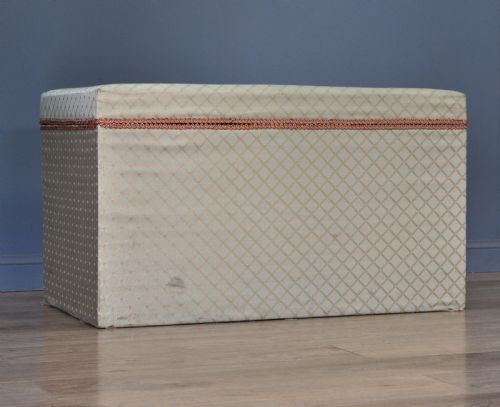
When you search for an upholstered ottoman box, you find a practical piece of furniture designed for seating and concealed storage. These items serve multiple purposes, functioning as footstools, blanket boxes, or daybeds depending on their construction.
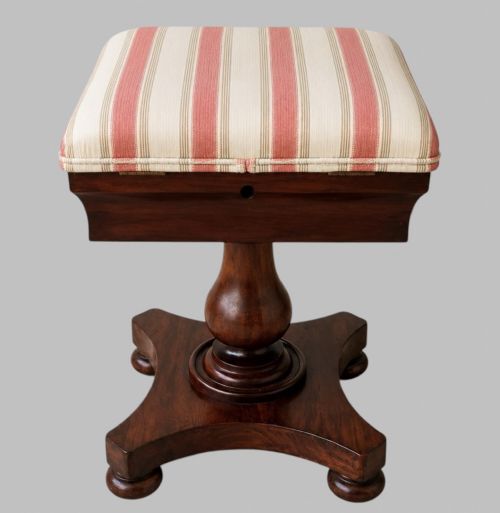
The pieces listed here predominantly span the Victorian and Regency periods, alongside early twentieth-century examples. You will encounter forms ranging from mahogany sewing box stools to large country house storage chests.
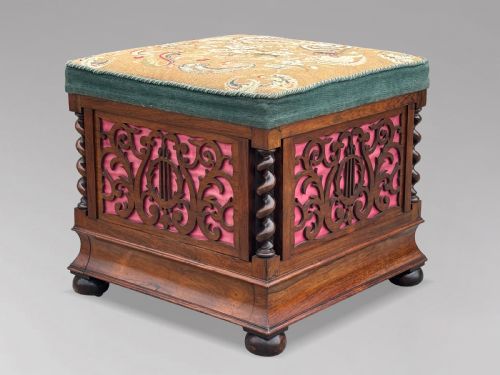
Materials such as mahogany, rosewood, pine, and walnut provide the structural framework for these storage seats. Upholstery ranges from simple leather and fabric to intricate needlework tops.
How they were made
Cabinetmakers constructed the main bodies of these storage pieces using timbers like mahogany, rosewood, and pine, often incorporating brass details or lions paw feet. Joinery techniques ensured sturdy boxes capable of supporting daily use as seats.
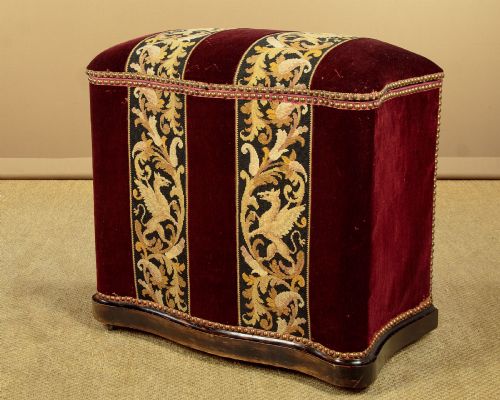
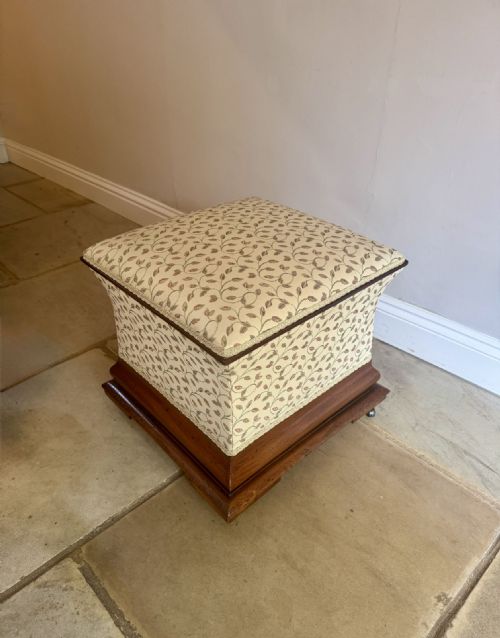
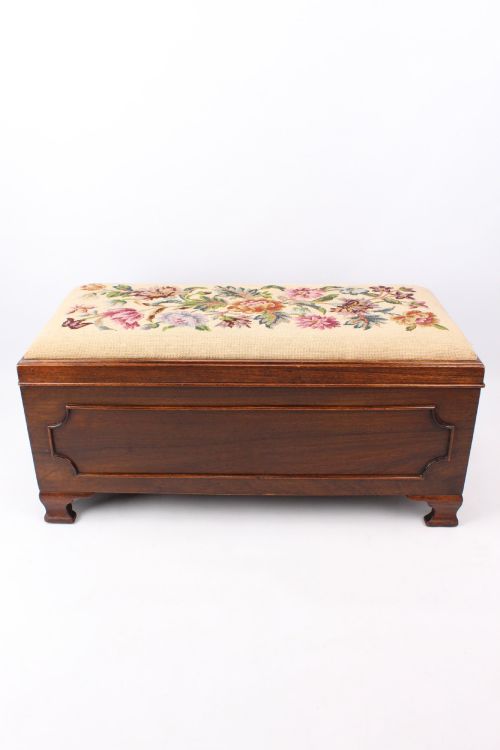
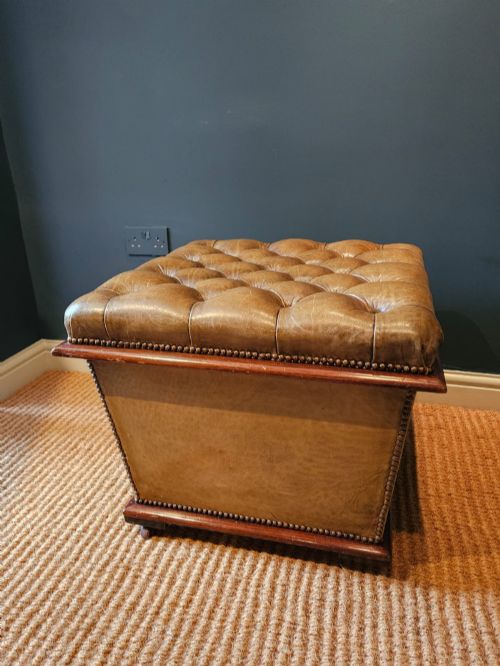
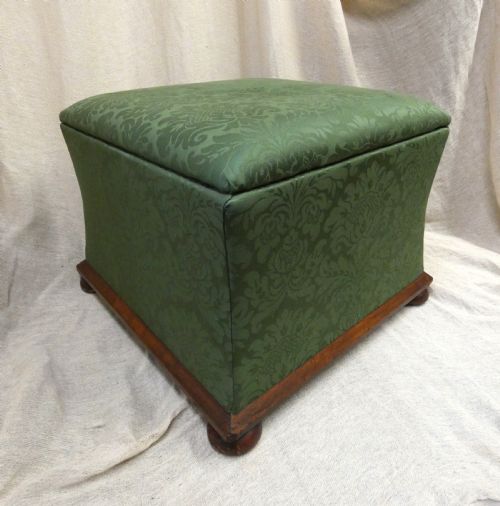
The upper sections combined internal storage compartments with padded lids upholstered in fabric, leather, velvet, or gros-point needlework. Deep buttoning and specialised textiles like Liberty fabric appeared on later or more decorative examples.
Upholstered Ottoman Box Retail Price Guide 2026
Typical asking prices for upholstered ottoman box among the pieces listed under this phrase on Sellingantiques today, from the lower quarter to the upper quarter. They describe what is for sale here now, not the wider market.
Certain nineteenth-century models double as daybeds, proving that Victorians took their daytime reclining very seriously indeed.
What varies in quality
The refinement of the timber frame and the choice of secondary woods set finer examples apart from utility items. Superior pieces display carefully figured mahogany or rosewood veneers and well-carved details.
The complexity of the internal mechanism, such as reversible box ottoman daybed frames or fitted work box interiors, marks a higher standard of craftsmanship. Original upholstery methods and high-grade textile choices also elevate the status of an individual piece.
Hallett & Sons
The Upholstered Ottoman Box Glossary
- Ottoman
- A padded seat or footstool with no back or arms, typically featuring a hinged lid that opens to reveal storage space inside.
- Gros-point
- A type of coarse needlepoint stitch often used historically for durable upholstery on chair and stool seats.
- Canterbury
- A low multi-partitioned stand or box traditionally used for holding sheet music or books, occasionally adapted into stool forms.
- Kist
- A traditional regional term for a heavy wooden storage chest or trunk.
- Deep buttoning
- An upholstery technique where buttons are pulled tight through the padding to create a diamond pattern.
Upholstered Ottoman Box: Frequently Asked Questions
What is an upholstered ottoman box?
An upholstered ottoman box is a dual-purpose item of furniture that combines a seated or footrest top with a hollow storage interior beneath.
Historically used in bedrooms, living rooms, and dressing areas, these pieces provided discrete space for blankets, sewing supplies, or personal items.
How do I date a Victorian ottoman?
Dating relies on observing the primary timber, secondary woods, hardware, and style influences such as Gothic Revival or Regency survivals.
Examining the construction methods inside the storage compartment and the style of the upholstery trim also helps place the piece within the nineteenth century.
Where were these boxes used?
These boxes found placement across various rooms, including drawing rooms as piano stools, bedrooms as blanket chests, and parlours as work tables.
Their ability to conceal clutter made them popular in both modest homes and large country houses.
Are the upholstery fabrics original?
Some pieces retain period textiles like gros-point needlework or leather, while others have been recovered in later fabrics or contemporary cloths like Liberty prints.
The choice of textile often reflects either the original nineteenth-century taste or a subsequent twentieth-century restoration.