



Victorian Square Ottoman
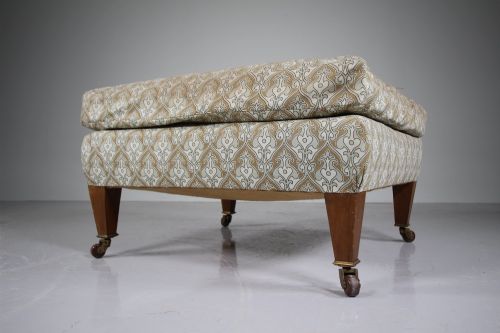
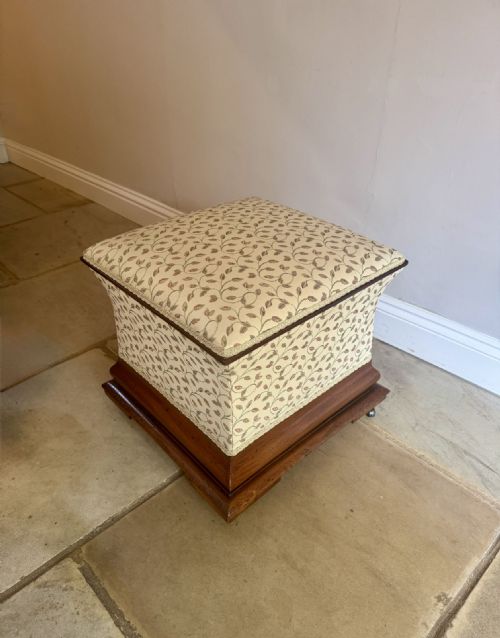
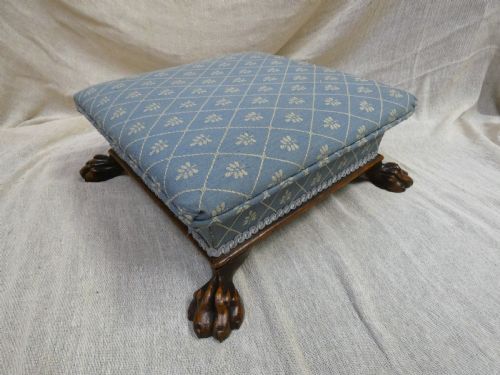
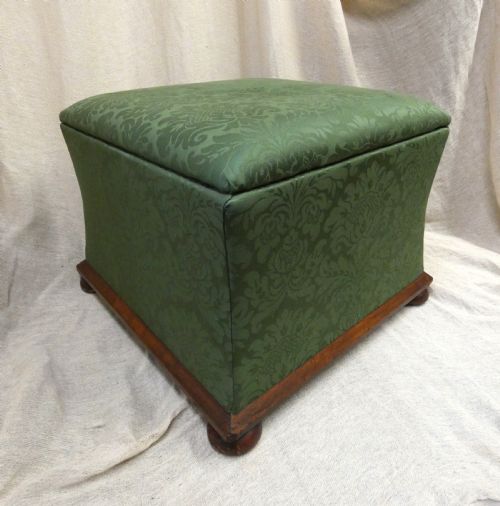
These victorian square ottoman pieces are substantial upholstered seats and footstools built to anchor a room, prized for their versatile comfort and sturdy timber frames.
Victorian Square Ottoman
When searching for a victorian square ottoman, a buyer examines low upholstered seating designed for the nineteenth-century interior. These pieces function as footstools, dressing stools, and centre stools depending on their scale and height.
The versions most commonly met on this page combine a low wooden frame with fully upholstered tops, often featuring buttoned leather or needlepoint fabric. Their forms range from simple footstools to larger pieces associated with English country house style.
Origins and periods span the nineteenth century, including specific dates such as 1860 and 1880, alongside revival designs like William and Mary. The underlying frames utilise timbers such as mahogany, walnut, oak, and rosewood.
How they were made
Frames rely on traditional cabinet timbers including mahogany, walnut, oak, and rosewood, shaped with carved details like spiral turning. Brass is occasionally integrated into the construction of these substantial seating forms.
Upholstery defines the character of the piece, utilising fabrics, needlepoint, and buttoned leather secured over padded foundations. Master workshops executed these builds to withstand daily domestic use across decades.
Victorian Square Ottoman Retail Price Guide 2026
Typical asking prices for victorian square ottoman among the pieces listed under this phrase on Sellingantiques today, from the lower quarter to the upper quarter. They describe what is for sale here now, not the wider market.
Listings demonstrate a strong presence of nineteenth-century pieces utilising mahogany, walnut, and buttoned leather.
What varies in quality
The distinction between standard and superior pieces rests on the weight of the timber and the crispness of any carved woodwork, such as spiral legs. Finer examples display thoughtful proportions and robust joinery that stabilizes the low frame.
Quality also shows in the choice of covering, where dense buttoned leather or finely worked needlepoint demonstrates superior craftsmanship compared to simpler fabric upholstery. The integrity of the internal padding determines the longevity of the top.
Howard & Sons
The Victorian Square Ottoman Glossary
- Ottoman
- A low upholstered seat or footstool without a back or arms, designed for resting feet or casual sitting.
- Needlepoint
- Canvas worked with stitches in wool or silk to create decorative patterns, frequently seen on Victorian stool tops.
- Spiral carved
- Wood turned into a twisting rope pattern, popular on the legs of nineteenth-century seating.
- Buttoned leather
- Upholstery technique where leather is pulled deep into the padding with buttons to form a diamond pattern.
- Centre stool
- A large freestanding stool intended to sit in the middle of a room rather than against a wall.
Victorian Square Ottoman: Frequently Asked Questions
What is a victorian square ottoman used for?
These pieces serve primarily as footstools or low occasional seating in living rooms and dressing areas. Their generous proportions also allow them to function as informal coffee tables when topped with a tray.
Historically, they provided comfort near a fireplace or at the foot of a bed. Their sturdy construction supports heavy daily use in traditional interiors.
How do I date a victorian square ottoman?
Dating relies on observing the timber species, joinery methods, and upholstery style characteristic of the nineteenth century. Specific design revivals, such as William and Mary influences, offer further clues to the period of manufacture.
Examining the underside reveals construction details that distinguish mid-nineteenth-century work from later productions. Reference dates in the listings help anchor the piece within the Victorian era.
Are these ottomans comfortable for daily sitting?
Most pieces feature padded upholstered tops designed for resting feet or brief seating rather than slouching. The firmness depends on the original padding materials and subsequent reupholstery work.
Buttoned leather and deep cushioning provide a resilient surface that withstands regular use. Their low height makes them natural companions to armchairs and sofas.