
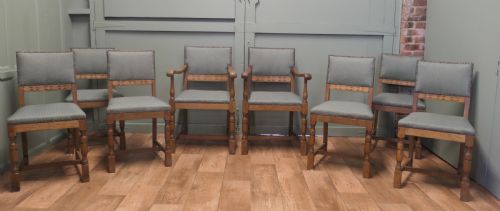


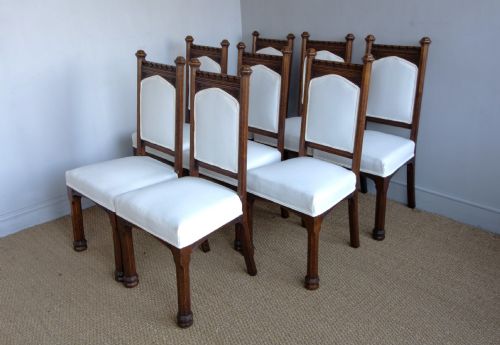
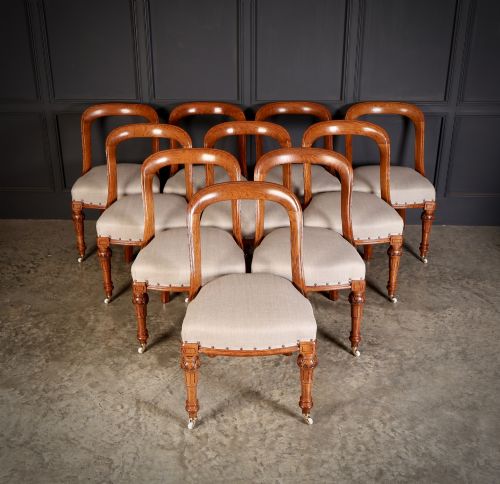
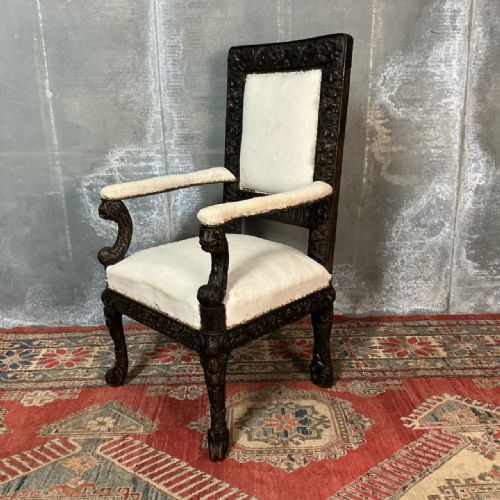
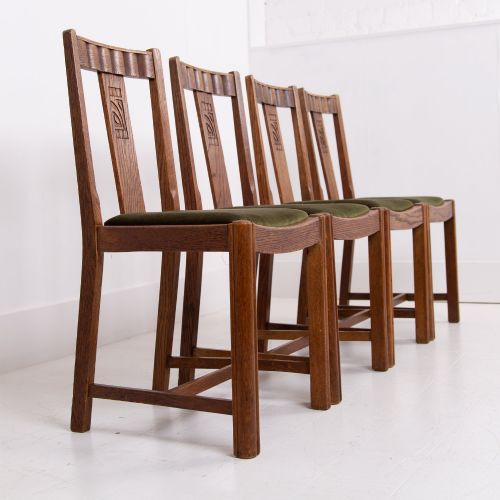
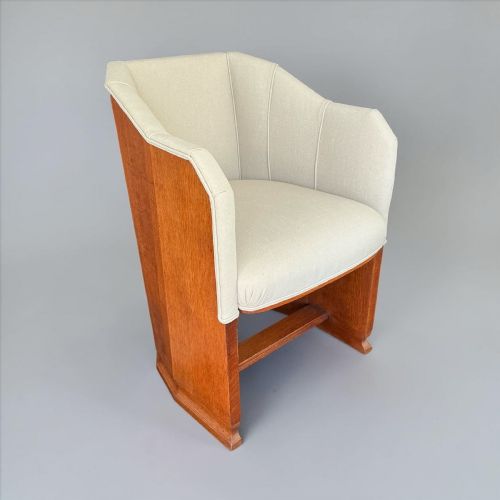
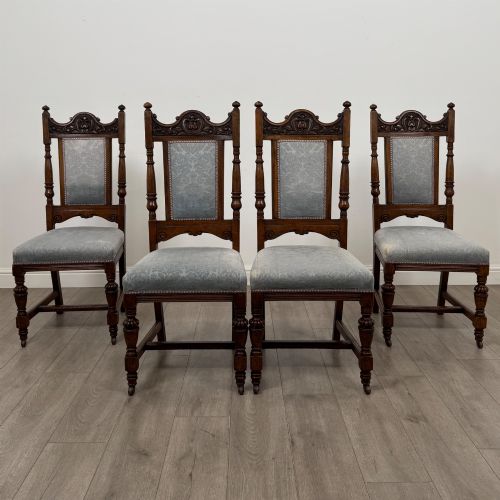
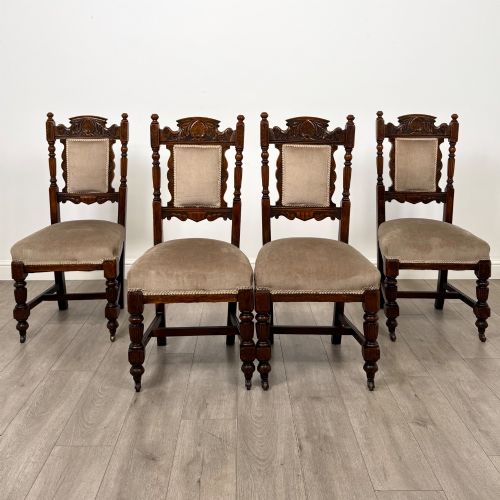
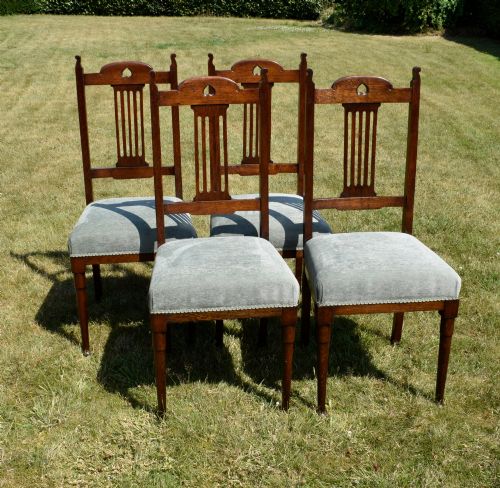
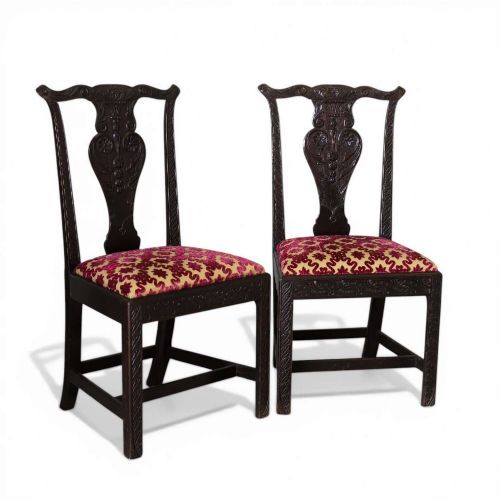
Upholstered Oak Side Chairs
These upholstered oak side chairs bring solid timber frames and padded seats together across centuries of British design.
Upholstered Oak Side Chairs
When you search for upholstered oak side chairs, you encounter seating built primarily from heavy timber and finished with textile, leather, or velvet coverings. The selection spans distinct eras, from early styles through the Victorian period and into Edwardian and Art Deco phases.
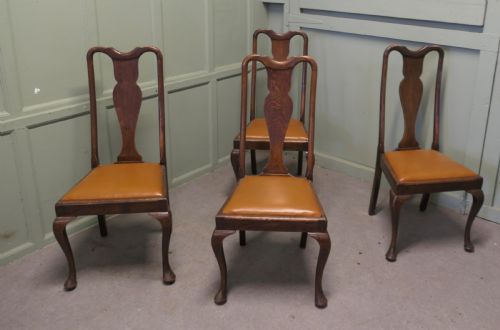
You are most likely to meet dining chairs and side chairs grouped in sets, alongside individual hall chairs and occasional seating. The aesthetic draws on various historic revivals, including Gothic, Jacobean, and Queen Anne interpretations, alongside characteristic Arts and Crafts movement pieces.
How they were made
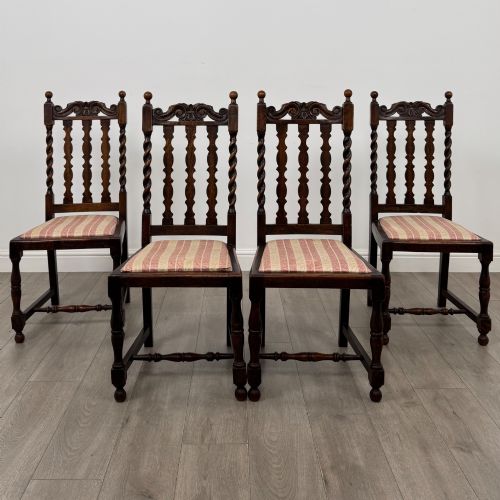
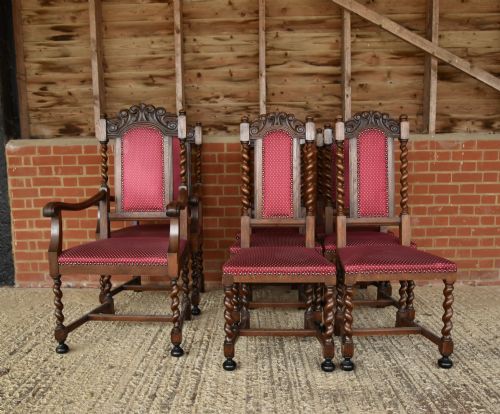
Frames rely on sturdy oak construction, often shaped through turning techniques such as barley twist and bobbin turning, or formed with carved high backs. Joinery secures the upright supports to the seats and rails.
Upholstery materials include leather, velvet, brass studding, and assorted textiles, fixed over padding to provide a functional seat. Bleached oak finishes and golden oak tones appear alongside darker traditional surfaces.
Oak is the dominant frame material, paired with fabrics, leather, velvet, and brass.
What varies in quality
The degree of hand carving on the oak frames separates standard production from finer workshop output, particularly in decorative details like floral leaf carving. Timber selection also matters, with dense golden oak or figured grain holding more visual weight.
The integrity of the construction and the historical accuracy of the revival style dictate the standing of a piece. Original upholstery treatments and established maker attribution further elevate specific examples above standard utility seating.
Bruce Talbert·Gillows of Lancaster·Liberty & Co·John Taylor & Son
The Upholstered Oak Side Chairs Glossary
- Barley twist
- A woodworking technique where timber is turned into a helical screw shape, popular in 19th-century furniture. This decorative profiling appears frequently on chair legs and stretchers.
- Bobbin turning
- A form of turned woodwork featuring a series of rounded spheres resembling spools or bobbins threaded together. It defines specific Victorian and Edwardian chair designs.
- Gothic Revival
- An architectural and design movement drawing inspiration from medieval forms, pointed arches, and heavy structural elements. Pieces in this style often feature high carved backs.
- Arts and Crafts
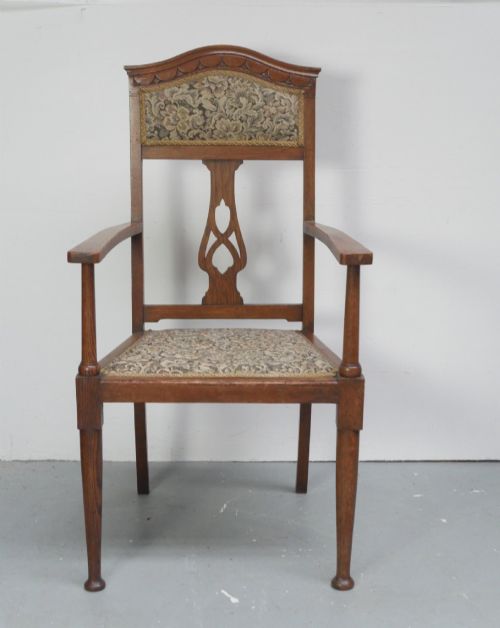
- A design philosophy prioritising traditional craftsmanship, plain materials, and structural honesty over mass production. Chairs from this movement often display golden oak frames and simple upholstered pads.
- Side chair
- A small, lightweight chair designed without arms, intended primarily for dining or placement against a wall. These form the majority of seated sets.
Upholstered Oak Side Chairs: Frequently Asked Questions
How do I date an oak chair?
Dating relies on identifying the prevailing style, construction methods, and tool marks visible on the timber frame. Stylistic revivals often mimic earlier centuries, so examining joinery helps clarify the actual period of manufacture.
Matching the recorded materials and turning styles against documented periods provides a reliable timeframe for each piece.
Are these chairs suitable for daily dining?
Most side chairs and dining chairs in these listings were built for functional domestic use around a table. Their robust oak frames handle regular seating when the structure remains sound.
Checking the stability of the joints ensures the timber supports everyday activity without strain.
What is the difference between side chairs and armchairs?
Side chairs lack armrests, making them compact enough to tuck neatly around a dining table or line a hallway. Armchairs feature enclosing supports for the arms, offering a more substantial profile for fireside or library placement.
Both forms utilise oak frames and upholstered pads, but serve distinct functional roles in historic rooms.
How do revival styles affect the look?
Revival designs borrow motifs from earlier eras, such as Jacobean twist turnings or Queen Anne curves, applied using the manufacturing techniques of the 19th or early 20th century. This creates pieces that look historic while fitting later domestic interiors.
Recognising these aesthetic layers helps distinguish genuine early periods from later interpretations.