
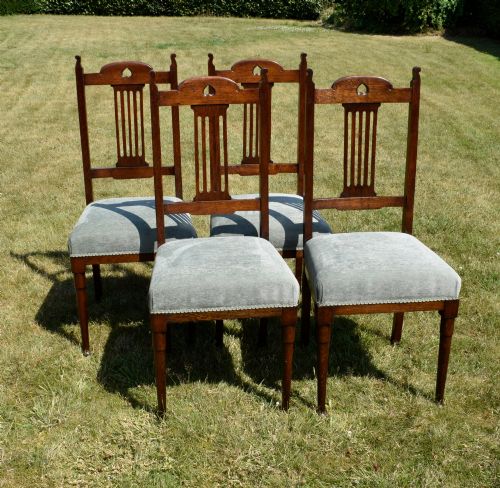
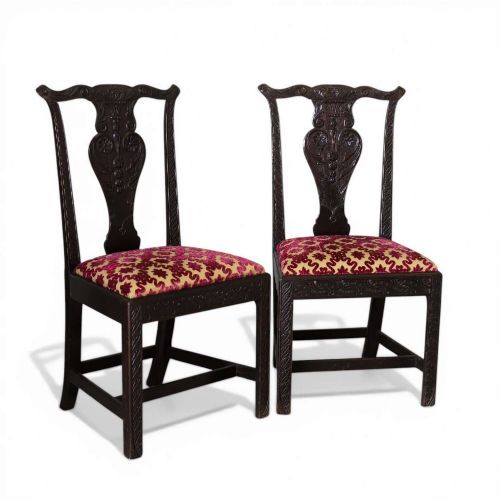
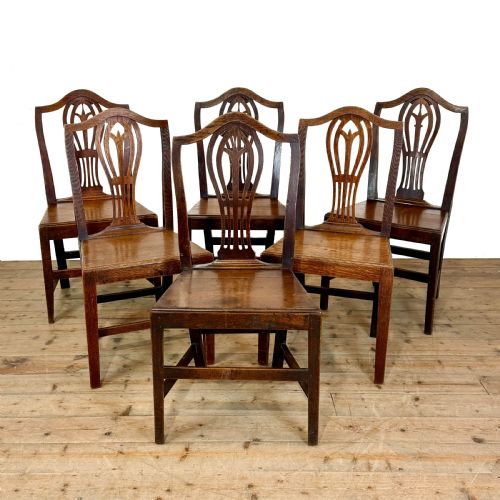


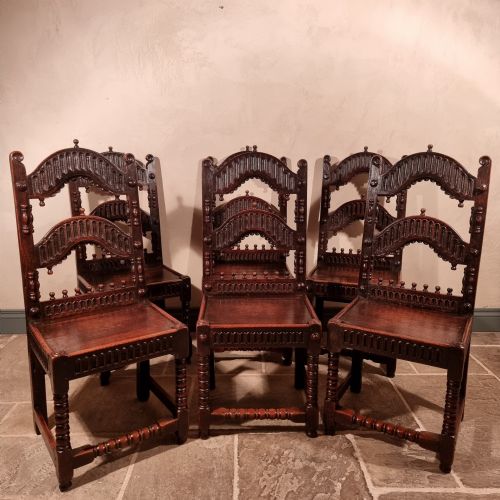


Period Style Oak Chairs
Period style oak chairs offer sturdy frames and rich grain that anchor a room with enduring presence.
Period Style Oak Chairs
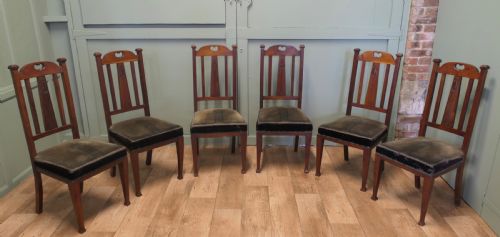
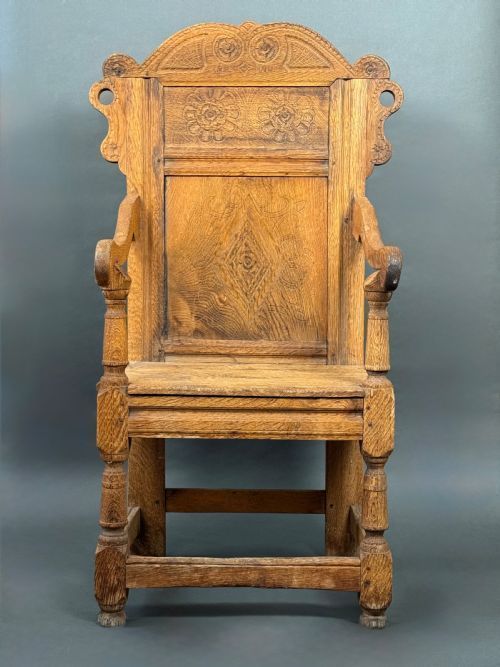
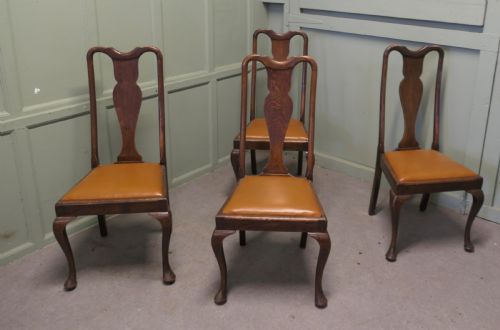
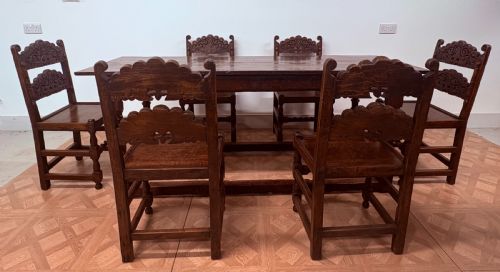
Period style oak chairs span multiple centuries, ranging from seventeenth-century wainscot forms and backstools to nineteenth-century revivals and Arts and Crafts sets. Buyers encounter everything from single carved armchairs to matched sets of dining chairs meant for daily use.
The selection leans heavily toward classic English and regional designs, including Yorkshire, Derbyshire, and Carolean styles alongside later Queen Anne and Georgian interpretations. These seating options suit traditional dining rooms, hallways, and studies where robust timber construction is valued.
Materials and construction
Cabinetmakers built these pieces primarily from solid oak, utilising its dense grain and durability for load-bearing legs, stretchers, and carved backs. Joinery relied on traditional pegged mortise and tenon joints to withstand decades of regular sitting.
Seating areas frequently incorporated leather, velvet, upholstery fabric, or tapestry, sometimes paired with metal hardware or supportive webbing. Later Arts and Crafts examples often highlighted the natural timber finish alongside exposed joints and hand-beaten metal elements.
Listings feature oak chairs spanning the seventeenth, eighteenth, and nineteenth centuries, alongside Arts and Crafts and revival pieces.
Judging quality
The distinction between ordinary and exceptional examples rests in the crispness of the hand-carved details and the integrity of the original timber. Superior pieces retain their structural rigidity without excessive modern reinforcement, showing balanced proportions and harmonious grain patterns across the set.
Original surface patination and period upholstery treatments elevate a piece above standard later reproductions. Subtle variations in turning, joinery precision, and the depth of relief carving indicate the skill of the original workshop.
The Period Style Oak Chairs Glossary
- Wainscot chair
- A heavy wooden armchair with a solid panel back, popular during the seventeenth century. This form provided solid protection from draughts in early homes.
- Backstool
- An early form of upholstered or wooden single chair without arms, serving as a precursor to the modern dining chair. These items typically feature high, straight backs.
- Carolean style
- Furniture design associated with the reign of Charles II, characterised by rich carving, scrollwork, and turned stretchers. Such pieces often display lively baroque motifs.
- Splatt
- The central vertical strip of wood in the back of a chair, connecting the crest rail to the seat. Makers often shaped or pierced this element for decorative effect.
- Stretcher
- A horizontal wooden rod connecting the legs of a chair to provide structural stability. Turned stretchers are common in seventeenth and eighteenth-century seating.
Period Style Oak Chairs: Frequently Asked Questions
How do I clean oak chairs?
Dust surfaces regularly with a soft, dry cloth to prevent dirt accumulation.
Apply a quality beeswax periodically to nourish the timber and maintain a gentle sheen.
Can I use these for daily dining?
Solid construction allows most of these chairs to handle regular daily use around a dining table.
Check that joints remain firm before seating guests for extended periods.
What is a wainscot chair?
A wainscot chair is a sturdy wooden armchair featuring a solid panelled back and arms.
Originating in the seventeenth century, it served as a primary seat of honour in the home.
How do I spot a revival piece?
Revival chairs from the nineteenth century often copy earlier seventeenth-century styles like Carolean or Derbyshire.
Machine tool marks, timber shrinkage patterns, and specific hardware clues help distinguish copies from originals.