
Upholstered Footrest Stool
An upholstered footrest stool supports tired feet and brings low, portable comfort to a fireside or dressing room.
Upholstered Footrest Stool
When you search for an upholstered footrest stool, you encounter low seating designed primarily to support the feet or serve at a dressing table. The selections span the nineteenth century, the Victorian era, the Edwardian period, and Regency times, alongside later revivals.
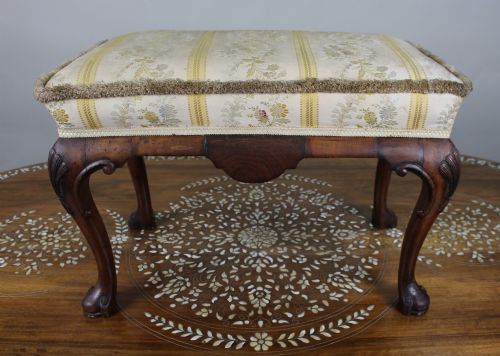
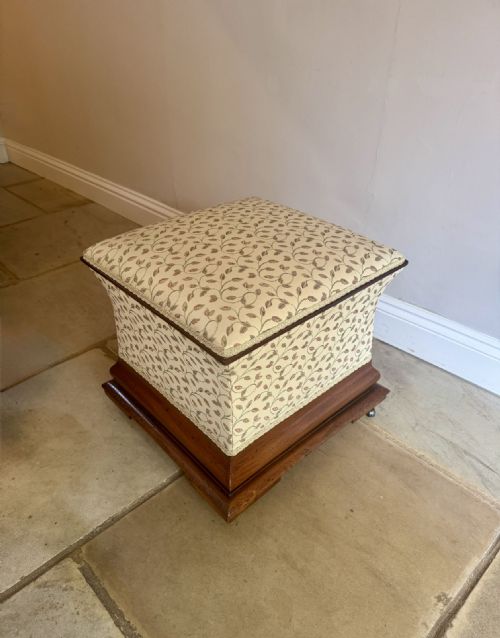
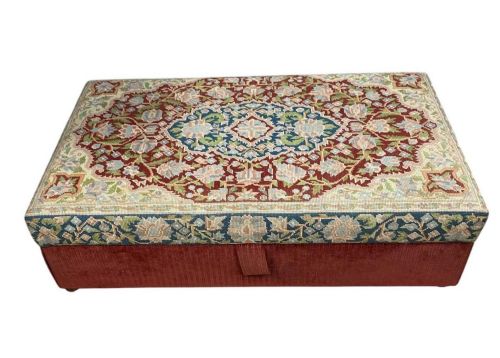
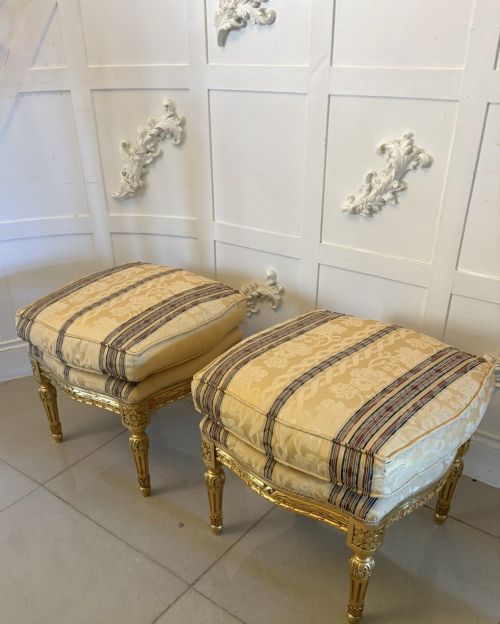
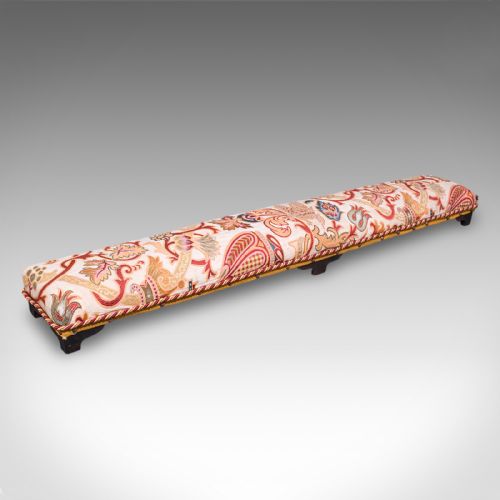
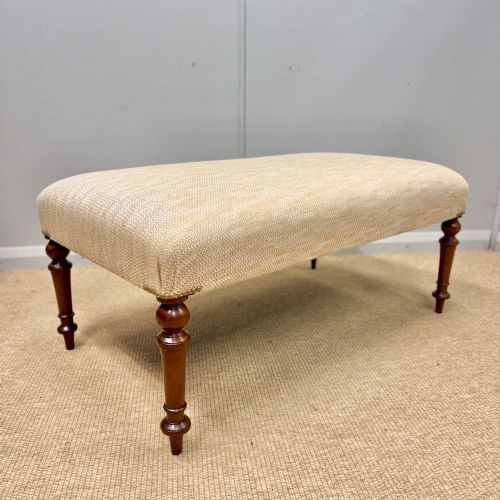
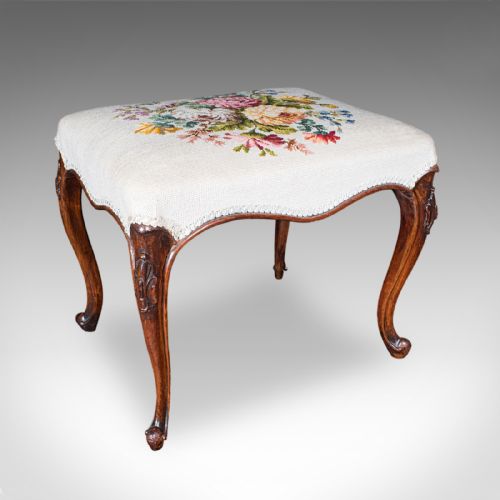
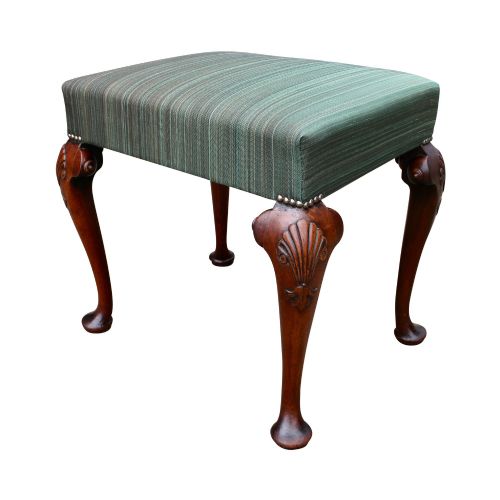
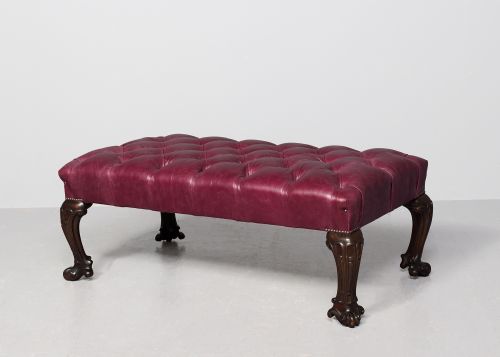
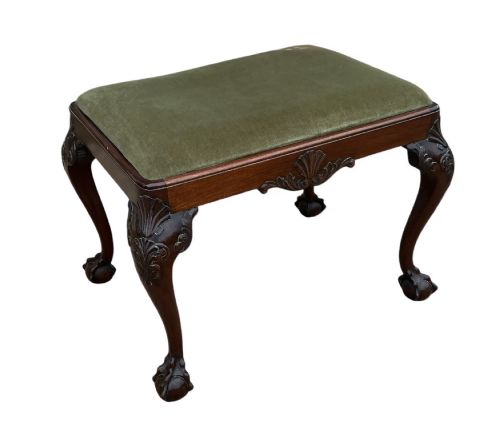
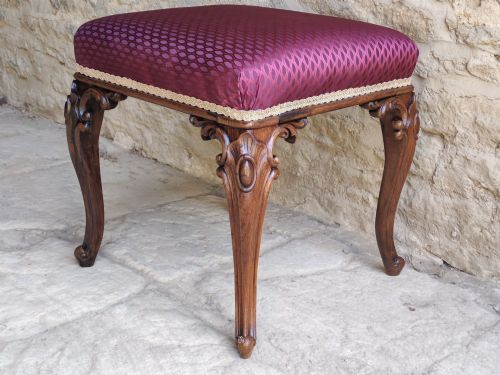
The most common examples you meet on this page are Victorian and nineteenth-century walnut, mahogany, or rosewood frames carrying needlepoint, textile, leather, or wool coverings. Forms range from small fireside footstools and dressing stools to large square ottomans and low pieces fitted with brass castors.
Materials and construction
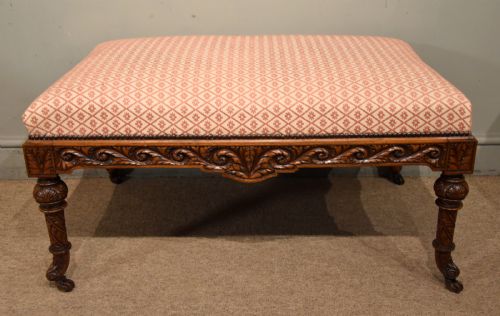
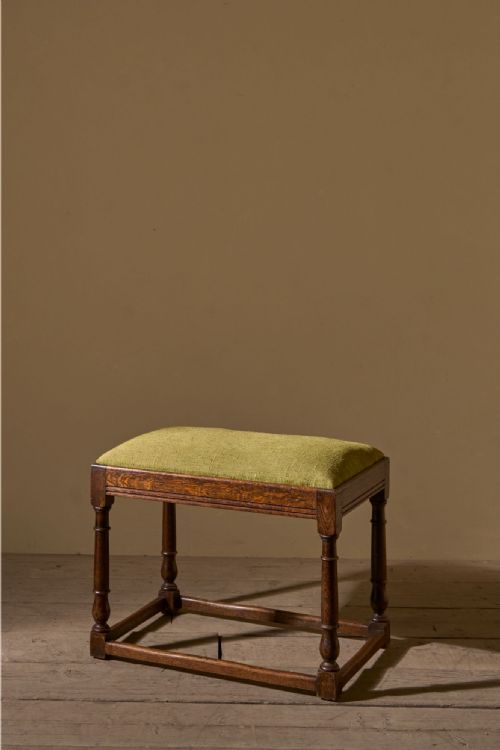
Timbers selected for these frames rely predominantly on hardwoods such as mahogany, walnut, rosewood, oak, and pitch pine, shaped with carved detailing, bobbin legs, or cabriole supports. Joinery is traditional, sometimes incorporating brass castors on larger or low-slung variations.
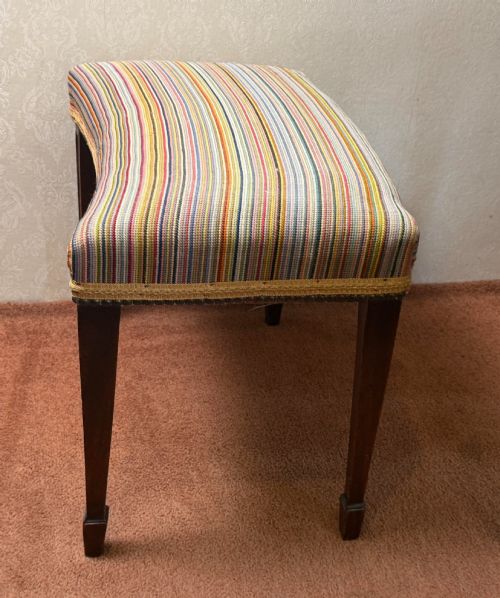
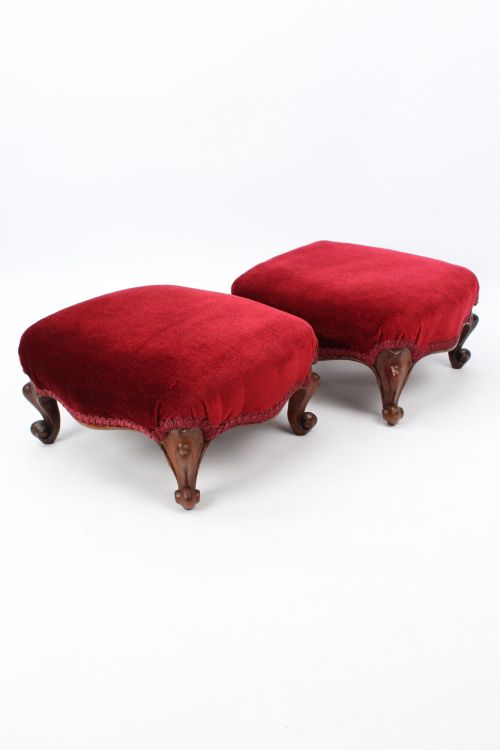
Upholstery materials include wool, heavy green linen, needlework tapestry, buttoned red hide, and leather. Many pieces arrive ready for new fabric or retain period textiles applied over stuffing.
Periods represented span from eighteenth-century designs through Regency and Victorian eras to Edwardian and Art Deco pieces.
Distinctions in quality
Quality reveals itself in the crispness of the timber carving and the integrity of the frame construction, particularly where legs meet the seat rail. Dense hardwoods like rosewood and finely figured mahogany hold sharp detail far better than softer woods.
The sophistication of the silhouette - such as scroll tops, cabriole legs, or well-proportioned dressing stool forms - separates standard utility pieces from finer workshop productions.
The Upholstered Footrest Stool Glossary
- Cabriole leg
- A furniture leg that curves out and then in, resembling an animal's leg.
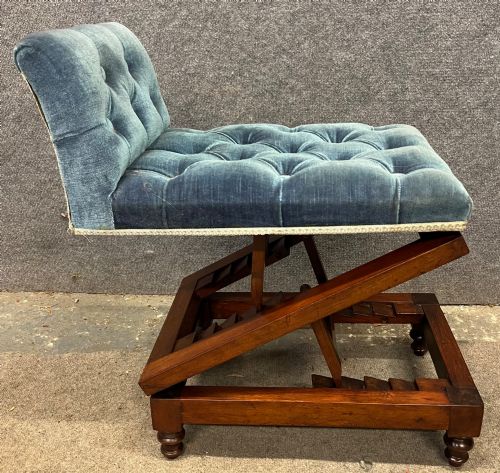
- Gout stool
- A specialised footrest featuring an adjustable sloping top designed to elevate and comfort feet affected by gout.
- Needlepoint
- A type of counted thread embroidery stitched on canvas, frequently used for historic footstool upholstery.
- Ottoman
- A low, upholstered seat or footstool without a back or arms, often built on a larger square scale.
- Bobbin leg
- A turned furniture leg shaped to resemble a string of wooden bobbins or spools.
Upholstered Footrest Stool: Frequently Asked Questions
What is an upholstered footrest stool?
An upholstered footrest stool is a low piece of furniture designed to support the feet while sitting or to serve as a compact seat at a dressing table.
These pieces typically combine a solid hardwood frame with a padded, fabric-covered top.
How were these stools used historically?
Historically, they sat near fireplaces to keep feet away from cold draughty floors or stood in bedrooms beside dressing tables.
Larger versions also functioned as low ottomans for relaxed seating in Victorian and Georgian parlours.
How do I identify a Victorian footstool?
Victorian examples often feature dark timbers like walnut or rosewood paired with needlepoint, wool, or leather upholstery.
Look for characteristic details such as carved cabriole legs, buttoned hide, or low frames fitted with brass castors.
Can I reupholster an antique footstool?
Many antique footstools are well-suited for new fabric, and some are even offered ready for upholstery.
Replacing the top textile allows you to match modern interiors while preserving the historic wooden frame underneath.