




Traditional Fabric Footstool
These traditional fabric footstools offer solid nineteenth-century and Edwardian seating, combining timber frames with practical textile covers for daily utility.
Traditional Fabric Footstool
A traditional fabric footstool brings low seating and resting places into a room, taking forms from footstools, ottomans, and dressing table stools. The selection draws heavily on nineteenth-century and Victorian pieces, alongside Edwardian examples.
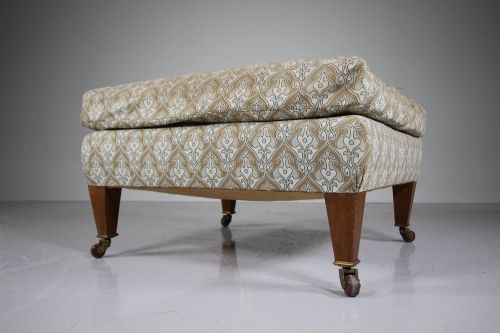
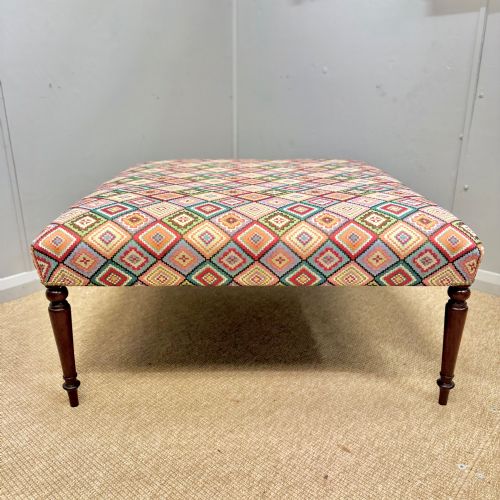
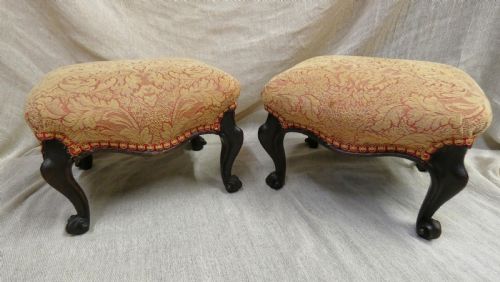
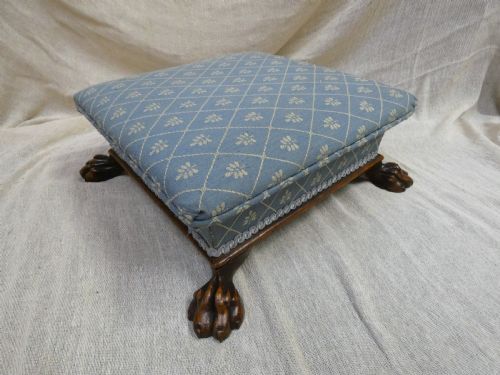
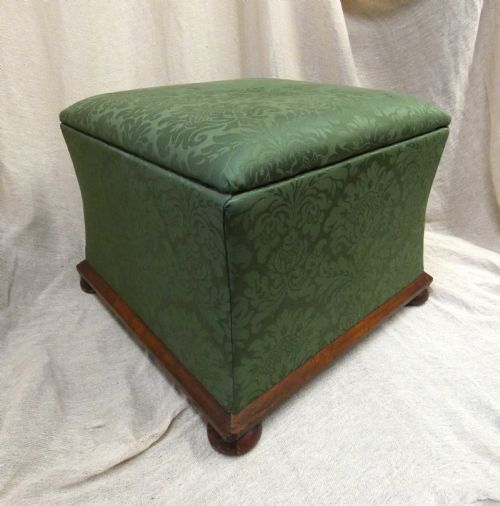
Makers shaped these items as compact squares, low oblongs, and large ottomans, frequently raising them on mahogany, walnut, or oak frames. Many include brass castors for movement or rest on carved cabriole legs.
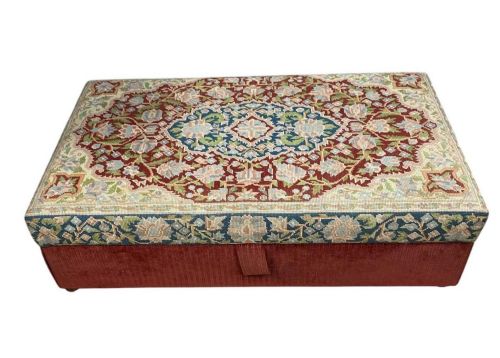
The upholstery defines much of the character, utilising geometric patterns, herringbone weaves, kilim textiles, and deep buttoning. Buyers meet everything from simple foot rests to substantial country house ottomans.
How they were made
Carpenters constructed the structural frames using hardwoods such as mahogany, walnut, oak, and rosewood, often shaping legs in styles ranging from Queen Anne to William IV. Timber frames support the padded tops through traditional joinery.
Upholsterers layered stuffing beneath durable textile covers, including wool, cotton, and patterned woven fabrics, sometimes securing the perimeter with decorative finishing. Castors cast in brass were fitted to the base of heavier nineteenth-century designs.
Several footstools hide their brass castors beneath deep upholstery, ready to roll at a moment's notice.
What varies in quality
The choice of timber and the complexity of the frame carving separate standard seating from finer cabinet work. Dense hardwoods like mahogany and walnut provide superior structural longevity compared to simpler secondary timbers.
The integrity of the upholstery execution, from tight geometric alignment to the depth of buttoning, marks the skill of the maker. Original fabric survivals and branded workshop attributions add distinction to individual pieces.
Howard and Sons
The Traditional Fabric Footstool Glossary
- Cabriole leg
- A furniture leg that curves outward and then tapers inward, typically ending in a pad or hoof foot. This form appears frequently on eighteenth-century revivals and Victorian seating.
- Kilim
- A flatwoven textile originating from the Near East and Central Asia. These durable wool fabrics are often repurposed to cover nineteenth-century footstools.
- Ottoman
- A low, upholstered seat or footstool without a back or arms. Larger examples function as central coffee tables or generous resting benches.
- Deep buttoning
- An upholstery technique where twine pulls the fabric through stuffing to secure a pleated diamond pattern. This method adds firmness and visual texture to Victorian seats.
- Castor
- A small wheel mounted in a swivel frame, attached to the feet of heavy furniture. Brass versions allow nineteenth-century footstools to move easily across carpets.
Traditional Fabric Footstool: Frequently Asked Questions
How do I date a footstool?
Examine the timber species, turning style, and framing methods beneath the upholstery. Nineteenth-century pieces often display hand-sawn secondary woods and distinct Victorian turning.
Look closely at the castors and fixings, as brass components and screw types change across the decades. Comparing the style to documented furniture eras helps narrow the manufacturing period.
Can I use these as coffee tables?
Large ottomans and square footstools provide stable surfaces for trays and books. Their solid timber frames easily support everyday living room requirements.
Ensure the upholstery fabric is robust enough for daily use and consider placing a firm tray on top to protect the textiles.
Are original fabrics better?
Original textiles demonstrate period manufacturing techniques and authentic visual age. However, antique fabrics require careful handling to prevent wear.
Many buyers choose to preserve intact period coverings like kilim or wool, while others re-upholster structurally sound frames in sympathetic traditional cloths.
What woods were used?
Cabinet makers predominantly selected mahogany, walnut, rosewood, and oak for visible frame sections. These dense hardwoods allowed for carved cabriole legs and sturdy structural joints.
Secondary timbers inside the frame were often chosen for strength rather than appearance, hidden beneath the padding and outer fabric.