
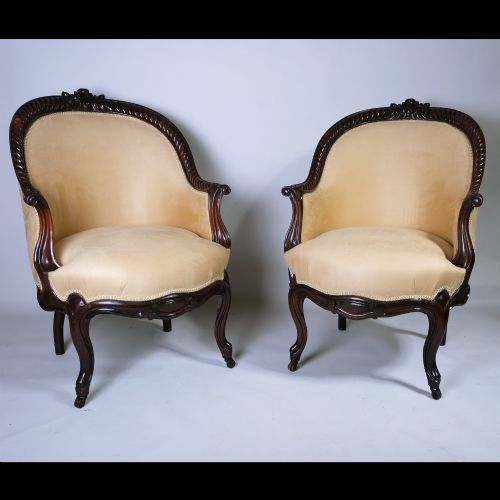
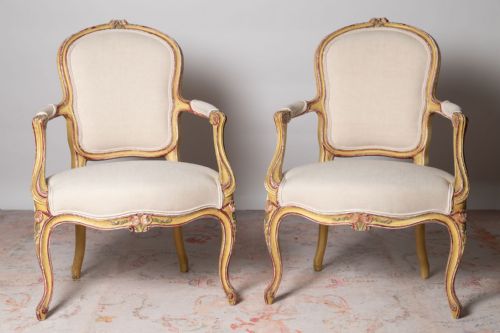
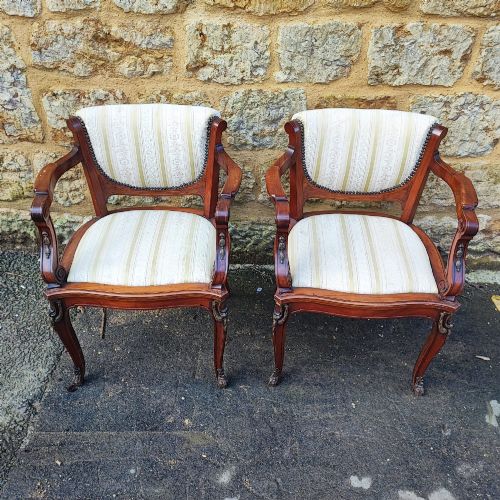
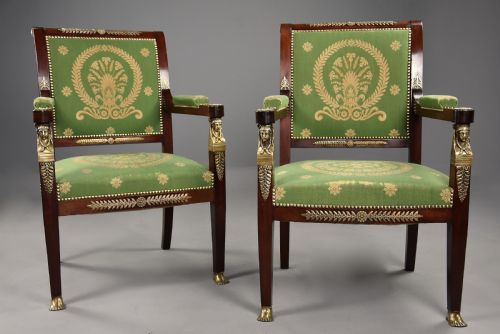
Upholstered Fauteuil Pair
An upholstered fauteuil pair brings symmetry and refined French seating to a room, offering deep open armchairs wrapped in period textiles.
Upholstered Fauteuil Pair
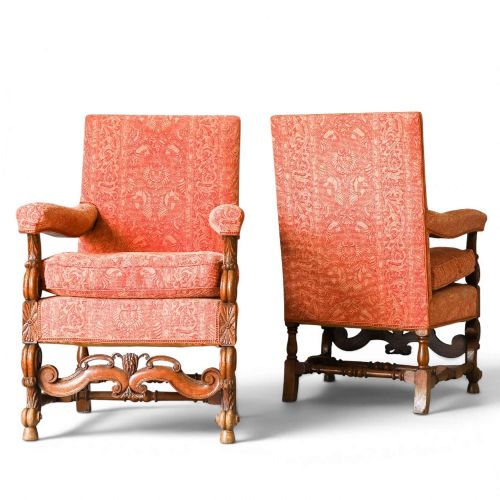
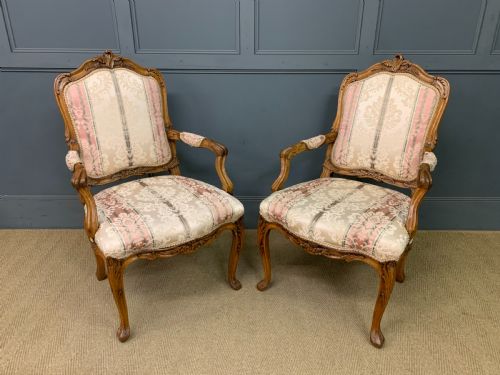
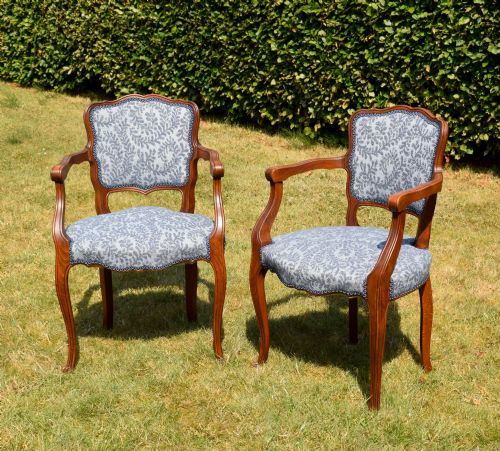
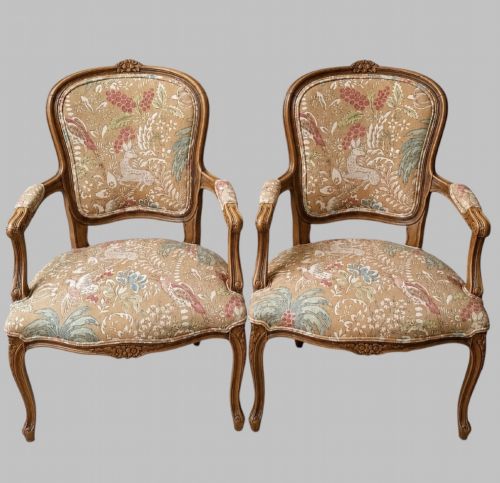
When you search for an upholstered fauteuil pair, you are looking at matched open-armed seating originating primarily from French and continental traditions spanning the eighteenth, nineteenth, and early twentieth centuries. These pairs combine structural wooden frames with supportive textile coverings, designed traditionally for salons, boudoirs, and drawing rooms where symmetry matters.
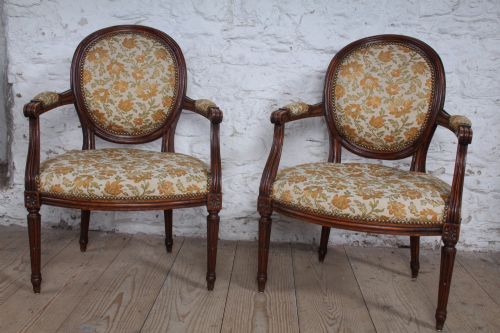
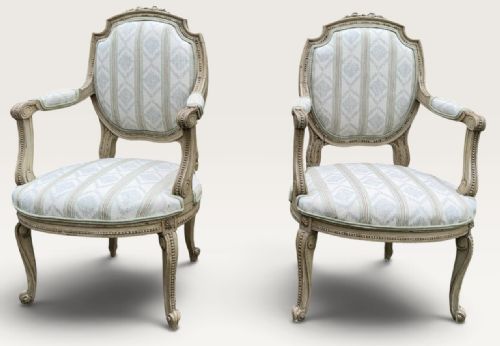
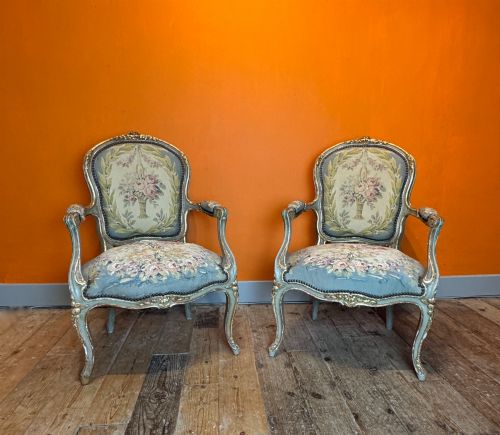
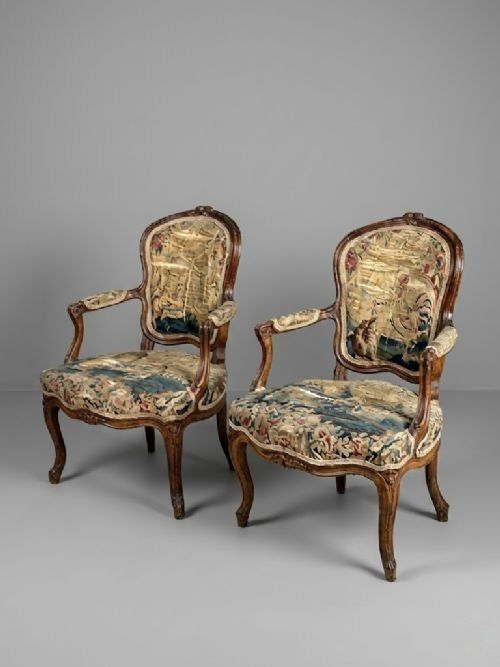
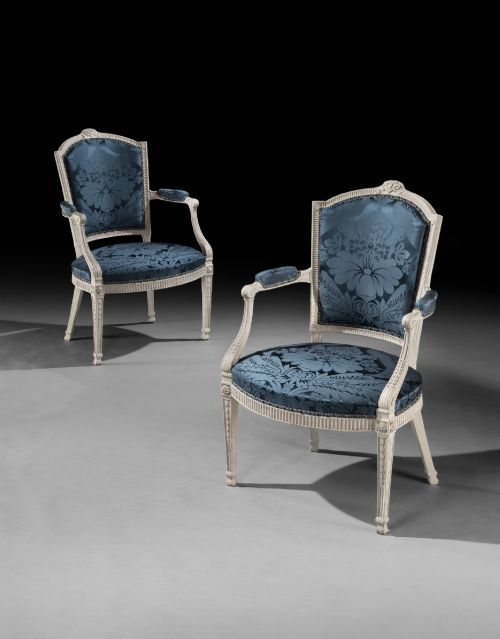
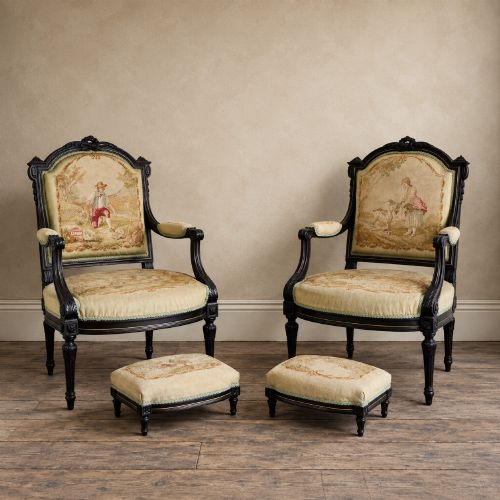
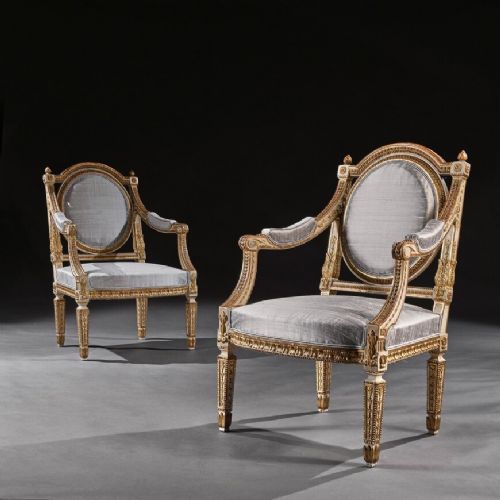
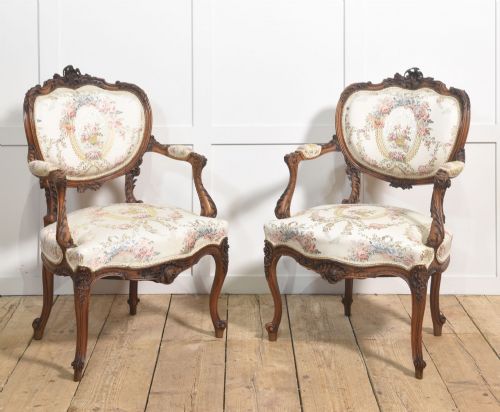
The versions you are most likely to meet on this page lean heavily towards nineteenth-century revivals of Louis XV and Louis XVI styles, alongside eighteenth-century originals upholstered in needlepoint or tapestry. Walnut, beech, and giltwood frames dominate the selection, often carved with rococo curves or neoclassical straight lines.
Armchairs of this form function practically as occasional seating or reading chairs while delivering strong decorative presence. Surviving in matched pairs rather than single items makes them particularly sought after for balancing a fireplace or framing a console table.
How they were made
Makers constructed the structural frames of an upholstered fauteuil pair using traditional cabinet timbers such as walnut, beech, oak, and mahogany, frequently enhanced with parcel gilt, silver gilt, or original painted finishes. Joinery relied on mortise and tenon techniques to support the stresses placed on open elbow rests and cabriole or tapered legs.
Upholstery methods involved traditional stuffing secured over webbing, finished with textiles ranging from contemporary silk and velvet to period tapestry, needlework, and leather. Carved ornamentation on the wooden chassis was executed by hand, expressing the distinct floral motifs and structural lines characteristic of French chateau and revival periods.
Several pairs preserve their original paintwork, bearing the quiet scuffs of centuries spent beside French salon firesides.
What varies in quality
The distinction between standard and exceptional pieces rests upon the crispness of the hand-carved woodwork and the integrity of the underlying frame construction. Fine examples exhibit deeply chiselled floral or scroll details in the walnut or giltwood, whereas lesser pieces show softer, shallower moulding.
Material selection and upholstery execution further separate the tiers, with superior seating retaining period textiles like Aubusson tapestry or needlepoint, or featuring high-grade traditional silks. The harmony between the matched pair, ensuring identical proportions and consistent ageing across both chairs, dictates the upper level of desirability.
Holland & Sons
The Upholstered Fauteuil Pair Glossary
- Fauteuil
- An open-armed upholstered armchair originating in France, typically featuring exposed wooden framing around the back and seat. These chairs were designed for formal entertaining and comfort during the seventeenth and eighteenth centuries.
- Giltwood
- Timber coated with a thin layer of gold leaf or gold paint over a prepared ground. It is frequently seen on formal nineteenth-century revival salon seating.
- Cabriole leg
- A furniture leg that curves outward at the knee and tapers inward toward the foot, mimicking animal limbs. This form is a hallmark of Louis XV and rococo design.
- Needlepoint
- A type of counted thread embroidery stitched onto canvas, often utilised for durable historic chair coverings. Surviving examples frequently depict pastoral scenes or floral motifs.
- Parcel gilt
- A decorative technique where only specific raised portions of a carved wooden surface are gilded, leaving the underlying paint or stained wood visible elsewhere.
Upholstered Fauteuil Pair: Frequently Asked Questions
How do I distinguish Louis XV from Louis XVI styles?
Louis XV frames embrace asymmetry, sweeping curves, and cabriole legs rooted in the rococo taste. They avoid straight lines where a flowing scroll can take its place.
Louis XVI chairs introduce neoclassical restraint, featuring straight fluted legs, rectangular or oval backs, and symmetrical geometric carvings. This shift reflects a later eighteenth-century return to classical antiquity.
Can these armchairs be used daily?
Historic frames provide sturdy seating, but nineteenth-century webbing and stuffing often require professional reinforcement for heavy modern use. Checking the interior support ensures they withstand regular sitting.
Lighter salon models suit reading and occasional lounging rather than robust everyday tasks. Maintaining appropriate weight distribution preserves the antique joinery over time.
How should I care for antique upholstery?
Protect delicate textiles like silk, velvet, and historical needlepoint from direct sunlight to prevent fading and fibre degradation. Regular gentle vacuuming with a low-suction attachment removes trapped dust.
Avoid chemical cleaning agents on fragile nineteenth-century fabrics. Professional textile conservationists should handle deeper cleaning requirements.