

Upholstered Button Back Chair
When you search for an upholstered button back chair, you are seeking a seating classic defined by deep tufting and structural comfort.
Upholstered Button Back Chair
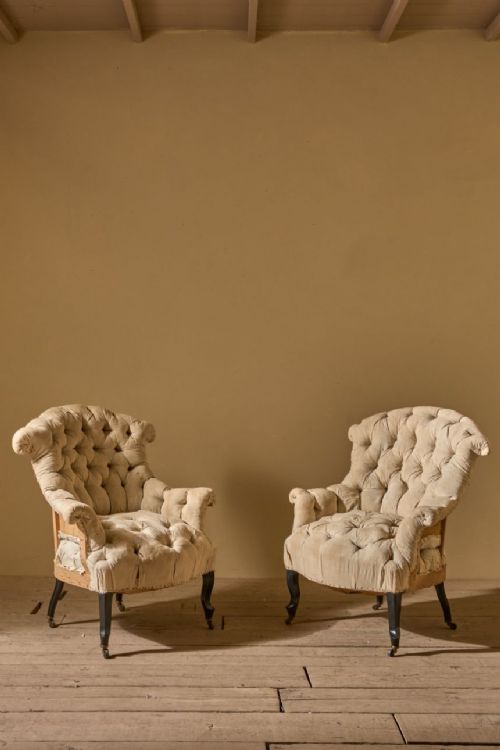
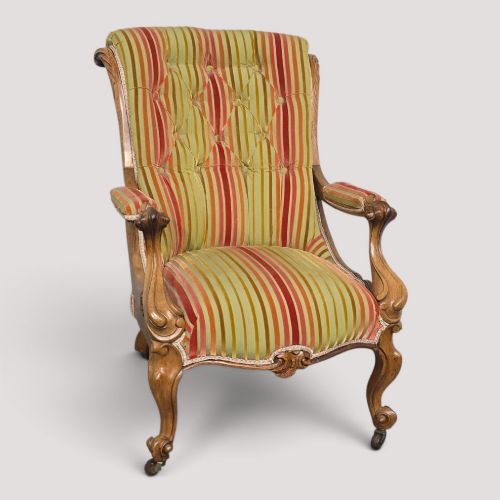
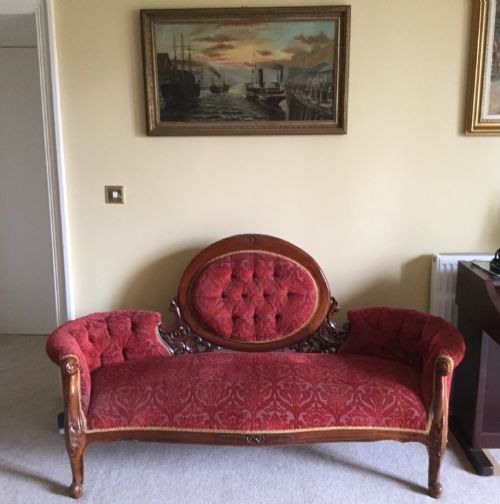
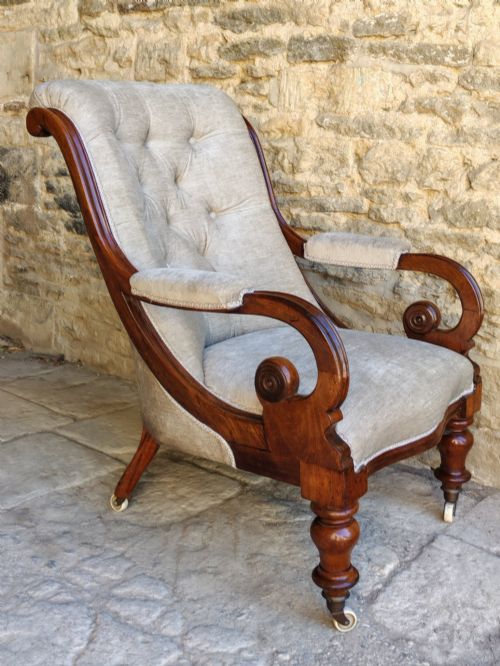
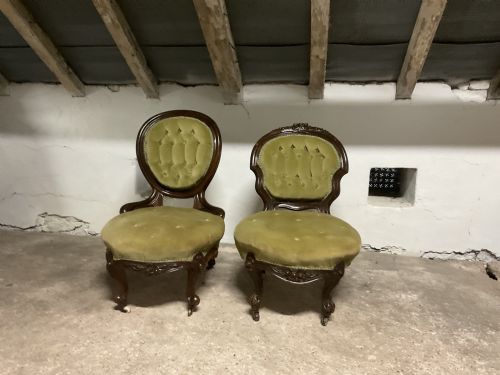
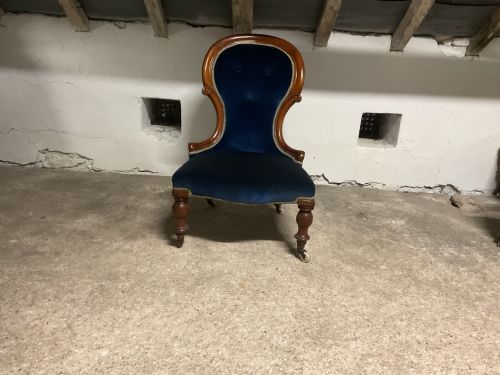
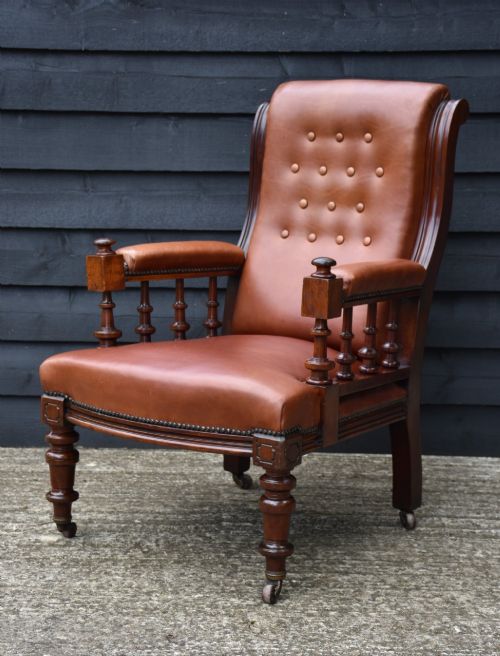
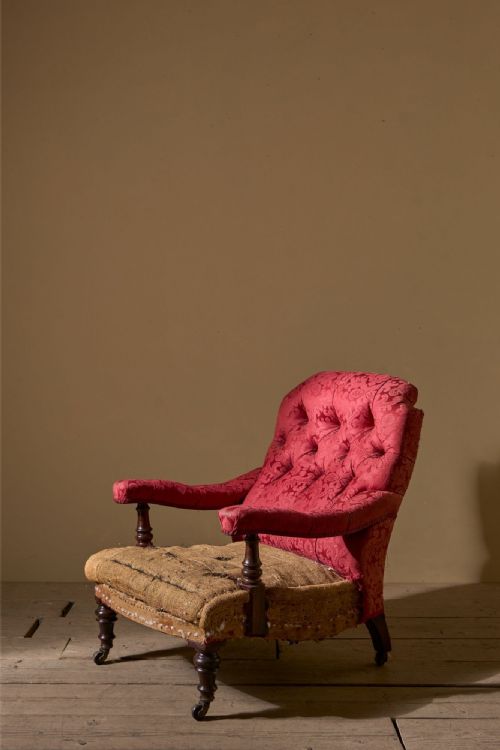
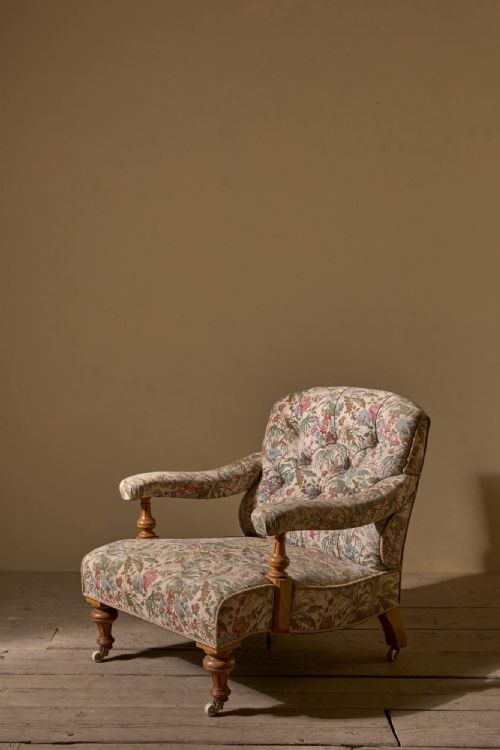
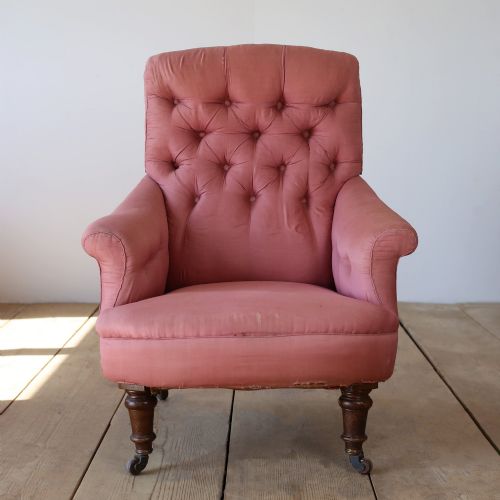
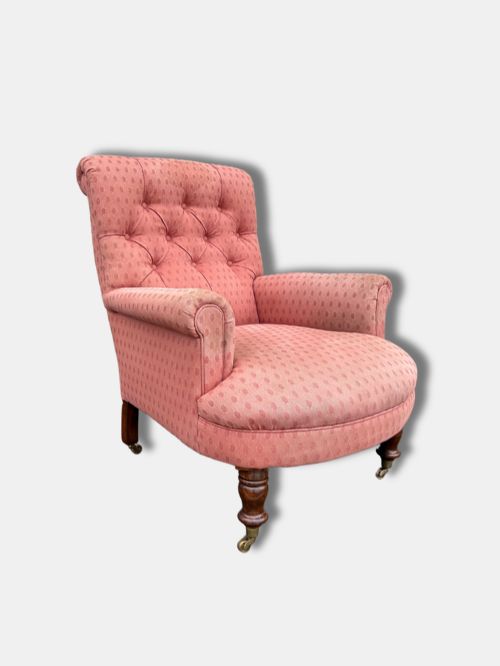
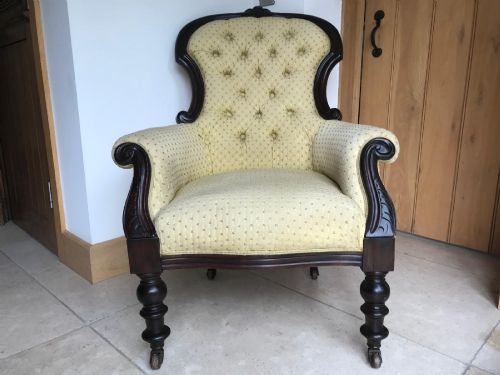
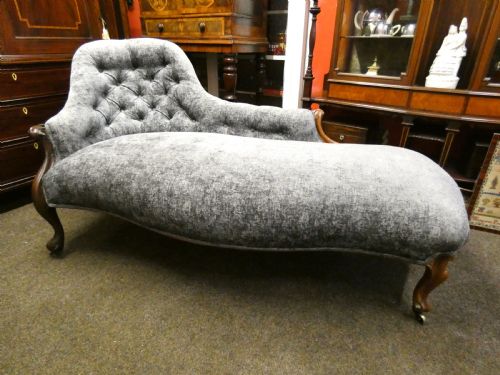
An upholstered button back chair encompasses various forms designed for relaxation and parlour use across the nineteenth and early twentieth centuries. These pieces appear frequently as Victorian nursing chairs, library armchairs, and low-slung occasional seats.
The aesthetic bridges several periods, leaning heavily into Victorian craftsmanship alongside Regency and Edwardian variations. Buyers encounter everything from robust mahogany library seats to delicate walnut spoon back examples.
Originating predominantly from English country houses and urban workshops, these chairs served specific domestic functions in bedrooms, libraries, and drawing rooms. Their survival in diverse forms demonstrates their enduring utility in modern interiors.
How They Were Made
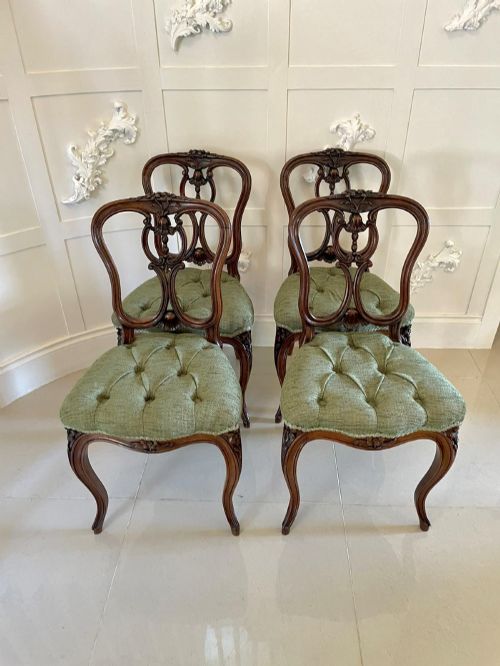
Makers constructed the foundational frames using dense hardwoods such as mahogany, walnut, oak, and rosewood, often featuring carved show wood details. Structural rigidity was achieved through traditional joinery before webbed and sprung bases were integrated.
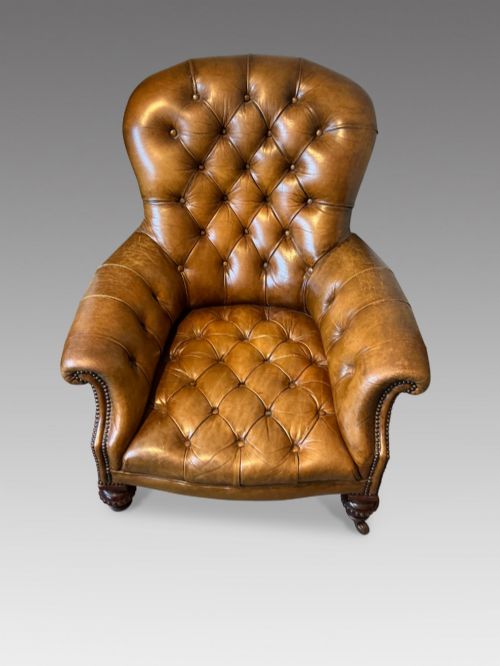
The signature buttoning technique required deep upholstering through materials like calico, leather, velvet, and brocade, secured tightly to pull the fabric into uniform recesses. Brass castors and turned or cabriole legs frequently finished the lower framework.
Some nineteenth-century library armchairs feature built-in reading stands, anticipating modern hands-free book management by over a century.
What Varies in Quality
Quality rests heavily on the integrity of the underlying timber frame and the precision of the cabinet work. Pieces retaining their original structural density and refined carving sit at the higher end of the scale.
The execution of the upholstery work, including the symmetry of the tufting and the quality of the textile covering, dictates the visual appeal. Maker attribution also elevates certain pieces significantly above anonymous workshop output.
Howard & Sons·Gillows·Mellier & Co·Holland & Sons·C. Hindley & Sons·Cornelius V Smith
The Upholstered Button Back Chair Glossary
- Button back
- A method of upholstery where recessed buttons are pulled deep into the padding to create a diamond pattern of soft pleats. This technique provides both structural tension and decorative relief.
- Spoon back
- A chair back shaped explicitly like the bowl of a spoon, curving away from the sitter to support the spine. This silhouette is particularly prevalent in mid-nineteenth-century nursing and drawing room chairs.
- Show wood
- Polished wooden framing left exposed around the upholstered portions of a chair. It highlights the timber grain and the cabinet maker's carving skill.
- Nursing chair
- A low-seated armchair designed originally for nursing infants or tending fires comfortably. Their modest height makes them distinct from standard library or dining chairs.
- Slipper chair
- An upholstered bedroom chair sitting low to the ground with legs often mounted on castors. Originally utilised for putting on shoes or garments in private chambers.
Upholstered Button Back Chair: Frequently Asked Questions
How do I date an upholstered button back chair?
Dating relies on identifying stylistic shifts in the exposed show wood, such as Regency lines versus heavy Victorian carving. Secondary clues include the timber used, such as rosewood or walnut, and construction methods.
Changes in castor design and upholstery foundations also help narrow the decade of production. Comparing the piece against documented maker output provides further chronological clarity.
Where were these chairs used historically?
These seats filled private chambers, formal libraries, and grand drawing rooms in English country houses and town residences. Low nursing chairs belonged in bedrooms, while leather-bound library chairs suited studies.
Occasional chairs moved freely between public entertaining spaces as needed. Their placement reflected strict domestic hierarchies and functional comfort.
How do I live with antique button back chairs?
Integrating these pieces into modern spaces works best by pairing them with clean-line contemporary furniture to create visual contrast. They function effectively as reading chairs in corners or as statement seating in living rooms.
Protecting the textiles from direct sunlight prevents premature fading of velvets and brocades. Regular gentle maintenance preserves both the wooden frames and the deep buttoning.
What is the difference between a nursing chair and a slipper chair?
Nursing chairs typically feature taller, often spoon-shaped backs designed to support the head while resting. Slipper chairs generally have lower, squarer profiles intended for quick dressing tasks.
Both share a low stance to the floor, but their upper proportions serve distinct seating postures. Examining the back height and contour clarifies the specific form.