

Upholstered Armchair with Castors
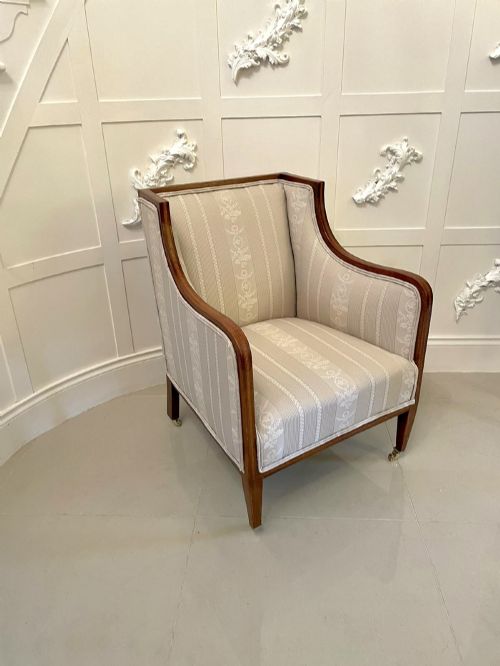
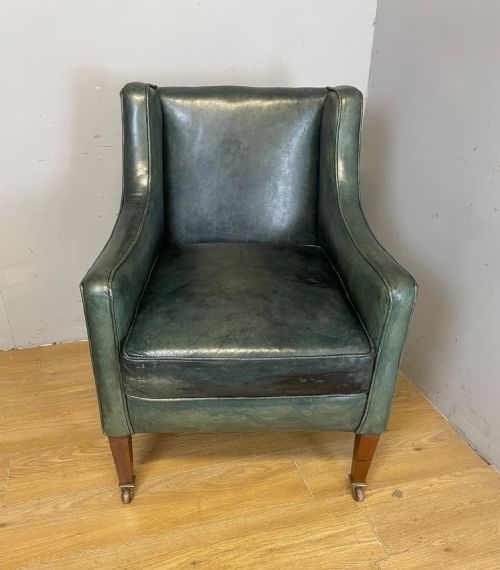
An upholstered armchair with castors offers deep-seated comfort paired with the mobility required for grand drawing rooms and country houses.
Upholstered Armchair with Castors
An upholstered armchair with castors brings together substantial padding and practical mobility, spanning periods from the Regency era through to Edwardian and Art Deco designs. Buyers searching for this phrase encounter open armchairs, slipper chairs, and low fireside seats designed for relaxation.
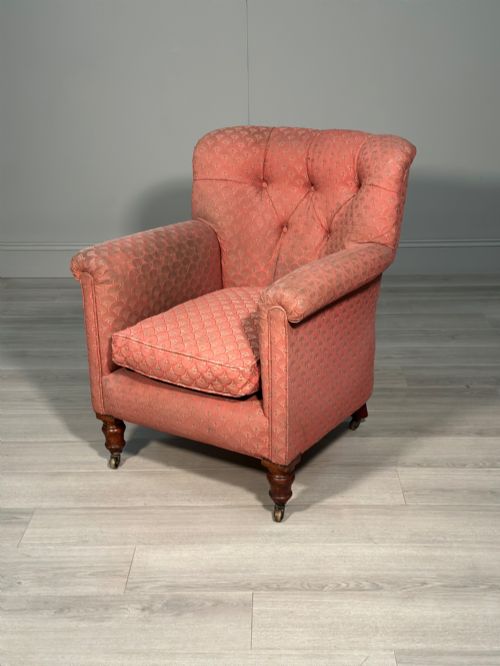
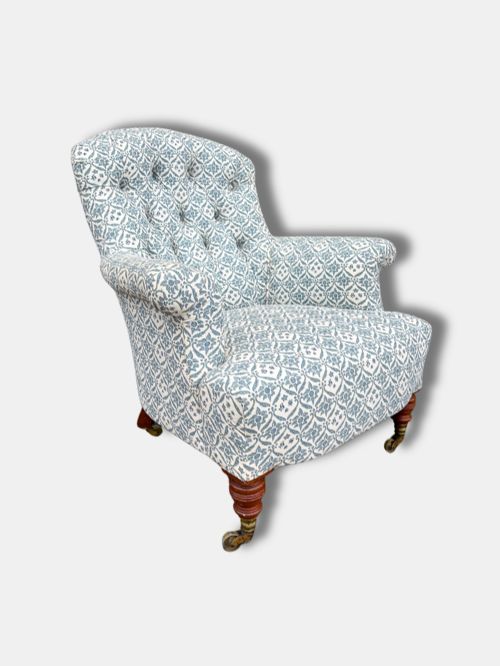
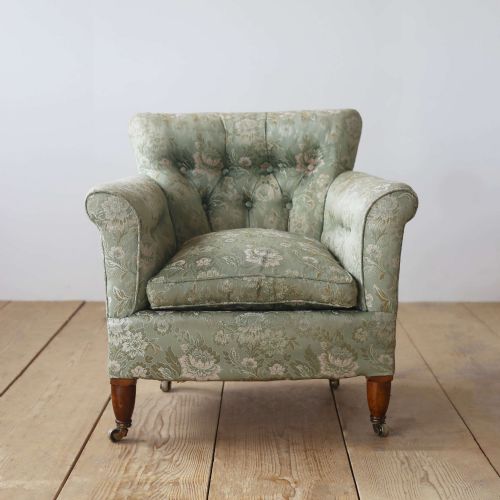
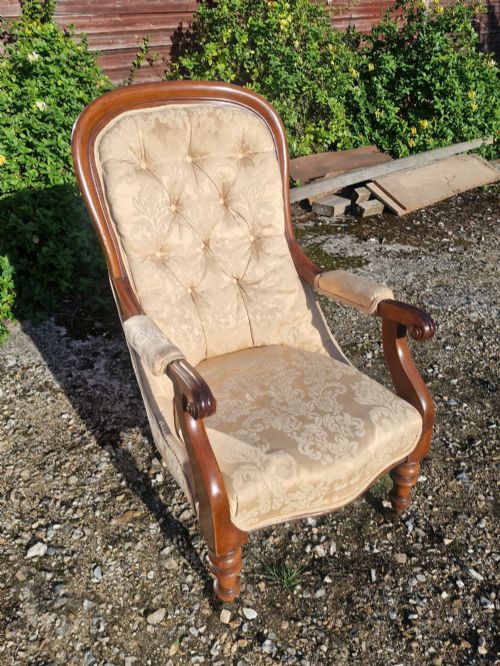
Victorian and Edwardian examples dominate the selections here, often featuring deep buttoned backs and turned wooden legs. Makers such as Howard and Sons and James Shoolbred established forms that range from compact Bridgewater chairs to oversized library seating.
Materials and Construction
Frames rely on sturdy timbers including mahogany, walnut, and satinwood, providing a strong structural skeleton for heavy springing and padding. Upholstery materials span cotton, linen, velvet, and needlework, often finished with decorative piping or buttoning.
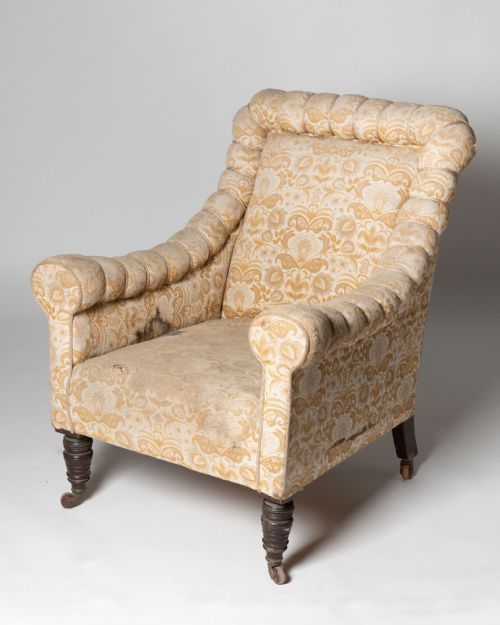
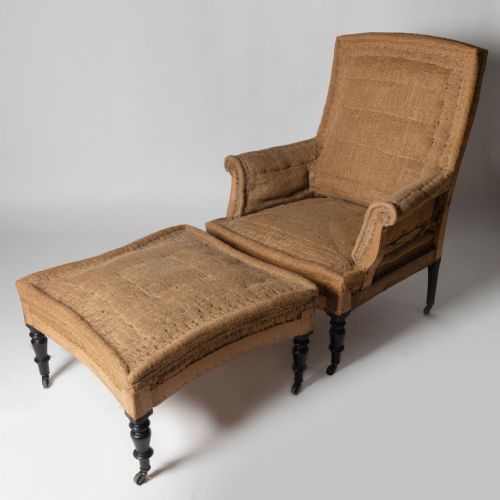
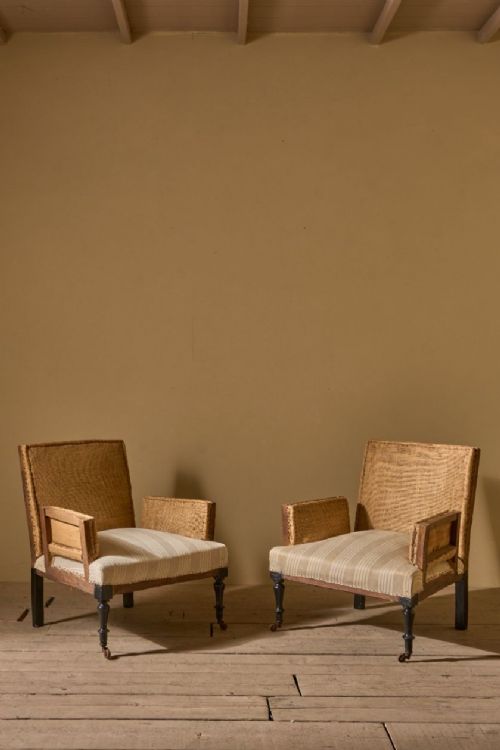
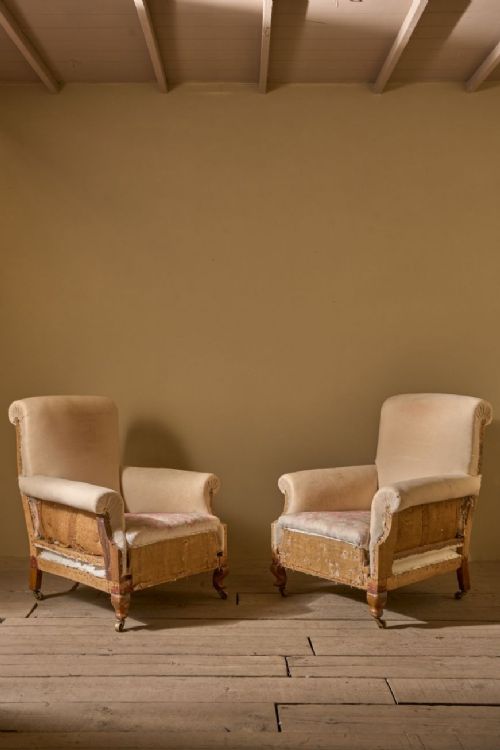
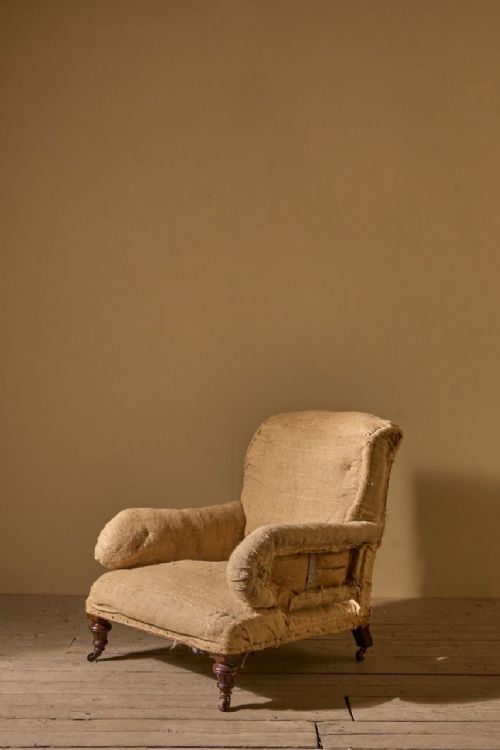
Brass castors are fitted to the base of the legs to allow smooth movement across carpets and wooden floors without marking the surface. Showwood frames display carved details, while fully upholstered versions conceal the wooden structure entirely beneath fabric.
Upholstered Armchair with Castors Retail Price Guide 2026
Typical asking prices for upholstered armchair with castors among the pieces listed under this phrase on Sellingantiques today, from the lower quarter to the upper quarter. They describe what is for sale here now, not the wider market.
Some Victorian slipper chairs were kept low to the floor so servants could lace up boots without standing on ceremony.
Craftsmanship and Proportion
The distinction between ordinary and exceptional pieces lies in the integrity of the internal stuffing, springing, and the crispness of the frame's woodwork. Superior examples maintain firm, supportive contours and retain their original stamped brass castors.
Proportion and balance define the superior items in this range, where the rake of the back and the height of the arms create a harmonious silhouette. Fabric choices also influence character, with specialist covers like kilim or William Morris prints elevating the presence of the chair.
Howard and Sons·James Shoolbred·Maple and Co·J. Mills
The Upholstered Armchair with Castors Glossary
- Castor
- A small wheel fitted to the foot of a piece of furniture for ease of movement. These are frequently made of brass and mounted on porcelain or wooden collars.
- Button back
- An upholstery technique where depressions are created by pulling twine tightly through the padding and securing it with fabric-covered buttons. This method maintains the internal stuffing in place over decades of use.
- Showwood
- Timber framing left exposed around the upholstered elements of a chair. It is typically polished mahogany or walnut.
- Slipper chair
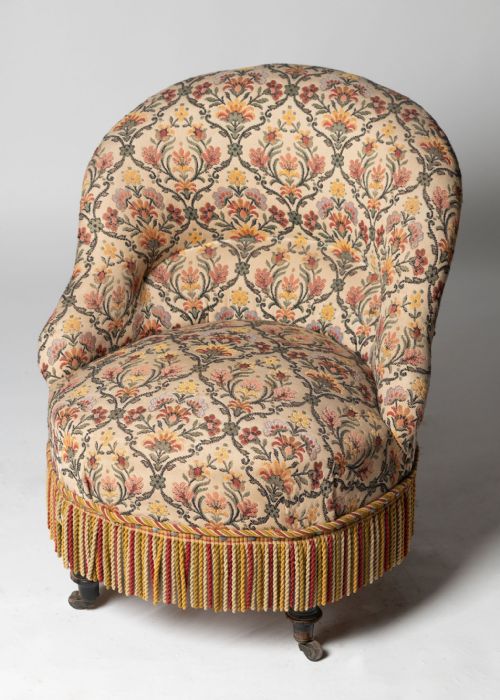
- A low-seated upholstered armchair traditionally used in bedrooms for dressing. The shortened legs bring the sitter closer to the floor.
- Bergere
- An enclosed armchair with stuffed upholstery and cane or upholstered sides. The frame is usually made of exposed wood.
Upholstered Armchair with Castors: Frequently Asked Questions
What defines a Howard style armchair?
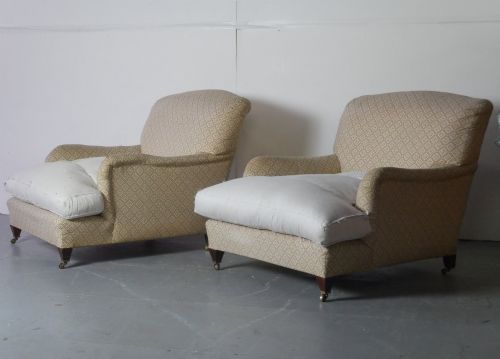
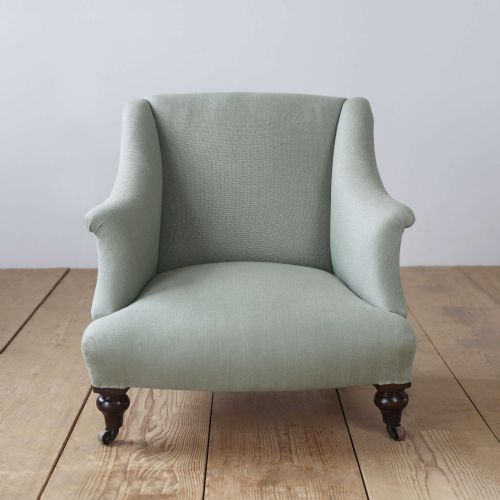
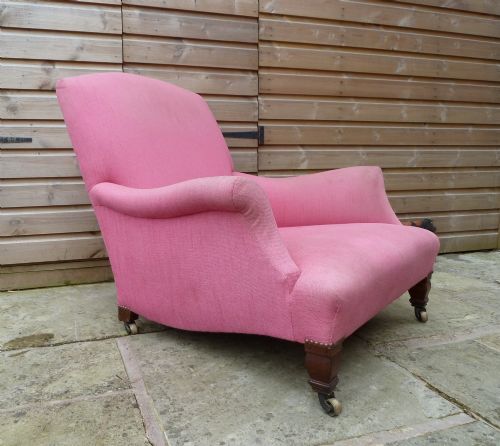
Howard style armchairs are characterised by low-slung profiles, rolled arms, and deep cushioning designed for maximum comfort. They typically stand on short turned legs fitted with brass castors.
Original pieces often carry maker stamps on the castor wheels or legs, and they employ traditional stuffing methods using hair and webbed bases.
How do I identify a Victorian armchair?
Victorian examples frequently display rich walnut or mahogany frames, button-tufted backrests, and heavy scrollwork. Proportions tend to be generous to accommodate the voluminous dress styles of the period.
Castors on these chairs are usually substantial brass fittings attached to turned or cabriole legs.
Where were slipper chairs used?
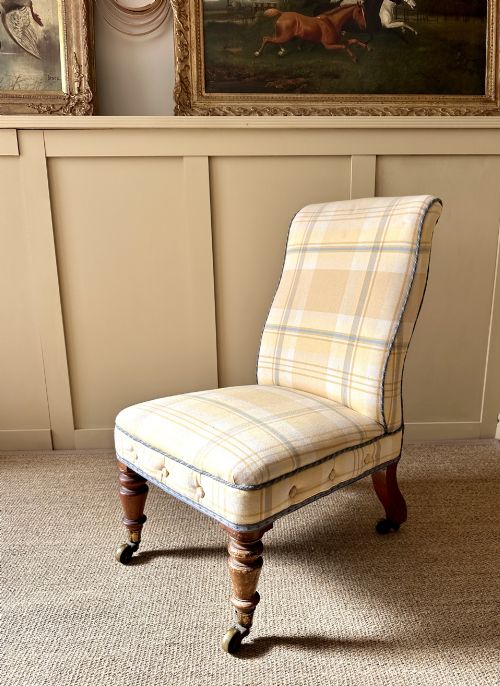
Slipper chairs were traditionally kept in bedrooms or boudoirs for women to sit upon while putting on shoes or garments. Their low profile made them practical for domestic dressing rooms.
They lack the high arms of a standard armchair, allowing full freedom of movement.