


Undertier Console Table
An undertier console table provides essential surface space with an added lower shelf, combining practical storage with classic period elegance.
Undertier Console Table
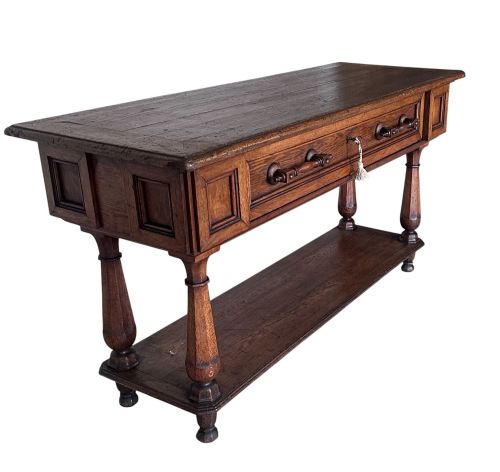
An undertier console table is a versatile surface designed to sit against a wall or float freely within a room, featuring a secondary shelf positioned beneath the main top. When searching for an undertier console table, buyers encounter examples originating from the nineteenth and early twentieth centuries, spanning the Victorian and Edwardian eras.
The form appears in various stylistic interpretations, including French Provincial, Italian Neoclassical, Chippendale Revival, Charles X, Arts and Crafts, and Louis XVI Revival designs. These tables serve multiple domestic functions, appearing as console tables, side tables, occasional tables, and library tables.
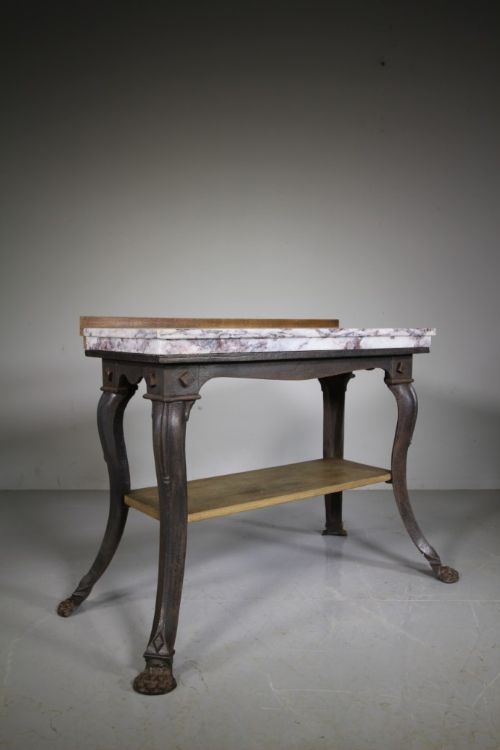
Makers utilised timber, iron, and stone to construct these pieces, often combining contrasting materials to decorative effect. The integration of the lower undertier provides structural stability while offering additional display space for books or decorative objects.
Materials and construction
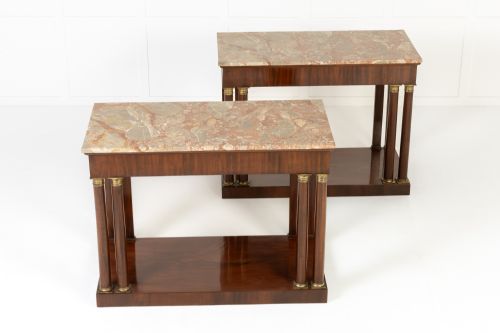
Makers constructed undertier console tables using hardwoods such as mahogany, oak, satinwood, and rosewood, frequently employing figured veneers to enhance the visual appeal of the primary surfaces. Inlaid details and fine cabinetmaking techniques define the construction of formal revival pieces from the period.
Alternative builds incorporate cast iron frames paired with marble tops, introducing industrial durability alongside classical elegance. The secondary undertier is typically tenoned or dowelled securely between the supporting legs to bear the weight of items placed upon it.
Assessing quality
Quality in an undertier console table rests upon the selection of timber and the precision of the joinery rather than mere ornamentation. Finer examples display carefully matched grain patterns, tight joints, and substantial secondary timbers that ensure longevity and stability.
The sophistication of the stylistic execution distinguishes standard utility items from exhibition pieces. Refined carving, thoughtful proportioning between the main top and the lower undertier, and the integration of high-grade marble or brass elements indicate superior craftsmanship.
The Undertier Console Table Glossary
- Undertier
- A secondary shelf or tier positioned beneath the main top surface of a table. This shelf adds structural rigidity and extra storage space.
- Console table
- A table designed to stand against a wall, frequently secured to it or balanced on shaped legs. They often feature decorative fronts and sides.
- Flame mahogany
- Mahogany timber exhibiting a distinctive flame-like pattern in the grain. Cabinetmakers achieved this effect by slicing through branches or burls.
- Satinwood
- A durable, lustrous hardwood with a yellowish sheen used extensively for fine cabinetmaking and decorative inlay work. It polishes to a high gloss.
- Charles X style
- A French design period bridging the classical restraint of the Empire style and the richer, domestic comfort of later nineteenth-century tastes. It favours warm timber tones and clean architectural lines.
Undertier Console Table: Frequently Asked Questions
What is an undertier console table?
An undertier console table is a decorative and practical furniture form that includes an extra shelf beneath the main surface. This lower tier provides additional space for display or storage.
These pieces span the nineteenth and early twentieth centuries, reflecting diverse decorative movements from French Provincial to Arts and Crafts designs.
Where should I place a console table?
Console tables traditionally stand against walls in hallways, reception rooms, or living spaces. Free-standing versions also function effectively as centre or library tables.
The lower undertier allows for the placement of books, lamps, or decorative objects without cluttering the main surface.
How do I identify Edwardian tables?
Edwardian tables typically date from the early twentieth century and often feature lighter timbers like satinwood or inlaid mahogany. The aesthetic favours refined, lighter proportions compared to heavy Victorian predecessors.
Construction methods from this era make use of machine-assisted precision alongside traditional hand finishing.
What materials were used?
Cabinetmakers relied heavily on hardwoods such as mahogany, oak, rosewood, and satinwood for standard wooden builds. Iron and marble also appear in pieces designed for specific functional or aesthetic requirements.
Brass hardware frequently complements the timber framework on revival and neoclassical examples.