
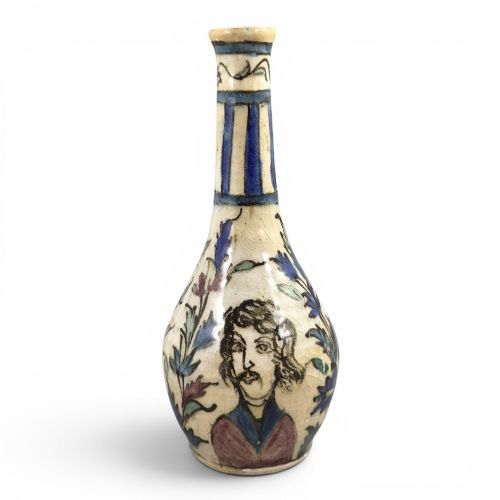


Underglaze Painted Vase
An underglaze painted vase brings centuries of ceramic skill into a room, offering rich blue and white scenes or vibrant enamel details.
Underglaze Painted Vase
An underglaze painted vase is a ceramic vessel decorated before a final transparent glaze is applied and fired in the kiln. These pieces span centuries of production across diverse regions, including Chinese dynasties, Japanese kilns and Persian workshops.
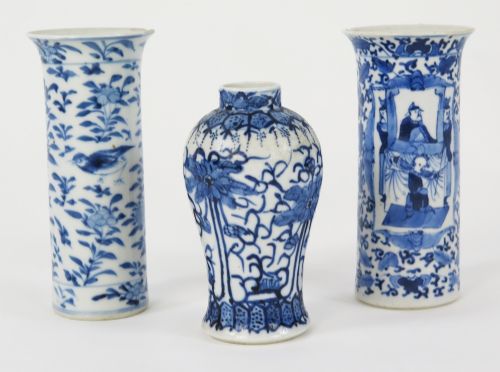
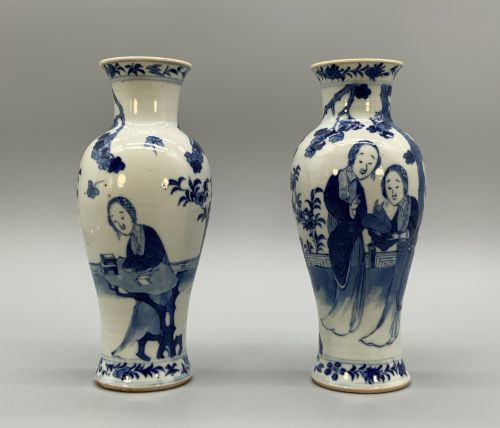
The version you are most likely to meet on this page is a nineteenth-century Chinese blue and white porcelain vase or a Japanese Imari piece. Forms range from ginger jars and double-gourd vessels to garlic-mouth vases and brush pots.
Makers shaped porcelain, ceramic and pottery into varied silhouettes intended for display or practical use in homes. Their surfaces carry cobalt oxide, cobalt glaze, enamel and gold leaf designs.
How they were made
Potters shaped ceramic or porcelain bodies by hand or wheel before applying pigments beneath a clear glaze. Cobalt pigment and cobalt oxide provided the deep blues seen on many surfaces, reacting predictably under high kiln temperatures.
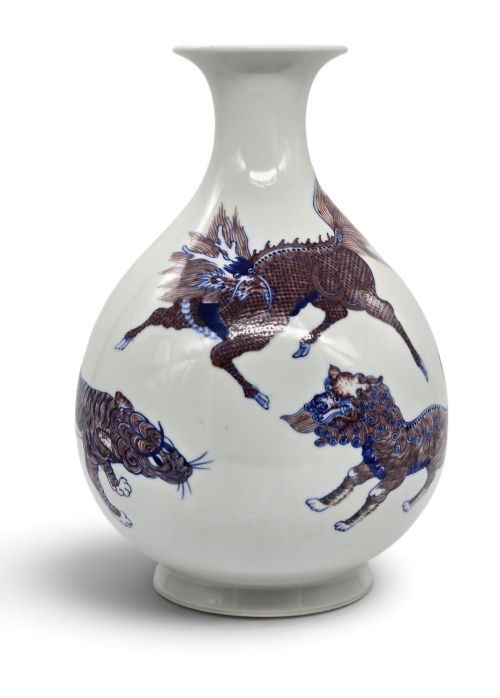
Some examples received secondary decorative layers of enamel or gold leaf applied over the initial glaze and fired again at lower temperatures. This technique allowed makers to combine underglaze blue painting with contrasting iron red and green enamels.
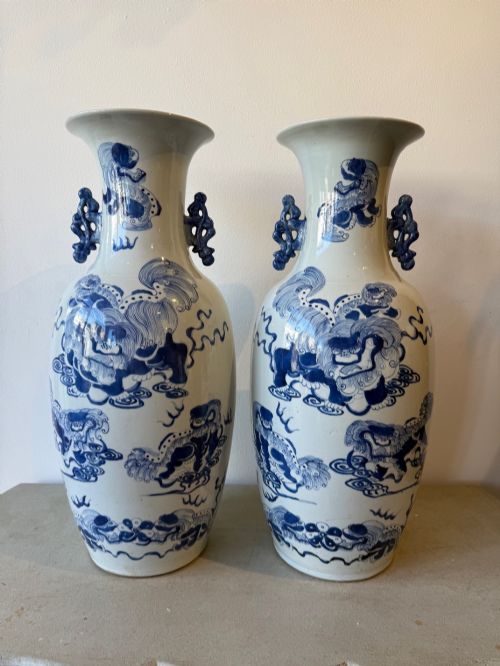
Mythical beasts and figural ladies peer out from nineteenth-century surfaces, keeping watch over centuries of quiet rooms.
What varies in quality
Quality rests upon the crispness of the underglaze painting and the control shown during the high-temperature firing. Finer vessels display precise brushwork in figural scenes or floral motifs without blurring or running of the cobalt pigment.
The balance of the ceramic form and the purity of the porcelain body also separate standard pieces from exceptional works. Superior examples maintain clear character marks to the base and harmonious proportions across complex shapes like double-gourd or garlic-mouth vases.
The Underglaze Painted Vase Glossary
- Underglaze
- A decoration method where pigments are applied directly to the unglazed ceramic body before a clear glaze seals the surface.
- Cobalt glaze
- A liquid preparation containing cobalt oxide used to achieve deep blue tones during kiln firing.
- Double-gourd
- A traditional bottle shape featuring two rounded bulbous sections stacked vertically, resembling a natural gourd fruit.
- Imari
- A Japanese ceramic style known for its rich palette of underglaze blue, iron red and gold leaf.
- Enamel
- A glassy coloured substance fused to the surface of fired ceramic during a secondary low-temperature heating.
Underglaze Painted Vase: Frequently Asked Questions
How do I date an antique vase?
Dating relies on stylistic markers, baseline character marks and the specific characteristics of the porcelain body and glaze. Comparing the vessel to documented periods from the seventeenth to the twentieth century helps narrow its origin.
Changes in painting style and kiln technology across different dynasties and eras provide further clues to a piece's age.
Where were these vases made?
The pieces originate primarily from historic kilns in China and Japan, alongside Persian workshops in Iran. Each region developed distinct potting traditions and decorative vocabularies.
Chinese works often feature blue and white imperial motifs, while Japanese kilns produced Imari patterns and Arita wares.
How were ginger jars used?
Ginger jars originally served to store and transport spices, salt and oil during trade. Over time, their practical function shifted toward decorative display within domestic interiors.
Collectors prize them today for their balanced proportions and detailed narrative or floral surface painting.
How do I clean an antique ceramic?
Dusting gently with a soft, dry cloth is usually sufficient for routine maintenance of glazed ceramic surfaces. Avoid harsh chemical cleaners or abrasive materials that might harm old glazes or gold leaf.
Keeping the vessel away from direct sunlight protects any delicate enamel decorations from fading over time.