

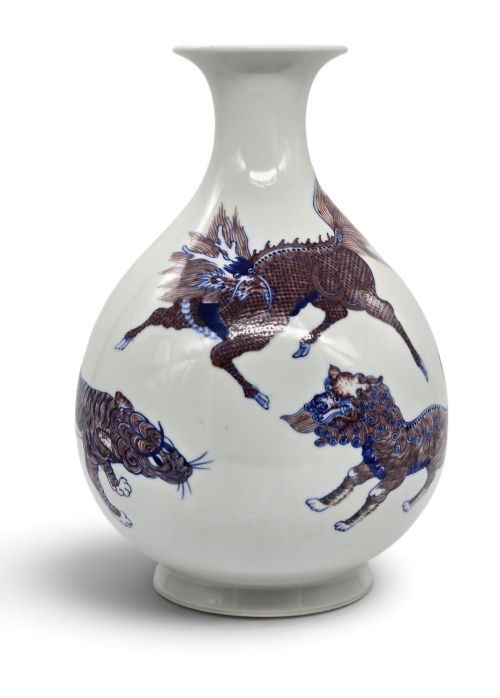

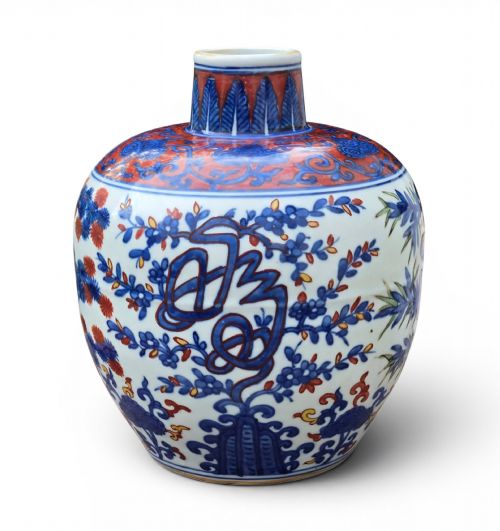


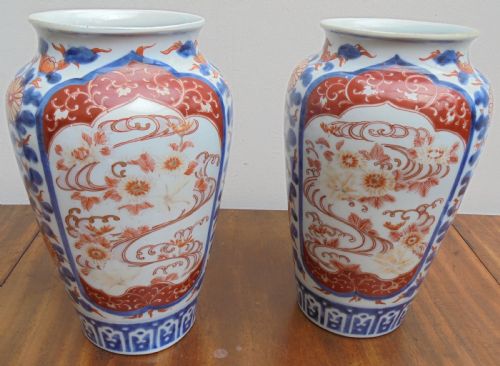
Underglaze Blue Red Vase
An underglaze blue red vase brings together layered mineral pigments and porcelain, offering a rich focal point for a period interior.
Underglaze Blue Red Vase
When you search for an underglaze blue red vase, you encounter ceramics that combine deep cobalt blue painted directly on the clay body with vibrant iron-red enamel or copper-red details added either beneath or over the glaze. The examples available here span centuries of craftsmanship, ranging from the intricate vessels of the Ming and Qing dynasties to nineteenth-century Japanese Imari productions.
The forms on this page include traditional garlic-mouth vases, double gourds, decorative jars, and even pieces adapted as table lamps. These diverse shapes demonstrate how potters utilised the fluid canvas of porcelain to showcase contrasting cobalt outlines alongside rich red highlights.
Originating predominantly from Chinese and Japanese kilns, these items reflect distinct regional aesthetic choices, from imperial longevity motifs to bold Japanese Imari patterns. A buyer looking at this selection engages with a long-standing tradition of high-temperature firing and meticulous hand-painting.
Assessing quality and craftsmanship
The distinction between ordinary and superior pieces rests on the precision of the brushwork and the clarity of the cobalt and red pigments. Finer examples display crisp delineation of mythical beasts, longevity symbols, or floral motifs without blurring or running in the kiln.
The weight, translucency, and purity of the porcelain body also signal higher quality, alongside the evenness of the glaze application across complex forms such as hexagonal or double gourd shapes. Control over the challenging copper-red or iron-red pigments separates masterworks from standard production pieces.
Age and historical context further differentiate the selection, with marked imperial pieces or well-preserved transitional vessels holding particular significance for collectors. The integrity of the shape and the harmony between the blue underglaze and the contrasting red enamel dictate the overall presence of the object.
Underglaze Blue Red Vase Retail Price Guide 2026
Typical asking prices for underglaze blue red vase among the pieces listed under this phrase on Sellingantiques today, from the lower quarter to the upper quarter. They describe what is for sale here now, not the wider market.
Listings feature porcelain vessels spanning from the sixteenth century through the nineteenth century, including Ming and Qing dynasty pieces.
The Underglaze Blue Red Vase Glossary
- Underglaze blue
- A method of decorating pottery in which cobalt pigment is applied to the raw clay body before glazing and firing. This technique protects the blue decoration beneath a glassy surface layer.
- Iron-red
- A brick-red enamel pigment derived from iron oxide, used widely in Chinese and Japanese ceramics. It is typically applied over the glaze and fired at a lower temperature.
- Imari
- A style of Japanese export porcelain characterised by a palette of underglaze blue, iron-red, and gold. It gained prominence during the Edo period and inspired European imitations.
- Transitional period
- A phase in Chinese ceramic history, spanning the late Ming dynasty to the early Qing dynasty, marked by political upheaval and innovative painting styles on porcelain. Pieces from this era often feature narrative or animal scenes.
- Celadon
- A type of ceramic glaze known for its jade-green colour, resulting from iron oxide in the glaze recipe being fired in a reducing atmosphere. It provides a subtle, monochromatic background compared to painted blue and red wares.
Underglaze Blue Red Vase: Frequently Asked Questions
How do I care for my vase?
Dust the surface gently with a soft, dry cloth to prevent any accumulation of dirt in the recesses of the glaze. Avoid using chemical cleaners or immersing antique ceramics in water, particularly if they feature overglaze enamels or metal fittings.
Keep the piece away from direct sunlight and areas subject to sudden temperature fluctuations to protect the integrity of the porcelain body and the mineral pigments.
Are these pieces water tight?
Many antique porcelain vessels retain their water-tight properties due to the vitrified nature of the clay and the complete glaze coverage. However, due to age and potential hairline fractures not immediately visible, placing a liner inside is advisable if you intend to use them for fresh flowers.
For pieces that have been converted into table lamps or bear historical repairs, avoid filling them with liquid entirely to preserve their structural stability.
How can I tell the period?
Dating relies on examining the painting style, the tone of the cobalt blue, the characteristics of the foot rim, and the specific composition of the porcelain body. Imperial marks, when present, offer a direct reference point, though apocryphal marks appear frequently across later centuries.
Comparing the potting technique and glaze texture with documented examples from periods such as the late Qing dynasty or the Ming dynasty helps clarify the likely age of the vessel.