





Two Section Mahogany Chest
A two section mahogany chest offers sturdy proportions and classic timber warmth, designed to divide easily for travel or placement.
Two Section Mahogany Chest
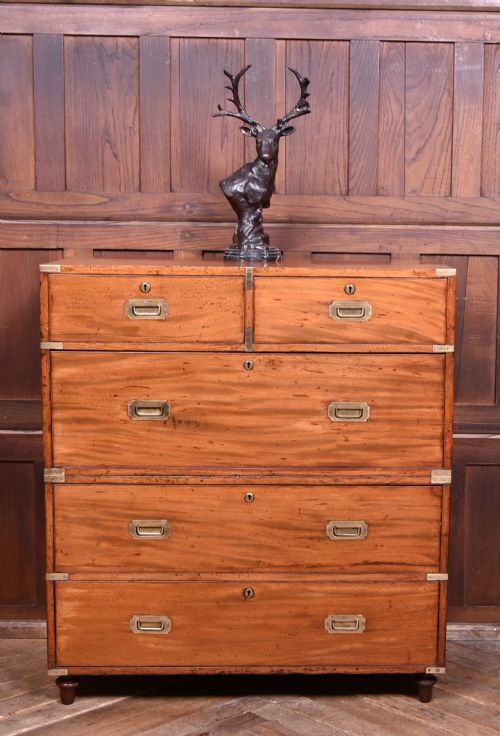
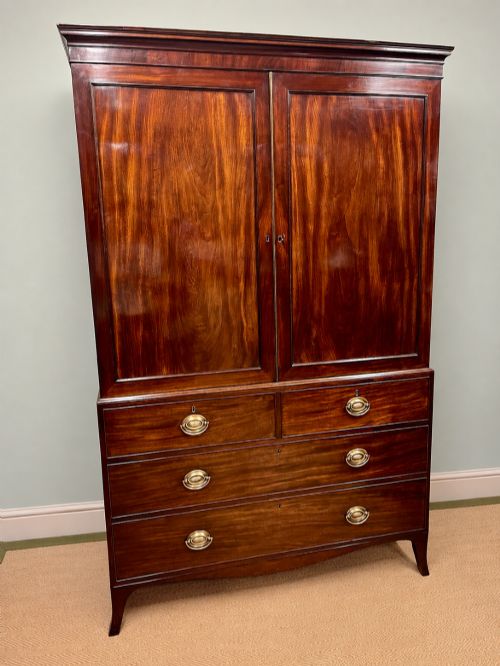
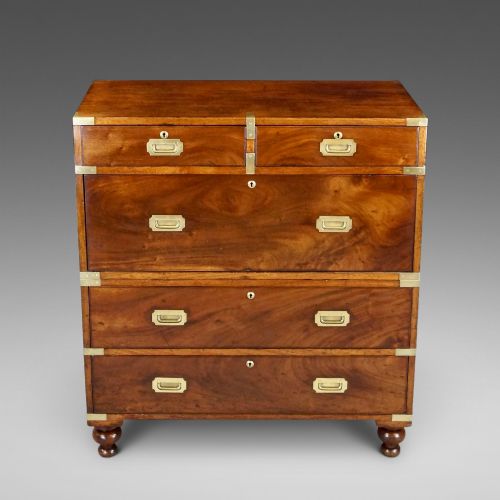
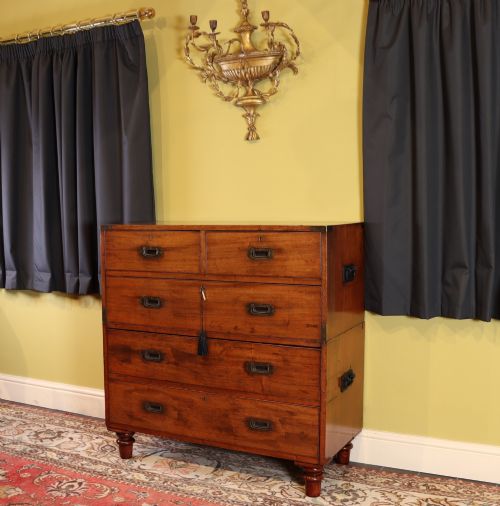
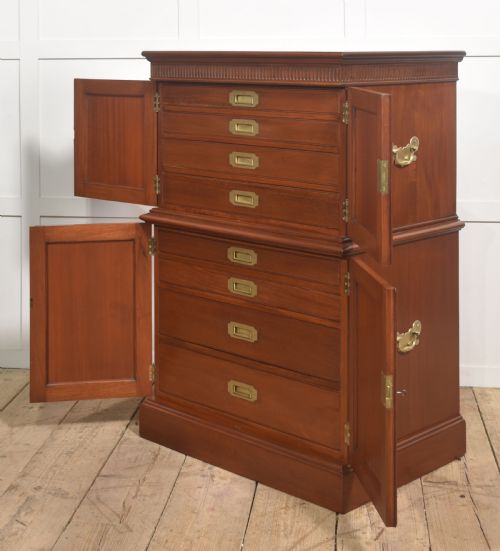
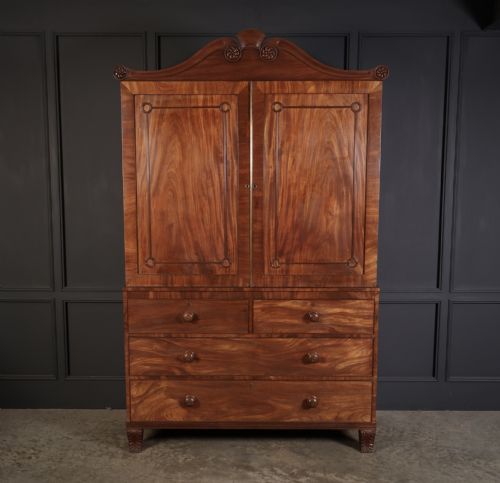
A two section mahogany chest comprises a top and bottom carcase designed to stack securely, typically built for officers and travellers during the nineteenth century. These items appear across Regency, Victorian, and Edwardian periods, frequently manifesting as military campaign furniture or tall linen presses.
The format provides deep drawer storage while remaining manageable to transport in separate halves. Buyers encounter traditional chest of drawers configurations alongside fitted collectors cabinets and linen presses featuring internal sliding trays.
Origins span standard domestic workshops to specialised makers producing robust campaign pieces. Most examples utilise dense timber varieties shaped for practical service rather than purely decorative display.
How they were made
Carpenters constructed these pieces using solid mahogany and flame mahogany veneer applied over secondary timbers. Brass corners, flush-fitting pulls, and carrying handles reinforce the structural joints and protect the edges during transit.
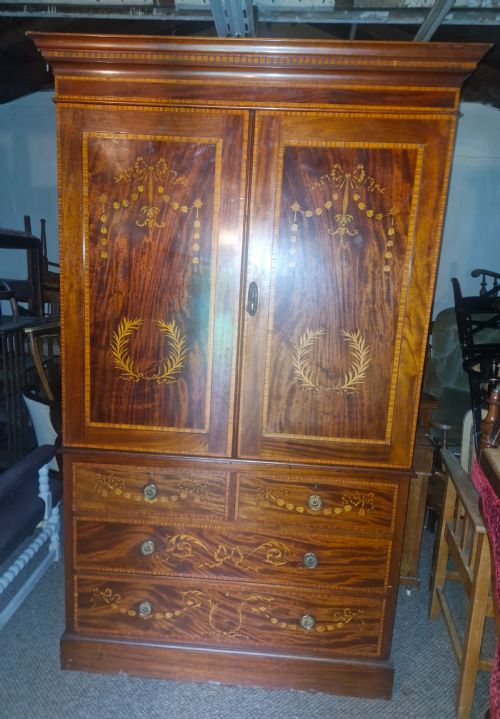
Many items incorporate crossbanding in rosewood or satinwood to define drawer fronts and cornices. Dovetail joinery secures the drawer boxes, ensuring stability across repeated dismantling and assembly.
Some drawers retain stubborn old sea salt trapped in the brass corners from decades stationed in humid colonial outposts.
What varies in quality
The refinement of the brass hardware and the crispness of the flush-fitting handles distinguish standard utility pieces from finer commissions. Heavy brass binding integrated cleanly into the timber indicates careful workshop execution.
Select examples display superior timber selection, such as figured flame mahogany veneer balanced symmetrically across the drawer fronts. Subtle inlay work and secondary woods like teak or satinwood also signal higher production standards.
S. W. Silver & Co. London & Liverpool·Druce & Co.
The Two Section Mahogany Chest Glossary
- Campaign chest
- A modular set of drawers built in two or more stacking sections for ease of military transport. These pieces usually feature recessed brass handles and corner brackets.
- Linen press
- A large cupboard combining upper sliding trays or shelves with lower drawer storage. They often present panelled doors beneath a moulded cornice.
- Crossbanding
- A decorative border of veneer laid around the perimeter of a drawer front or top surface with the grain running perpendicular to the centre.
- Flame mahogany
- A highly figured cut of mahogany displaying a distinctive feather-like or flame pattern across the timber grain. Makers utilised this veneer on prominent exterior surfaces.
Two Section Mahogany Chest: Frequently Asked Questions
How do two section chests come apart?
The structure divides horizontally into a top half and a bottom half, held together by internal alignment pins or brass side brackets.
Lifting the upper section straight up separates the two units for easier movement through tight hallways or up stairs.
Why do some chests have brass corners?
Brass reinforcement protected the vulnerable wooden edges from heavy impacts during military transport and travel.
These metal fittings also provided flush attachment points for carrying handles without protruding from the sides.
What is the difference between a chest and a linen press?
A chest consists solely of horizontal drawers stacked within a carcase. A linen press adds an upper cabinet section with internal sliding shelves or trays above the lower drawers.
Presses were traditionally used for storing folded household textiles rather than garments hung on rails.
How do I date a mahogany campaign chest?
Examination of the drawer construction, brass hardware style, and secondary woods helps determine the production period. Pieces associated with nineteenth-century military campaigns often display maker stamps or specific recessed handle designs.
Stylistic shifts from Regency neoclassical lines to heavier Victorian proportions offer further chronological markers.