

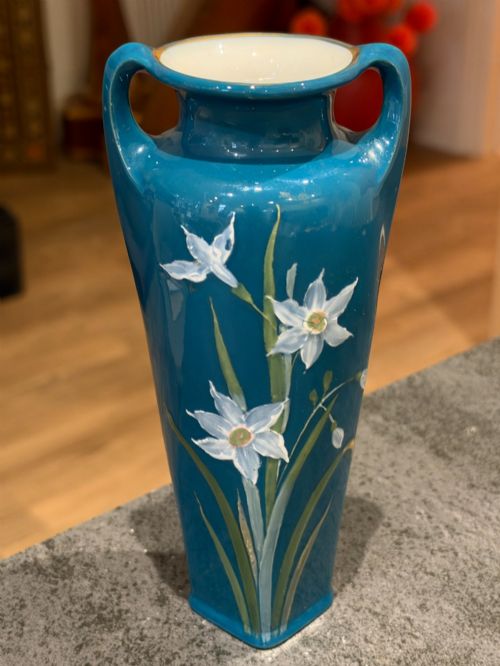
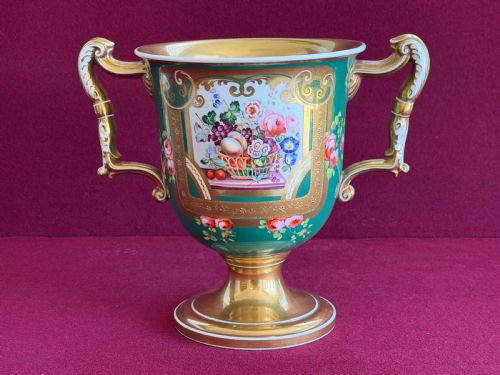


Two Handled Porcelain Urn
A two handled porcelain urn brings classic neoclassical elegance into a room, offering striking symmetry and fine painted detail.
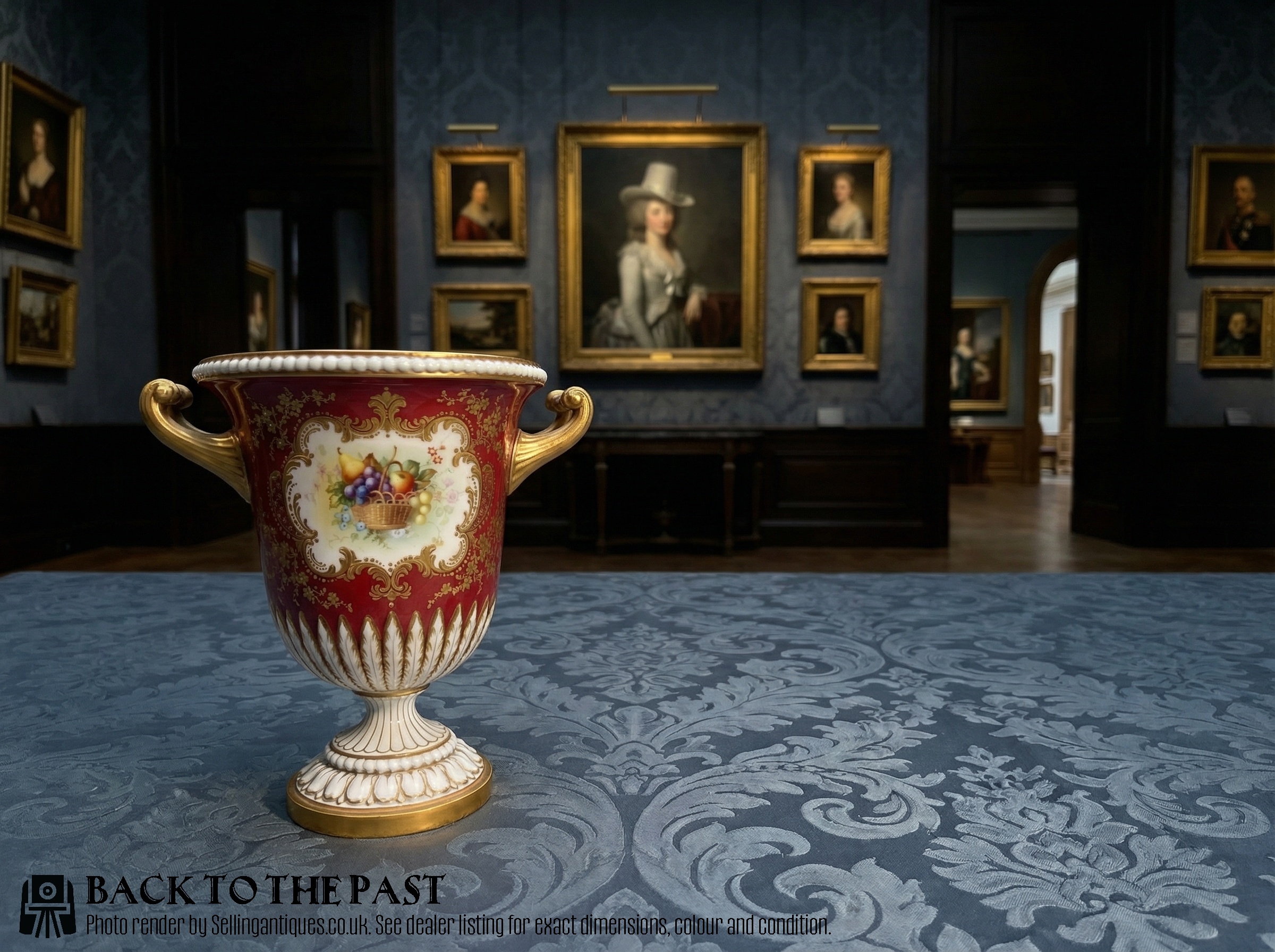
Two Handled Porcelain Urn
Buyers most frequently encounter nineteenth-century English and continental productions, particularly works from makers like Royal Worcester alongside KPM and Spode pieces. These vessels range from stark white and gilt designs to richly painted botanical or figural scenes executed by named artists.
The objects serve primarily as decorative centrepieces or mantel ornaments, carrying historical weight through their varied manufacturing origins and artistic traditions. Each piece demonstrates the enduring appeal of twin-handled ceramic forms across different European and Asian workshops.
How they were made
Makers shaped fine porcelain and earthenware bodies before applying intricate enamel paints and detailed gold leaf, gilding, or gilt highlights. Hand-painted decoration frequently required skilled artists to render fruit, landscapes, or botanical studies directly onto the ceramic surface prior to firing.
Vessels such as those from Derby, Spode, and Royal Worcester combined thrown or moulded ceramic bodies with applied handles, securing structural balance in both large decorative urns and smaller loving cups. Artisans then utilised gold gilding to accentuate rims, bases, and handle contours.
Two Handled Porcelain Urn Retail Price Guide 2026
Typical asking prices for two handled porcelain urn among the pieces listed under this phrase on Sellingantiques today, from the lower quarter to the upper quarter. They describe what is for sale here now, not the wider market.
The selection includes forms ranging from large decorative vases and covers to loving cups and fruit vases created by English and continental makers.
What varies in quality
Quality rests significantly upon the skill of the hand-painted decoration, distinguishing standard factory output from pieces signed by notable painters such as Zachariah Boreman, William Hawkins, or Richard Seabright. Finer examples display superior brushwork, depth of enamel colour, and meticulous application of gold leaf.
The crispness of the porcelain moulding and the preservation of the original gilding dictate the overall calibre of an urn. Pieces exhibiting robust proportions alongside well-defined handles and unblemished painted panels represent the upper tier of the range.
H & R Daniel·Derby Porcelain·Spode·Royal Worcester·KPM
The Two Handled Porcelain Urn Glossary
- Porcelain
- A hard, white, translucent ceramic material fired at high temperatures. It forms the smooth body essential for fine decorative painting and gilding.
- Gilding
- The application of gold leaf or gold paint to ceramic surfaces. This technique highlights handles, rims, and decorative borders on classical urns.
- Neoclassical
- An artistic style drawing inspiration from classical antiquity. It influences the symmetrical forms and balanced proportions seen on many eighteenth and nineteenth-century vases.
- Loving Cup
- A large ceramic vessel equipped with two or multiple handles designed for shared drinking. They often appear decorated with commemorative or ornamental painting.
- Imari
- A traditional Japanese style of ceramic decoration featuring distinct blue, iron red, and gold palettes. It appears on nineteenth-century vases imported to or emulated in the West.
Two Handled Porcelain Urn: Frequently Asked Questions
How were these antique urns used?
Historically, these ceramic urns served as ornamental centrepieces within domestic interiors, reflecting the refined tastes of their owners. Rather than functioning as utilitarian containers, their primary purpose was aesthetic display.
Certain related forms, such as loving cups, had social functions during gatherings, but the larger vases and urns remained stationary decorative items. Their sturdy porcelain and earthenware construction ensured they endured as focal points in period rooms.
How do I style a porcelain urn?
Living with a porcelain urn involves placing it where its symmetrical form and painted details can be appreciated without risk of accidental damage. Mantelpieces, entrance hall consoles, and cabinet tops provide traditional settings that highlight their architectural qualities.
Pairing an urn with complementary antiques or letting it stand alone as a solitary statement piece allows the craftsmanship and gilding to command attention. The neutral or painted tones adapt well to both traditional and eclectic interiors.
How can I tell the period apart?
Differentiating periods relies on examining stylistic markers, paste compositions, and any factory marks stamped or painted on the base. Eighteenth-century pieces often display neoclassical motifs, while Victorian and Edwardian examples may show denser gilding or specific floral painting.
Signatures from known artists or specific factory ciphers help narrow down the date of manufacture. Comparing the weight, glaze texture, and handle attachment style provides further clues to an item's age.