
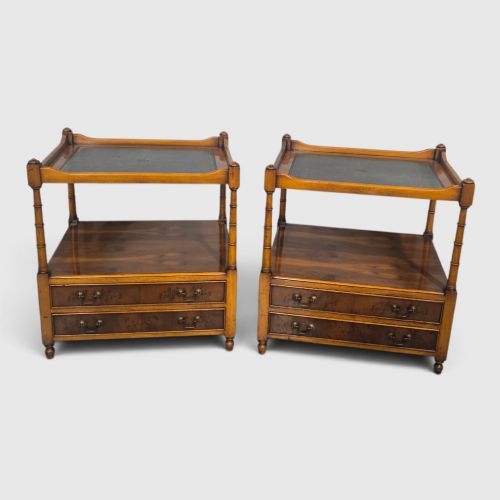
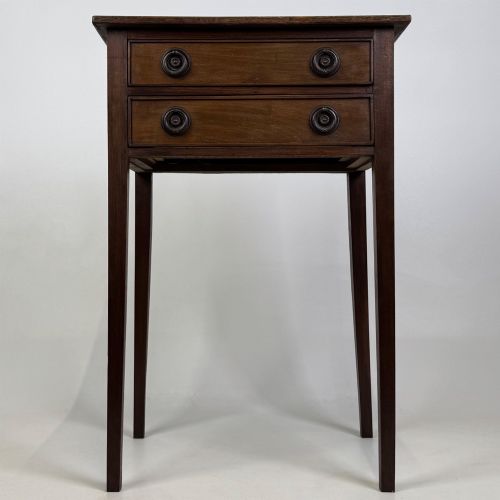
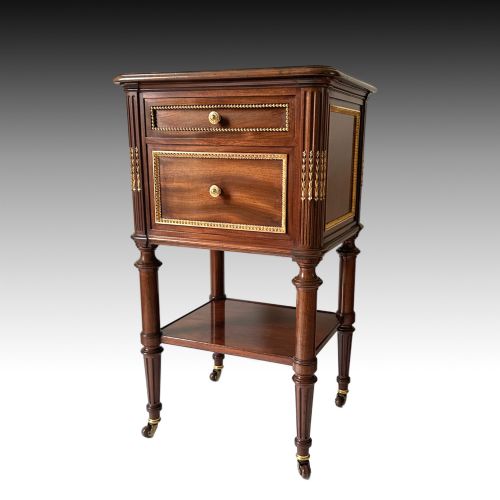
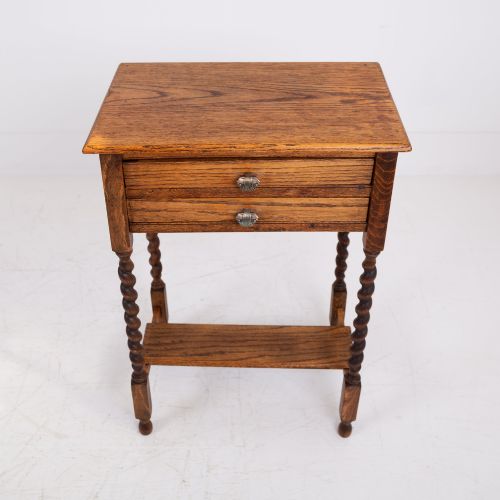

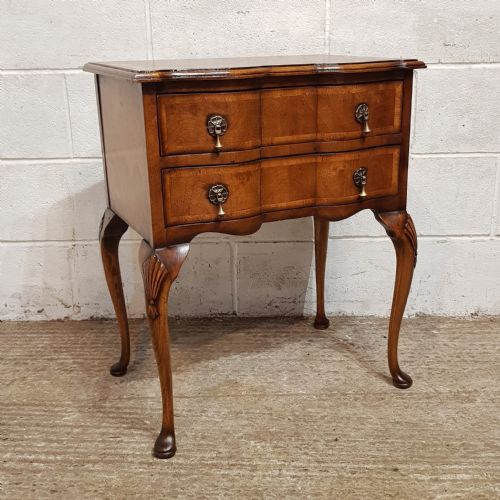

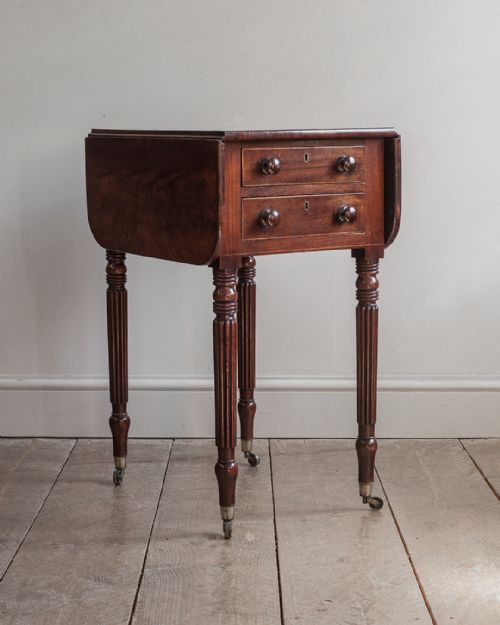
Two Drawer Bedside Table
These two drawer bedside table pieces combine compact storage with period character, offering a practical bedside surface scaled for daily use.
Two Drawer Bedside Table
A two drawer bedside table serves as a functional companion piece for the bedroom, providing concealed storage within a compact footprint. Buyers seeking this form encounter various historic interpretations ranging from Edwardian and Victorian examples to pieces influenced by Regency and Georgian design.
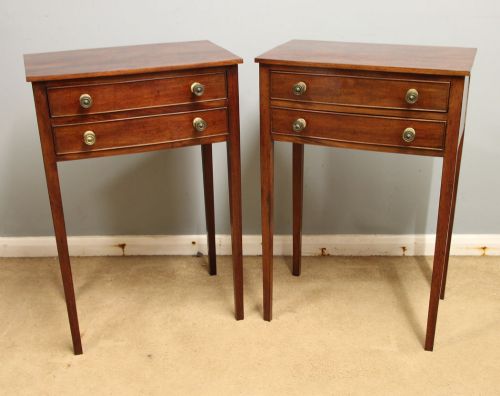
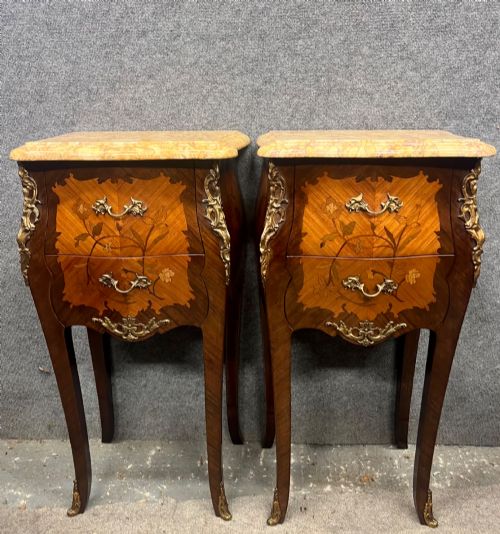
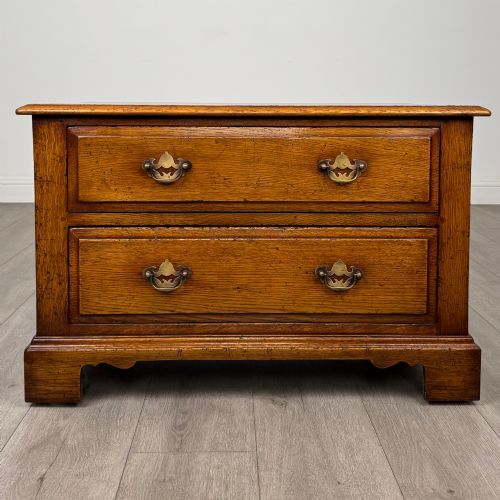
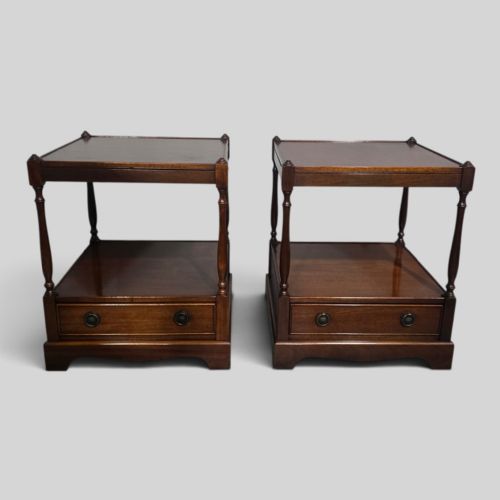
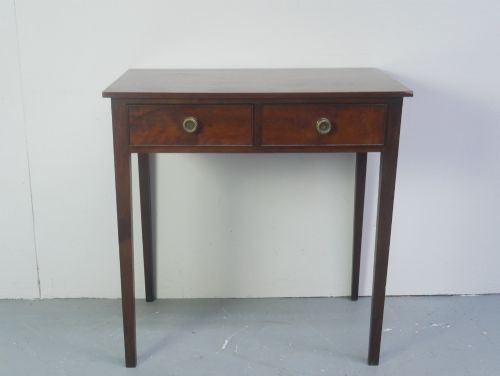
The pieces listed on this page manifest as dedicated bedside cabinets, small side tables, and diminutive chests of drawers featuring two operational drawers. Materials span traditional timbers like mahogany, oak, walnut, and yew, occasionally paired with marble or ormolu mounts.
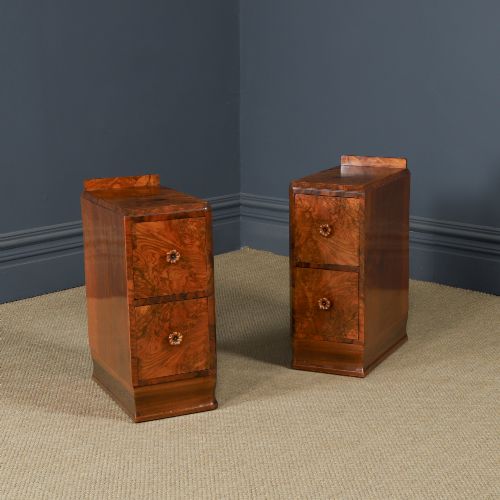
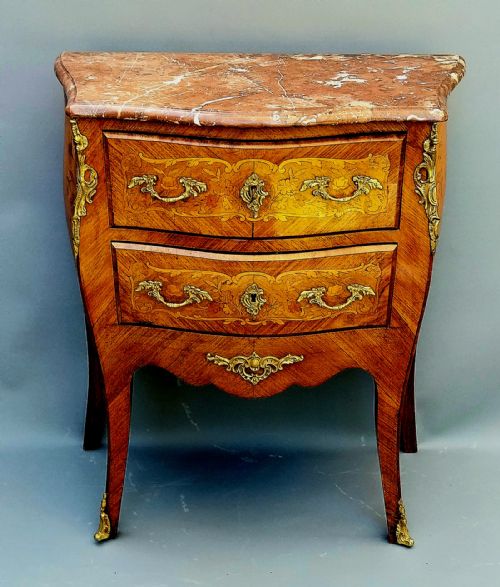
Origins stretch across English workshops and continental makers, producing distinct stylistic variations from French provincial bombe shapes to clean-lined Art Deco nightstands. The most frequent encounters on this page include mahogany Edwardian designs and 1930s walnut or oak pieces.
Construction and materials
Cabinet makers utilised dense hardwoods such as mahogany, oak, walnut, and rosewood, frequently applying burr walnut or satinwood veneers to prominent surfaces. Timber selection governed both the structural integrity and the visual grain pattern of each small chest or table.
Decorative techniques recorded in the evidence include marquetry inlay, brass hardware fittings, leather top inserts, and gilt bronze ormolu accents. Joinery methods relied on traditional drawer construction to support frequent daily use in domestic chambers.
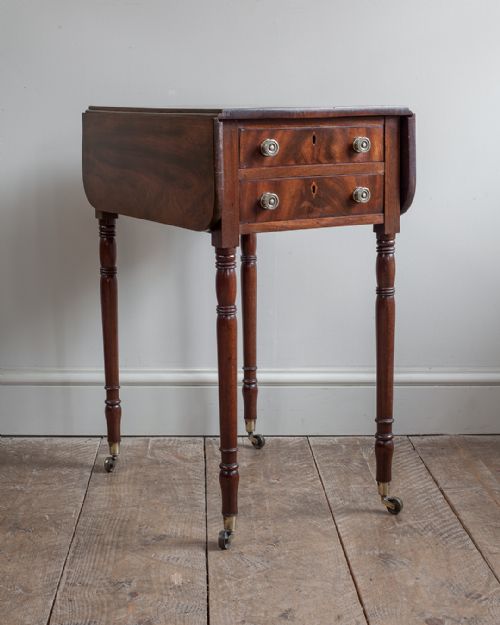
Some tables began life as sewing companions before quietly retiring to hold bedtime reading and alarm clocks.
Distinctions in craftsmanship
The upper tier of pieces displays superior timber selection, evident in carefully matched burr walnut veneers or finely figured mahogany grains. Finer examples also exhibit precise marquetry inlay and well-executed brass or ormolu mounts that integrate harmoniously with the primary wood.
Structural refinement separates standard production items from finer workshop output, particularly in the smoothness of drawer operation and the crispness of edge mouldings. Proportions also dictate quality, with better pieces maintaining balanced scaling suited to intimate bedside placement.
The Two Drawer Bedside Table Glossary
- Ormolu
- Gilt bronze ornamentation applied to furniture mounts and details. This decorative technique appears frequently on French pieces alongside mahogany.
- Marquetry
- Decorative veneer work arranged in intricate patterns using various coloured woods. It creates detailed surface ornament on tabletops and drawer fronts.
- Bombe
- An outward-swelling serpentine contour characteristic of certain continental furniture forms. This curved profile defines specific French bedside chests.
- Serpentine
- A gently undulating furniture front curving convexly at the sides and concavely in the centre. This shape adds fluidity to smaller side tables.
- Work table
- A small occasional table equipped with drawers or compartments designed originally for sewing or needlework. These frequently translate well into bedside use.
Two Drawer Bedside Table: Frequently Asked Questions
What defines a two drawer bedside table?
These pieces are compact storage items featuring a surface top and two stacked drawers, designed to sit beside a bed. They provide accessible storage for bedside essentials while maintaining a small spatial footprint.
The listings show forms ranging from dedicated bedside cabinets and nightstands to small side tables and diminutive chests of drawers spanning multiple historic periods.
How were these tables used historically?
Historically, small tables and cabinets served varied domestic purposes in bedrooms, holding lighting, reading materials, and personal items. Some variations originated as sewing or work tables before finding modern adaptation beside the bed.
Their scaled dimensions allowed them to fit snugly into chamber layouts without dominating the room space, providing practical surface utility.
How do I live with antique bedside tables?
Living with older furniture involves balancing historic character with everyday utility, accepting natural timber patina and previous use. Using coasters and protective pads helps preserve polished mahogany, walnut, or marble surfaces from daily wear.
Their compact proportions mean they integrate easily alongside contemporary beds, offering functional drawer storage that complements varied interior styles.
How do I tell periods apart?
Identifying periods relies on observing characteristic design details, timber choices, and overall cabinet proportions. Georgian and Regency pieces show classic restraint and mahogany grain, while Edwardian examples often feature delicate inlaid stringing.
Later 1920s and 1930s pieces introduce geometric Art Deco lines, bleached oak finishes, or contrasting yew woods, marking a distinct shift from earlier traditional styles.