



Vintage French Chevet Table
A vintage french chevet table provides compact bedside storage with continental elegance, bringing practical surface space and period character to a bedroom.
Vintage French Chevet Table
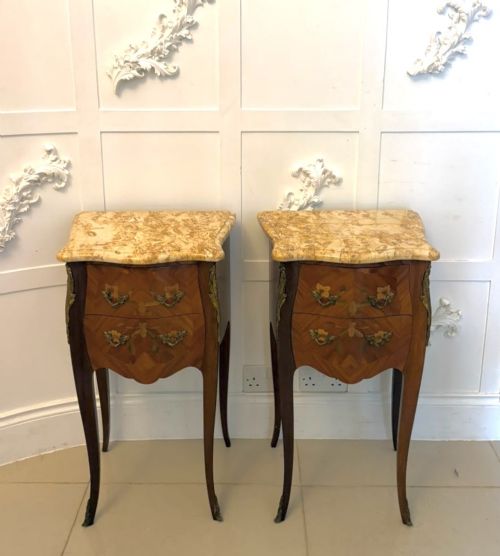
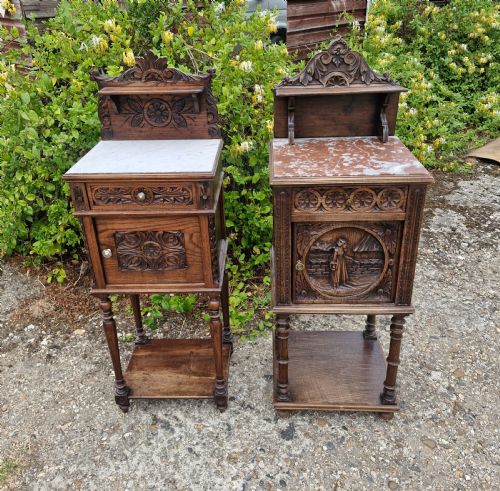
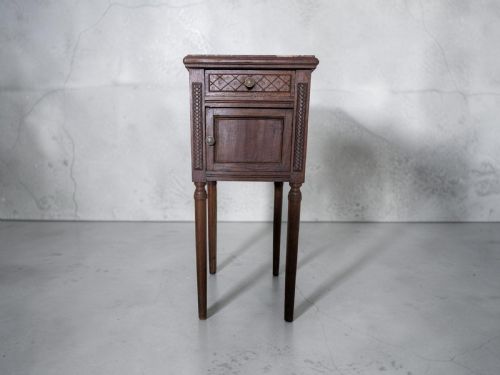
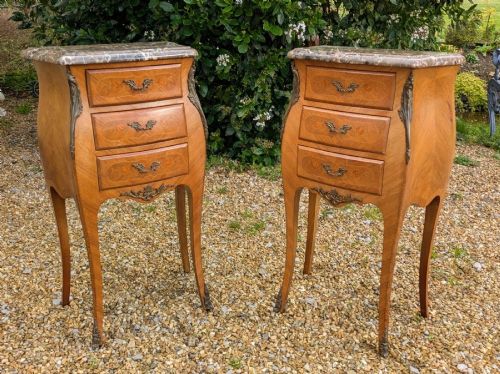
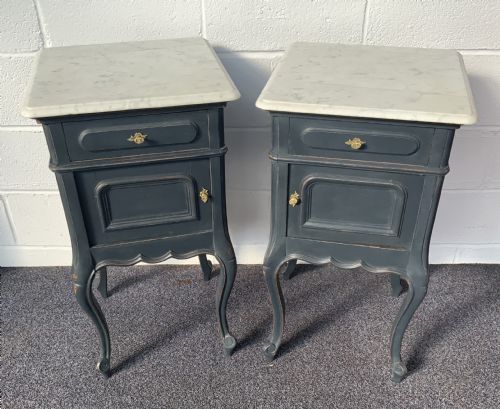
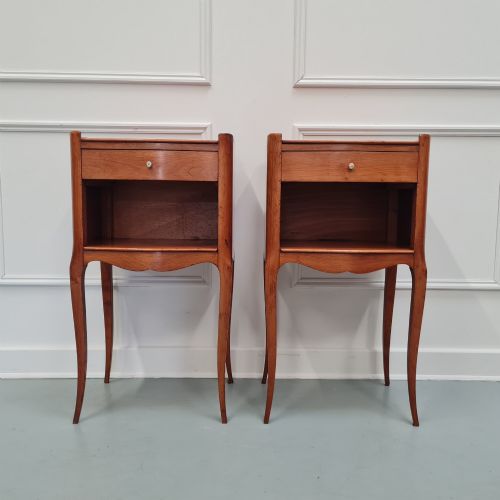
A vintage french chevet table appears on this page in forms such as bedside cabinets, bedside tables, side cabinets, and nightstands. These pieces originate from periods spanning the nineteenth century, Victorian era, and the early decades of the twentieth century, including the 1880s, 1890s, 1900, 1910, 1920, and 1930.
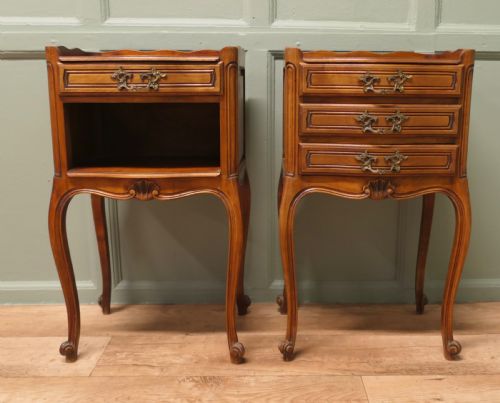
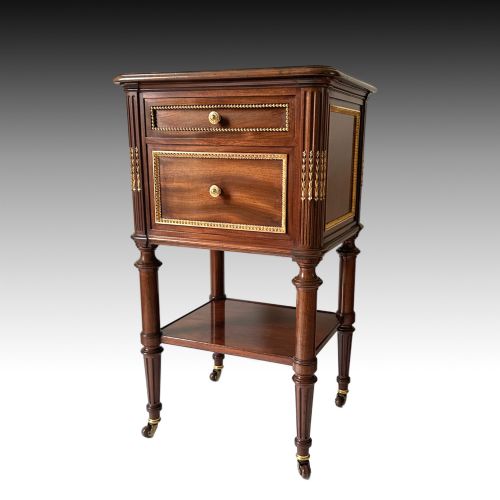
Buyers will most frequently encounter these items shaped by historical design movements. The listings reflect French Provincial, French Chateau, Louis XV, Louis XVI, and Rococo styles, alongside pieces finished with painted surfaces or natural wood grains.
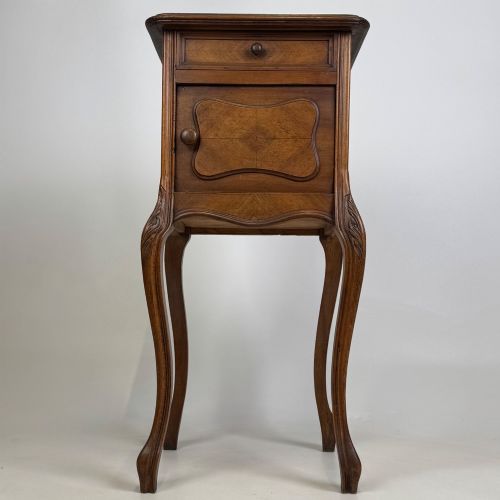
The primary function remains placing a compact cabinet beside a bed for night-time storage. Many examples take the form of enclosed cupboards or multi-drawer chests designed specifically for domestic sleeping quarters.
Materials and construction methods
Cabinet makers utilised a range of substantial timbers for these items, predominantly walnut, mahogany, oak, cherry, and kingwood. These woods formed the main carcass and structural framing of the bedside units.
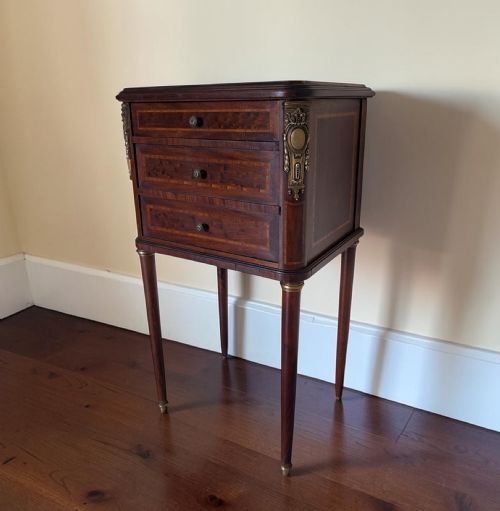
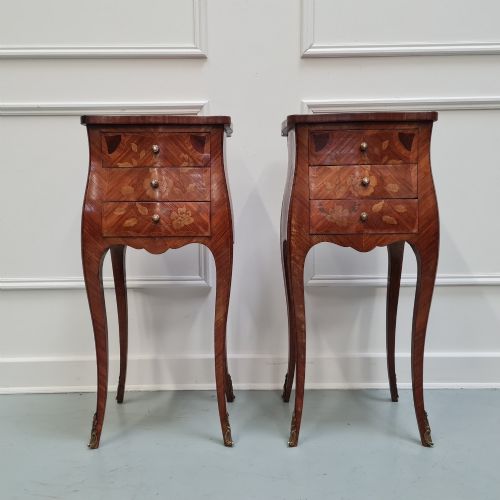
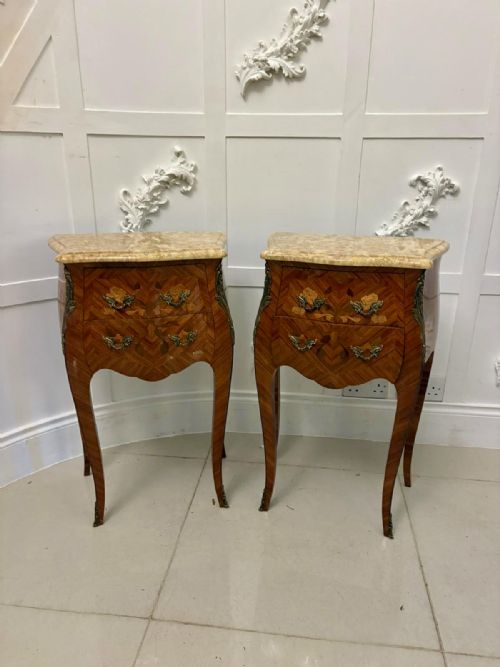
Decorative detailing relied heavily on applied brass mounts, ormolu, and intricate marquetry floral inlay work. Surfaces frequently incorporated inset marble tops, including Belgian Sainte-Anne marble, providing a durable and polished upper tier.
Some compact bedroom cabinets feature a dedicated candle shelf, designed for safely resting a nocturnal light source before sleep.
Distinctions in construction and finish
The standard of timber selection and the precision of marquetry inlay dictate the refinement of individual examples. Elaborate floral patterns executed in contrasting wood veneers require high levels of artisan skill compared to plain timber surfaces.
The integration of heavy materials like fitted marble slabs and cast ormolu mounts separates standard utility items from more ambitious decorative commissions. Finer versions exhibit careful matching of wood grains and well-executed hardware.
Structural complexity, such as the inclusion of sliding tambour shutters or multi-drawer configurations, influences the relative sophistication of the piece. The overall balance of proportions relative to historical design idioms defines the more successful interpretations.
The Vintage French Chevet Table Glossary
- Chevet
- A French term denoting a bedside table or small cabinet. It typically refers to compact furniture positioned beside a bed for holding lamps and small personal items.
- Ormolu
- Gilded bronze mounts applied as decorative ornaments to furniture pieces. This technique was widely utilised during revival periods to emulate eighteenth-century opulence.
- Marquetry
- The art of applying decorative veneer pieces to a structure to form intricate floral or geometric patterns. Craftsmen used various coloured woods to achieve tonal depth.
- Tambour
- A flexible shutter door constructed from narrow vertical strips of wood glued to a canvas backing. This mechanism allows access to enclosed cabinet spaces without outward-swinging doors.
- Sainte-Anne marble
- A specific type of dark grey or mottled Belgian limestone used for decorative table tops. It provides a cool, polished surface resistant to liquid spills.
Vintage French Chevet Table: Frequently Asked Questions
How were these bedside cabinets used historically?
These pieces served as bedside storage in European bedrooms, holding chamber candlesticks, night-time reading materials, and personal belongings.
The enclosed cupboards and drawers kept private items out of sight while providing a convenient upper surface for a lamp or water jug.
What is the difference between a chevet and a nightstand?
A chevet is the traditional French term for a bedside table, whereas nightstand is a more general modern descriptor used internationally.
Both terms describe low, compact furniture positioned next to a bed, though continental pieces often feature more elaborate marquetry or marble tops.
How do I identify a Louis XV style piece?
Louis XV style items typically display characteristic curved lines, cabriole legs, and organic floral marquetry motifs. These design elements reflect the asymmetry and grace associated with mid-eighteenth-century French aesthetics.
Revival pieces produced in later decades adopted these same flowing contours and decorative bronze mounts.