
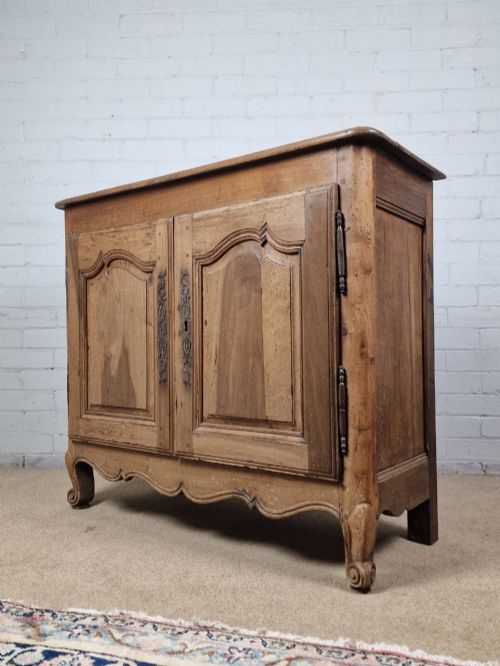
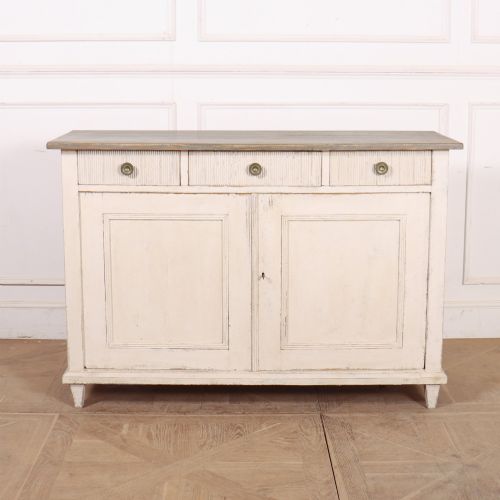
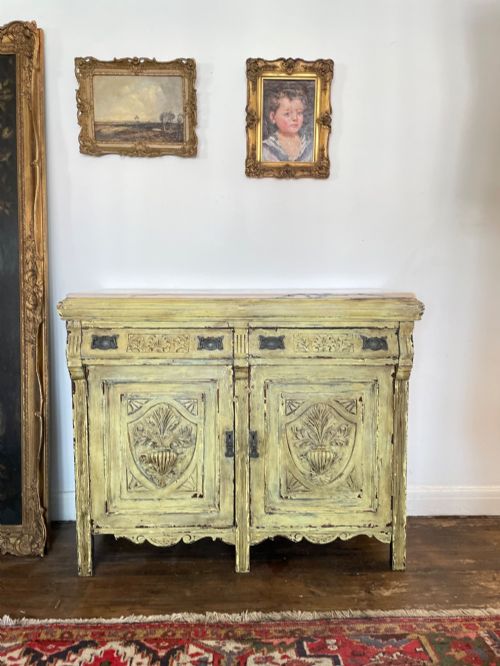
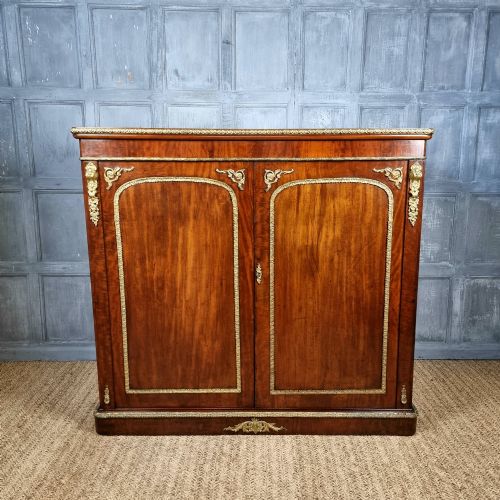


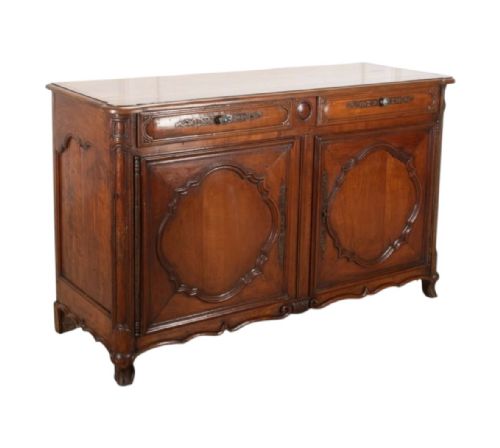


Two Door French Sideboard
A two door french sideboard brings robust storage and regional character to a room, drawing on centuries of European cabinet-making traditions.
Two Door French Sideboard
A two door french sideboard provides practical storage through a pair of hinged cabinet doors, often housing internal shelving for domestic use. These pieces serve dining rooms, hallways, and living spaces as both surface areas and storage units.
The selection here draws heavily on regional traditions, featuring forms ranging from provincial buffets to architectural cupboards. Pieces span from the 18th century through to the early 20th century, capturing shifts in domestic utility.
Buyers encounter regional country furniture alongside formal urban pieces, reflecting diverse local tastes across France. Common configurations include low dresser bases, tall housekeepers' cupboards, and marble-topped side cabinets.
How they were made
Cabinet-makers relied on solid hardwoods like oak, walnut, cherry wood, and mahogany for the primary carcase construction. Timber selection dictated the structural integrity and determined whether the surface received plain polishing or intricate carved detail.
Marble slabs frequently formed the upper surfaces of later or high-end items, providing a cool, durable counter. Metal components such as brass, iron, or ormolu provided functional hardware for hinges and locks alongside decorative mounts.
One piece arrived bearing the rustic charm of a barn find, complete with a pink marble top.
What varies in quality
The standard of timber selection and the crispness of hand-carved ornamentation set finer examples apart from utility pieces. Artisans who invested time in shaping panels and mouldings produced unified compositions with enduring structural balance.
Hardware integration and internal fittings reflect the original commission level, where bespoke brasses and fitted shelving indicate higher status. The thickness of stone tops and the precision of joinery at joints and corners signal skilled workshop output.
Gillows
The Two Door French Sideboard Glossary
- Buffet
- A low sideboard or cupboard used for storing and serving food. These items typically feature double doors enclosing shelving space.
- Directoire
- A transitional French design style characterised by classical restraint and rectilinear forms. This period bridges the gap between Louis XVI and Empire styles.
- Ormolu
- Gilded bronze mounted onto furniture for decorative effect. Craftsmen employed this technique to accent corners, keyplates, and door mounts.
- Provincial
- Furniture made in the regions outside major metropolitan design centres. These pieces often utilise local timbers and vernacular decorative motifs.
- Serpentine
- A furniture front or top curving inward centrally and outward at the ends. This undulating contour requires advanced woodworking skill to execute.
Two Door French Sideboard: Frequently Asked Questions
What is a two door french sideboard?
A two door french sideboard is an enclosed wooden storage unit featuring a pair of hinged cabinet doors on the front facade. These items function as buffets, cupboards, or serving cabinets within domestic interiors.
Craftsmen built them to hold tableware, linens, or provisions, combining a flat top surface with internal shelving. Their designs range from simple provincial oak constructions to sophisticated walnut and marble-topped pieces.
How do I date a french sideboard?
Dating relies on examining the timber species, construction methods, and stylistic indicators present in the woodwork. Pieces from the eighteenth century often display hand- carved panels and pegged joints specific to regional workshops.
Later nineteenth-century examples incorporate machine-sawn elements, mahogany veneers, or factory-cast brass hardware. Comparing the structural proportions and decorative motifs against known historical styles narrows the period of manufacture.
How were these sideboards used historically?
Households utilised these cabinets in dining rooms and kitchens to store heavy ceramics, glassware, and serving dishes. The top surface served as a staging area for food preparation or displaying tableware during meals.
Housekeeper cupboards and dresser bases accommodated domestic provisions and linens in large country houses. Their enclosed compartments protected contents from dust and pests before modern fitted kitchens existed.
Where should I place a sideboard?
These cabinets suit dining rooms for storing serving ware, or hallways as a statement storage piece. Their shallow depth allows them to sit comfortably along walls without blocking interior pathways.
Pairing a wooden or marble-topped cabinet with lighting or mirrors creates a functional focal point. Placement away from direct heat sources protects the antique timbers and natural finishes from drying out.