




Two Door Chiffonier Sideboard
A two door chiffonier sideboard provides practical low storage with a disciplined surface for display, prized for its compact footprint.
Two Door Chiffonier Sideboard
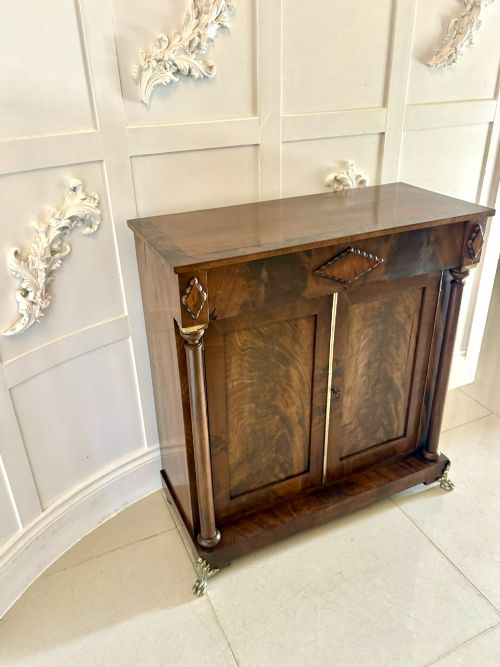
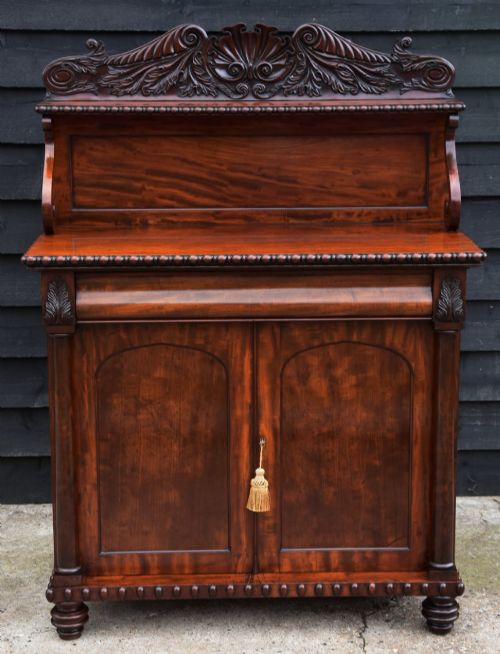
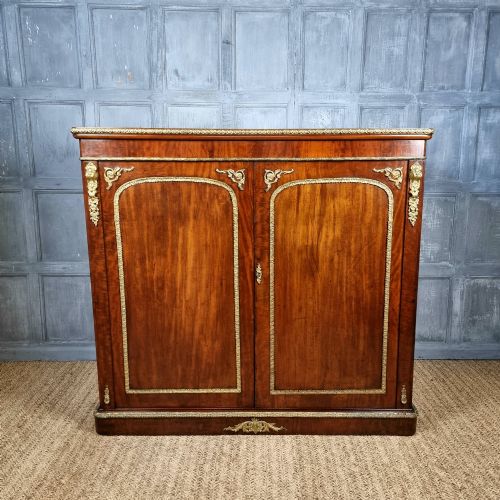
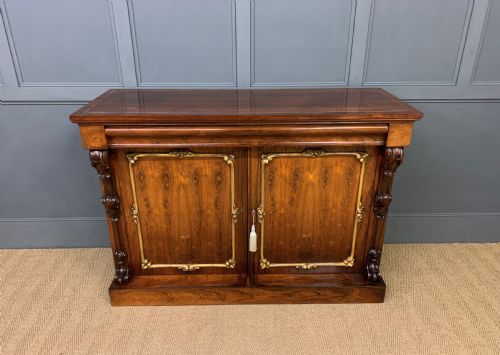
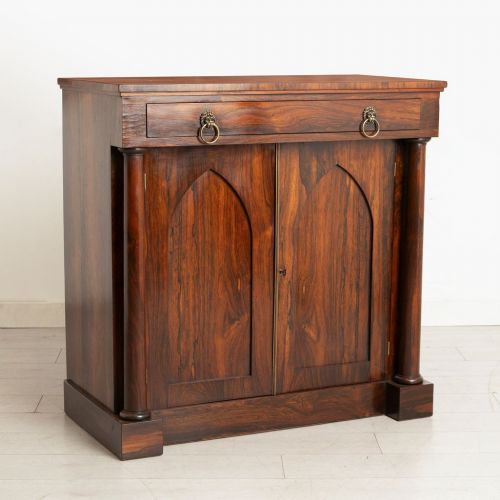
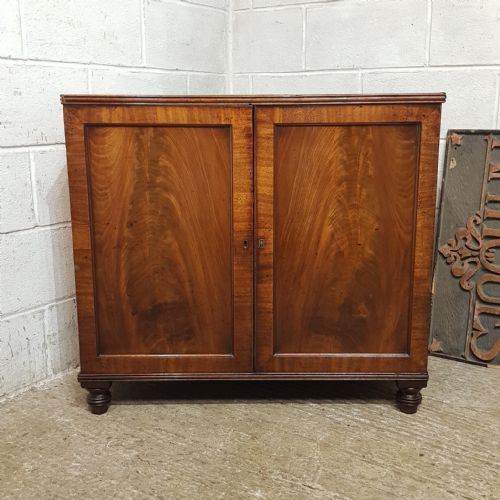
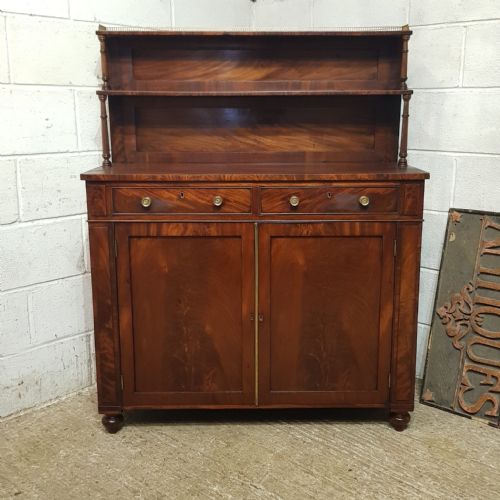
A two door chiffonier sideboard combines enclosed lower shelving with a low cabinet form, emerging frequently across the Regency and Victorian periods. These pieces serve primarily as dining room servers or parlour side cabinets, offering compact storage behind twin doors.
The selections span distinct regional variants including Anglo-Indian solid satinwood and French mahogany forms alongside standard English workshops. Buyers encounter mahogany, flame mahogany veneer and rosewood surfaces most often in these listings.
Materials and construction
Cabinet makers utilised dense timbers like mahogany, rosewood and walnut, frequently applying flame mahogany veneer to create striking grain patterns on the twin doors. Solid cedar, pine and satinwood also appear as structural or primary woods depending on the regional origin.
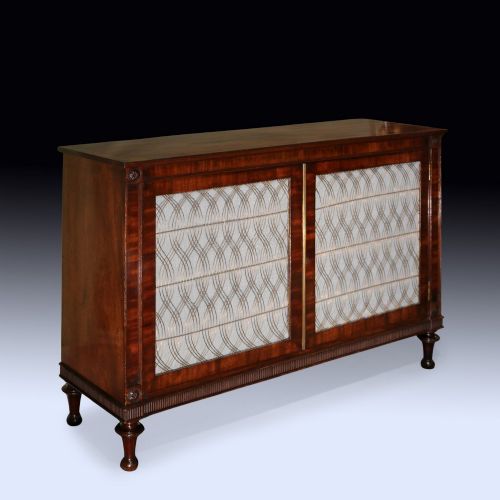
Detailing often incorporates brass inlays, brass grilles and gilt brass mounts to accent the timber framework. Structural joining relies on traditional cabinet making techniques suited to the 19th century workshop tradition.
Some cabinet makers incorporated brass wire grilles behind the doors, perhaps allowing early remote ventilation for delicate items.
Judging quality in a two door chiffonier sideboard
The selection of timber grain on the doors dictates much of the visual appeal, with matched flame veneer representing superior material selection. Subtle decorative additions such as fine brass inlay or intricate carving elevate an ordinary carcase into a refined statement piece.
Proportion and structural integrity separate standard utility pieces from exceptional examples. Cabinet makers who paid careful attention to the alignment of timber and the restraint of applied ornament produced the most balanced survivors.
Gillows·S.Jamar
The Two Door Chiffonier Sideboard Glossary
- Chiffonier
- A low cabinet with doors enclosing shelves, distinct from taller sideboards by its modest height and serving surface.
- Flame Mahogany
- A veneer cut from the branch junction of the mahogany tree, displaying a characteristic flickering flame pattern.
- Palisander
- A dense timber resembling rosewood, utilised by cabinet makers for rich dark surfaces on 19th century pieces.
- Side Cabinet
- A low furniture form positioned against a wall for storage and display, encompassing cupboards and chiffoniers.
Two Door Chiffonier Sideboard: Frequently Asked Questions
What is a two door chiffonier sideboard used for?
These cabinets serve as practical storage units for dining rooms and sitting rooms, keeping tableware or books enclosed behind doors.
The top surface provides a convenient ledge for displaying lamps, decorative objects or serving dishes during gatherings.
How do I date a two door chiffonier sideboard?
Dating relies on identifying stylistic markers associated with periods like the Regency, William IV or Victorian eras.
Changes in timber choice, such as the shift from figured mahogany to rosewood or walnut, help narrow the decade of manufacture.
Are these pieces suitable for modern homes?
Their modest depth and low profile allow them to fit easily into hallways, dining rooms or living spaces without overwhelming the room.
The enclosed lower cupboards offer practical concealed storage for contemporary items while retaining traditional character.
What woods were used for these sideboards?
Mahogany remains the predominant timber, appearing frequently in solid form or highlighted with flame mahogany veneer.
Other examples utilise rosewood, walnut, satinwood, pine and cedar depending on the regional workshop and period.