




French Country Sideboard Cabinet
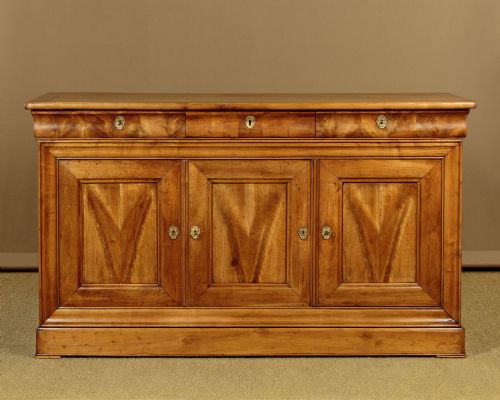
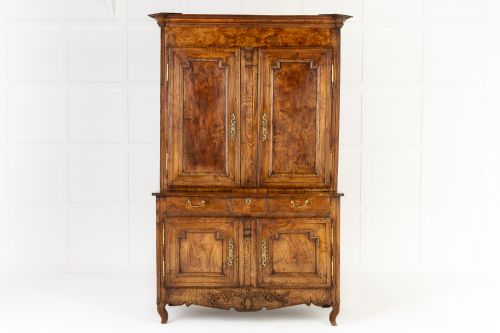
A french country sideboard cabinet brings rustic storage and regional character to a room, ranging from low buffets to tall dressers in oak, cherrywood and pine.
French Country Sideboard Cabinet
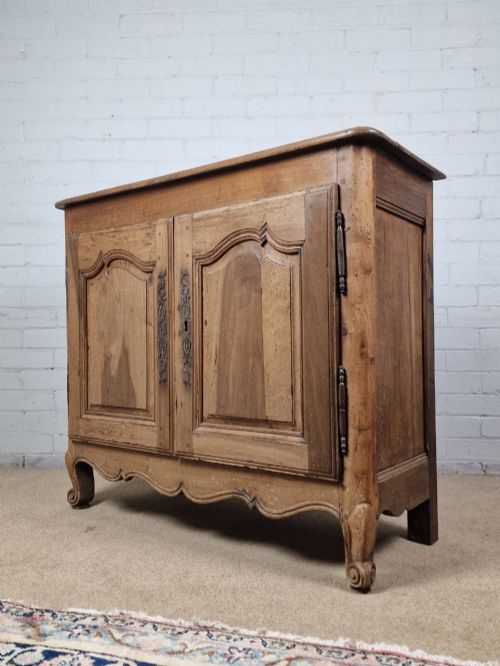
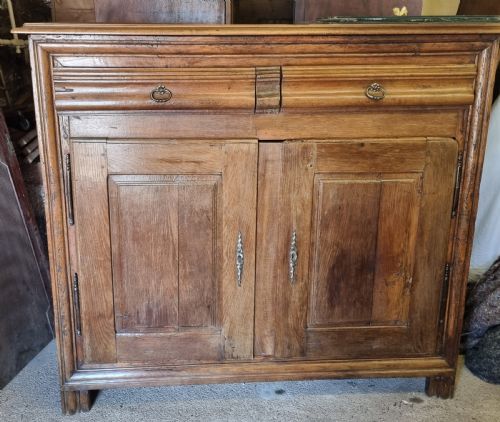
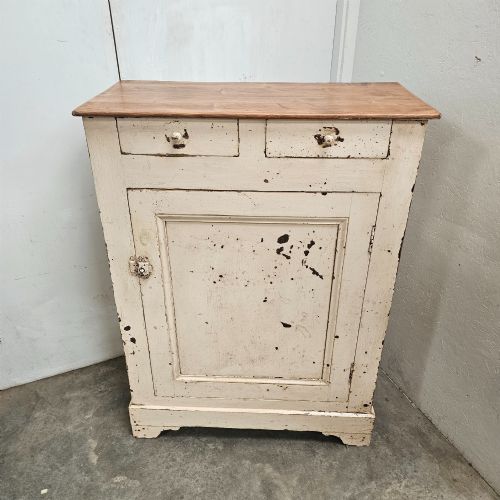
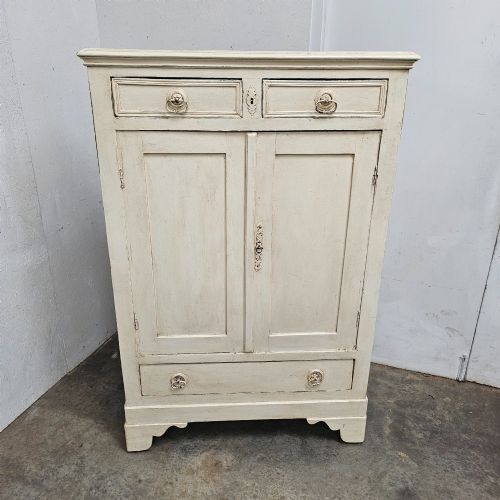
When buyers search for a french country sideboard cabinet, they are looking at practical storage pieces originating from French provinces, spanning the eighteenth and nineteenth centuries. These items include low buffets, enfilades, kitchen dressers, and cupboards constructed for rural domestic use.
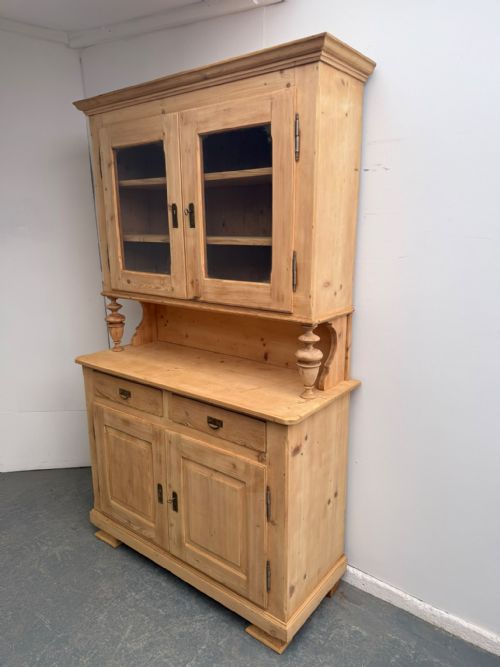
The most common versions met on this page are oak and cherrywood buffets from the eighteenth century, alongside nineteenth-century pine and fruitwood cupboards. These forms serve dining rooms, kitchens, and hallways with deep shelving and drawer space.
Regional variations appear across the selection, from Breton folk art cabinets to Louis Philippe style mahogany pieces and Provincial fruitwood commodes. Each object carries the utilitarian design typical of its specific French district.
How they were made
Makers utilised solid timbers such as oak, cherrywood, walnut, ash, and pine, often pairing native fruitwoods with durable structural frames. Iron hinges, locks, and brass mounts secure heavy doors on cupboards and enfilades.
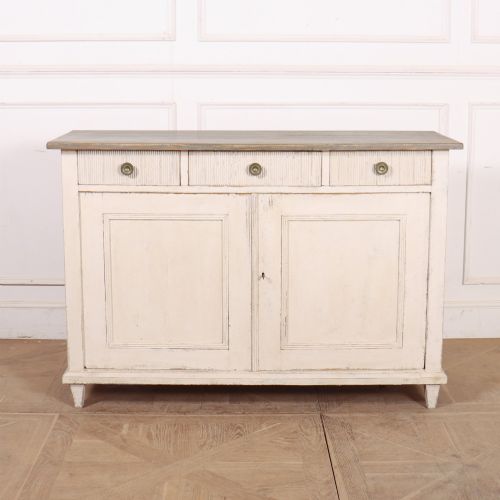
Surfaces receive traditional wax finishes, paint layers, or marble tops, particularly on nineteenth-century commodes and sideboards. Joinery relies on panelled construction and pegged joints rather than modern fasteners.
Regional forms span Breton folk art cabinets, Louis Philippe commodes, and sacristy cupboards built for French rural interiors.
What varies in quality
The degree of refinement in provincial carving and the selection of timber grain separate standard storage pieces from finer examples. Burr elm, figured cherrywood, and walnut panels indicate higher status regional commissions.
Original hardware, integrated marble slabs, and intact surface patination preserve the integrity of the piece. Alterations to interior shelving or replaced timber elements shift the balance away from original workshop condition.
The French Country Sideboard Cabinet Glossary
- Enfilade
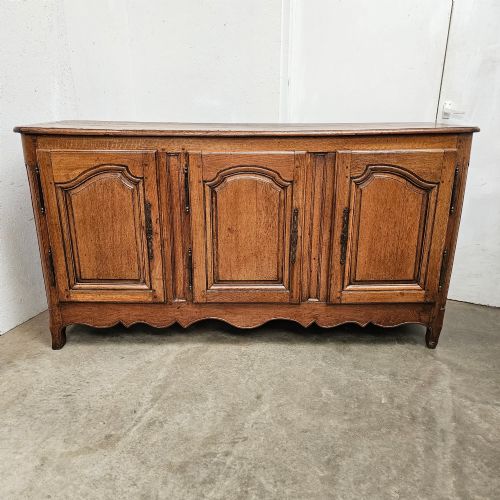
- A long sideboard featuring three or more doors in a continuous line, traditionally used for serving food in large dining spaces.
- Buffet deux corps
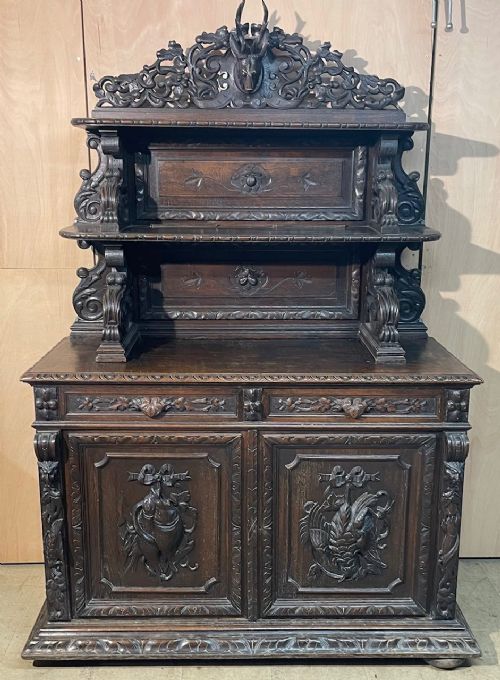
- A tall two-part dresser comprising a lower cabinet base and an upper display section enclosed by doors.
- Confiturier
- A small jam cupboard designed to store preserved fruits and provisions in provincial French kitchens.
- Mazarin commode
- A low drawer unit or desk featuring a recessed central cupboard flanked by banks of smaller drawers.
- Lit-clos
- An enclosed bed front from regions like Brittany, repurposed into cabinets or architectural furniture elements.
French Country Sideboard Cabinet: Frequently Asked Questions
Where do I put a french country sideboard cabinet?
These pieces fit naturally into dining rooms, kitchens, and large hallways where substantial storage is required for tableware or linens. Low enfilades and buffets also function well beneath wall art or mirrors in living spaces.
Their substantial depth means measuring the floor space carefully before placement is essential to maintain clear walkways in smaller rooms.
How do I clean a waxed wooden sideboard?
Dust the surface regularly with a soft, dry cloth and apply a quality beeswax periodically to nourish the dry timber. Avoid silicone sprays or harsh chemical cleaners that strip the historic patination.
Allow the wax to dry before buffing it gently with a clean cloth to restore a soft, natural sheen to the wood.
Are marble tops original to these cabinets?
Marble tops appear frequently on nineteenth-century commodes and later sideboards, providing a durable surface for daily domestic tasks. Earlier eighteenth-century buffets rely entirely on solid timber top boards.
When a marble slab is present, check that it sits flush within the wooden frame and matches the period of the base.