
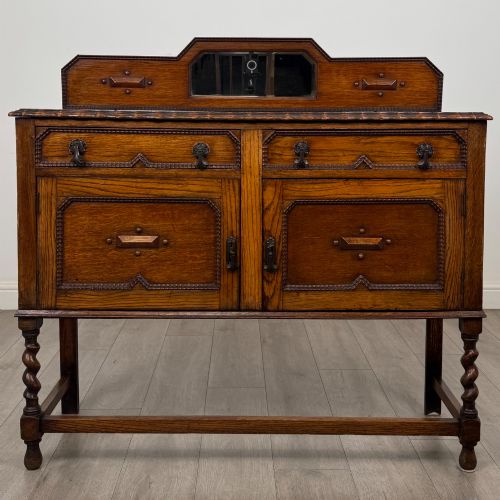
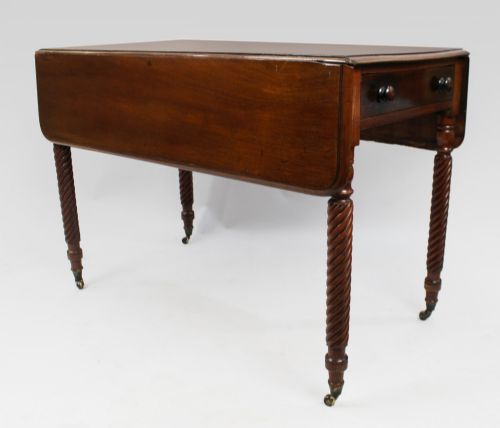
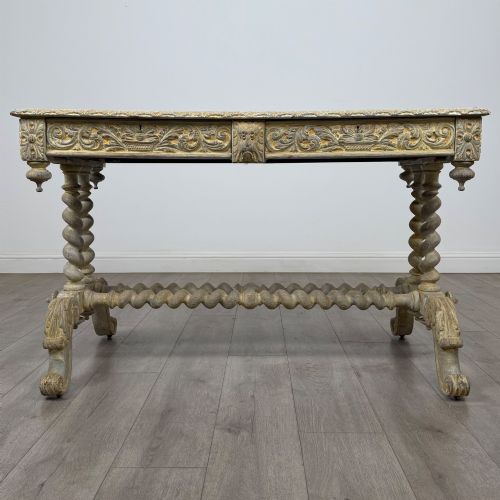
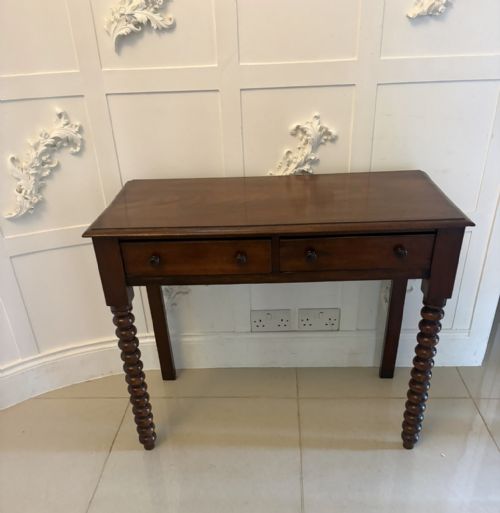

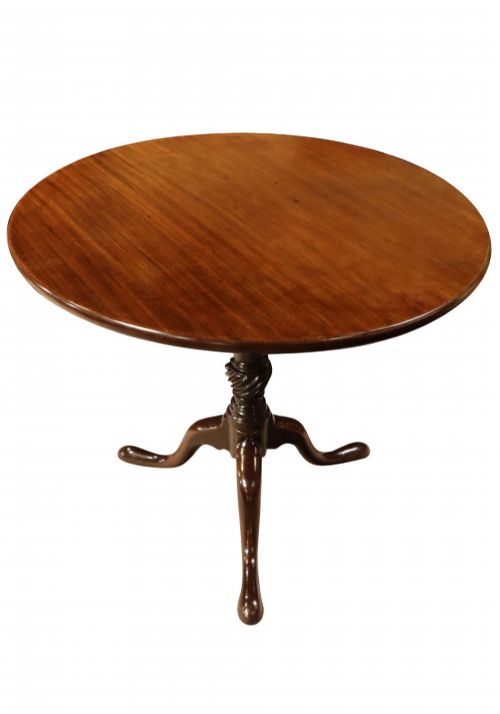


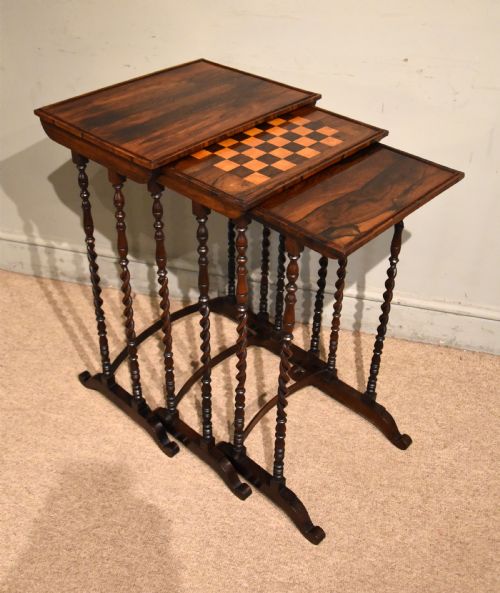

Twisted Leg Table
These twisted leg table examples bring centuries of turned timber tradition into modern rooms.
Twisted Leg Table
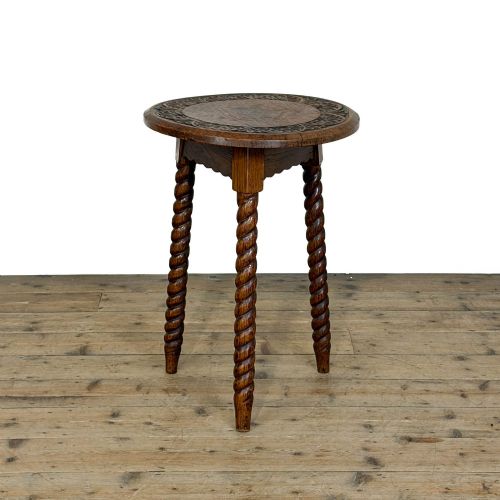
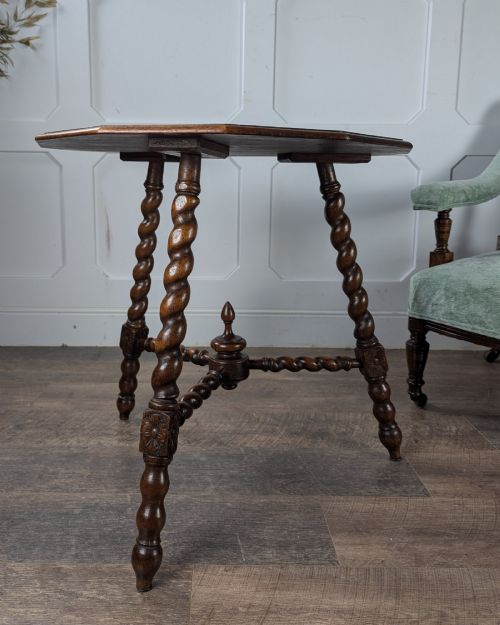
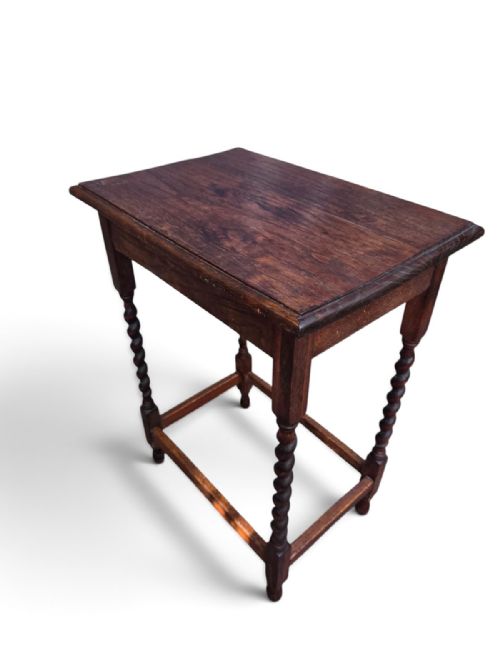
A twisted leg table is primarily a form of English or continental European furniture designed for domestic utility and display. When searching this phrase, a buyer encounters domestic items ranging from compact side tables and occasional stands to substantial gateleg dining tables.
The most common version met on this page is the oak side table or drop-leaf gateleg dining table dating from the late nineteenth or early twentieth century. These pieces utilise barley twist turnings that recall earlier seventeenth century fashions while serving contemporary domestic spaces.
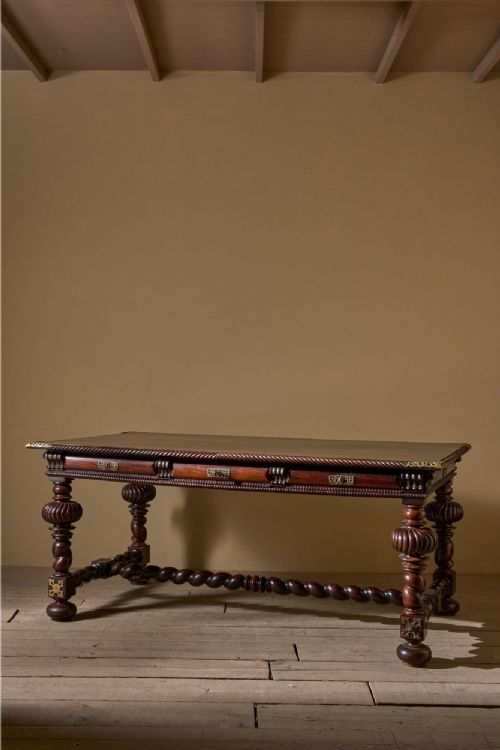
Beyond standard side tables, the selections encompass specialised forms such as writing desks, plant stands, and occasional tables in walnut, mahogany, and rosewood. Earlier examples extend back to the seventeenth and eighteenth centuries, showing walnut, oyster veneers, and parquetry.
Materials and construction
Cabinet makers relied predominantly on solid oak, walnut, and mahogany for structural stability and rich grain patterns. Secondary timbers appear in framing, while brass hardware and leather inserts accent writing surfaces.
The characteristic legs are shaped using lathe turning and hand carving to create barley twist or spiral profiles. Joinery involves traditional methods like mortise and tenon joints, particularly on gateleg frames and robust dining tables.
Some nineteenth century desks hid secret correspondence compartments behind their barley twist supports.
Assessing craftsmanship and condition
Quality rests in the crispness of the wood turnings and the depth of the hand carving on aprons and legs. Sharply defined barley twists reflect skilled lathe work compared to softer, worn profiles.
The choice of timber and figuring heavily dictates grade, with dense seventeenth century oyster olive or richly grained nineteenth century rosewood sitting above standard oak utilities. Original hardware, stable gateleg actions, and minimal timber replacement elevate individual pieces.
The Twisted Leg Table Glossary
- Barley twist
- A type of furniture leg turned on a lathe to resemble a twisted rope or column. This decorative form reached high popularity during the seventeenth century and saw substantial revival periods.
- Gateleg table
- A drop-leaf table with hinged legs that swing outward to support the extended leaves. This design maximises floor space when folded down.
- Oyster veneer
- Slices cut transversely across small branches or roots to create circular or oval patterns resembling oyster shells. This technique defines high end seventeenth century surfaces.
- Parquetry
- Geometric mosaic woodwork used for surface decoration on tabletops. Artisans fit contrasting timber veneers together to form repeating patterns.
Twisted Leg Table: Frequently Asked Questions
How do I date a twisted leg table?
Dating relies on timber selection, construction methods, and the style of the turnings. Earlier seventeenth and eighteenth century examples exhibit hand-cut joints and distinct patina, while revival pieces from the Victorian and Edwardian eras show machine-assisted turning.
Secondary woods and drawer construction further clarify the period of manufacture. Examining the underside and interior surfaces often reveals the age of the timber and assembly techniques.
Are these tables suitable for daily use?
Solid oak and mahogany versions offer robust stability for everyday dining and writing tasks. Drop-leaf and gateleg designs function effectively in compact rooms where surface area needs adjustment.
Careful placement away from direct heat sources preserves the timber and prevents veneer splitting. Regular polishing maintains the finish against normal wear.
What is the difference between barley twist and spiral columns?
Barley twist legs feature a continuous helix that tapers or maintains a uniform thickness like a wound cord. Spiral columns often relate to architectural supports found on larger tables or cabinets.
Both styles involve lathe turning, but barley twists are closely associated with seventeenth century revival domestic furniture.
How should I care for antique timber surfaces?
Maintaining antique timber involves applying appropriate wax polish to nourish the grain and build a protective barrier. Avoiding excess moisture and direct sunlight prevents the wood from warping or fading.
Gentle dusting with a soft cloth keeps the carved recesses clean without abrasion.