

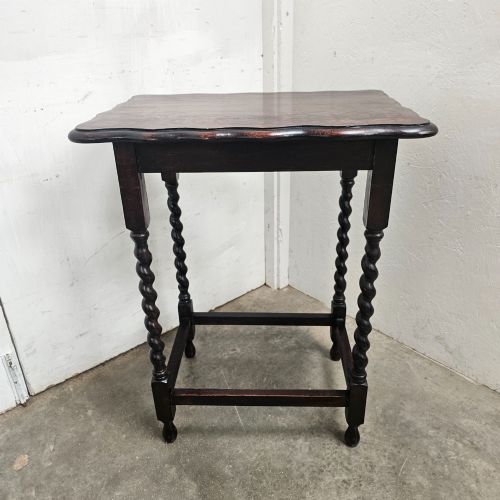


Twist Carved Accent Table
A twist carved accent table brings sculptural presence to a room through turned timber and compact proportions.
Twist Carved Accent Table
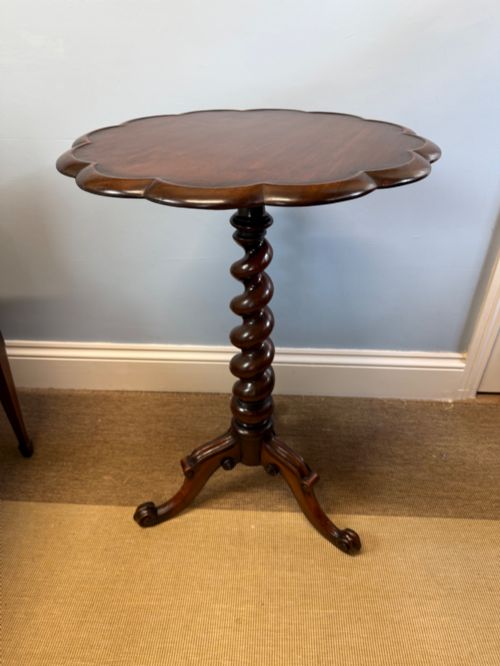
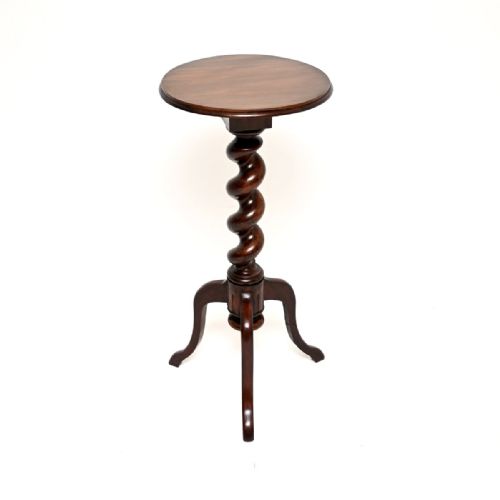
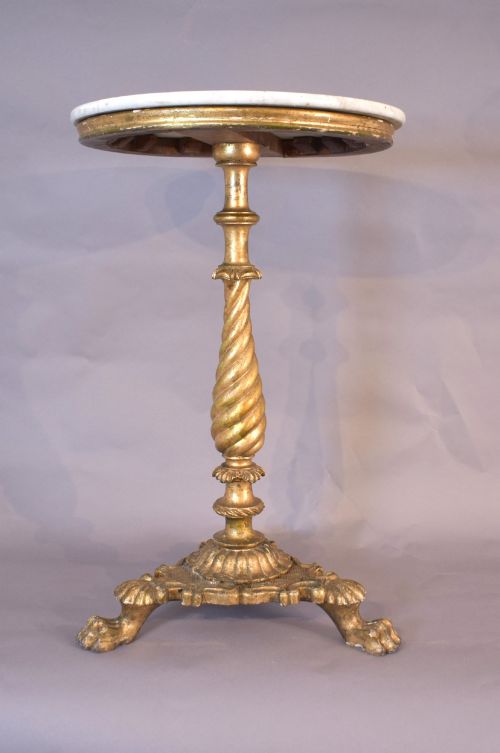
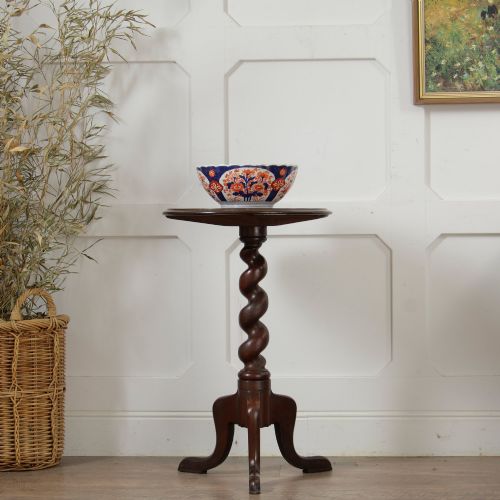
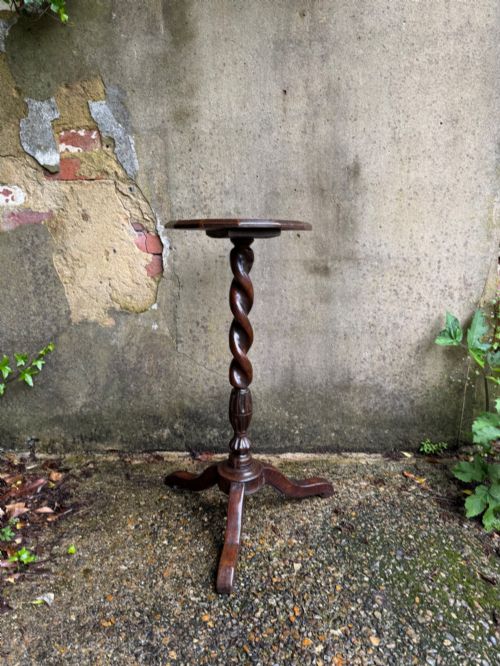
A twist carved accent table serves as a versatile surface for lamps and small objects, appearing primarily as side tables, occasional tables, and wine tables. The twist carved accent table most frequently encountered on this page originates from the Victorian and Edwardian periods, constructed in portable dimensions suited to domestic sitting rooms.
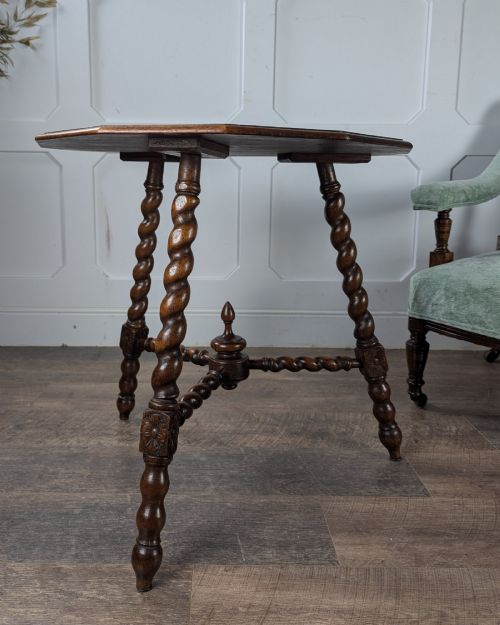
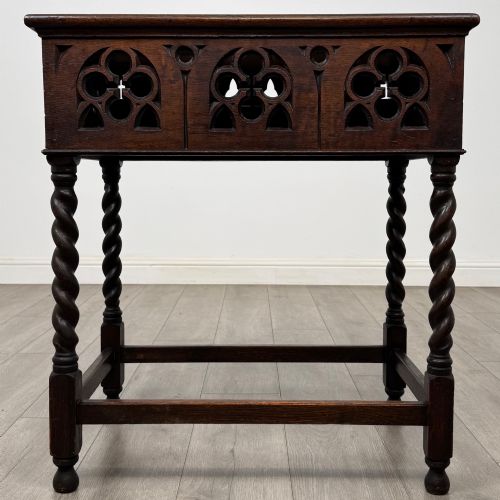
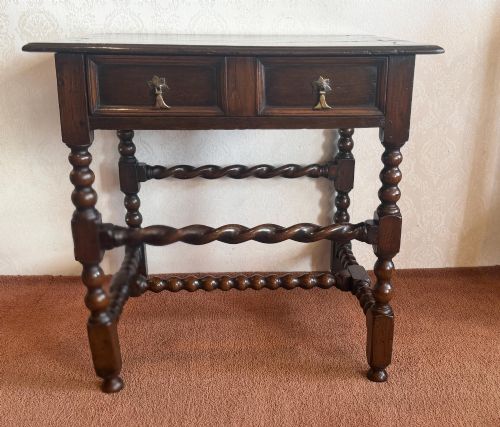
Makers adapted the form across diverse styles, pairing the spiral motif with tripod bases, octagonal surfaces, and drop leaves. While earlier examples reach back to the seventeenth century with bobbin turning and heavy oak construction, nineteenth-century mahogany and walnut versions dominate the selection.
Materials and Construction
Cabinet makers utilised dense hardwoods including oak, mahogany, and walnut, often selecting burr walnut or rosewood for decorative tops. The distinctive spiral legs required precise lathe work to shape the continuous timber twist without compromising the structural integrity of the support.
Secondary techniques involve parquetry, marble inserts, and tilt mechanisms, which required careful joining of movement parts. Turned stretcher rails frequently stabilise the legs, combining rigid joinery with decorative impact.
Twist Carved Accent Table Retail Price Guide 2026
Typical asking prices for twist carved accent table among the pieces listed under this phrase on Sellingantiques today, from the lower quarter to the upper quarter. They describe what is for sale here now, not the wider market.
Listings feature oak, mahogany, and walnut woods across Victorian, Edwardian, and seventeenth-century periods.
Judging Quality and Execution
The standard of a twist carved accent table rests on the crispness of the hand-carved spiral and the choice of timber figure. Sharp depth in the timber channels and well-proportioned pillar thickness separate finely executed pieces from simpler commercial production.
Construction details such as solid timber tops versus veneered surfaces, along with the retention of original brass or wooden turning elements, dictate the standing of an individual table.
The Twist Carved Accent Table Glossary
- Barley twist
- A spiral carving resembling a rope or barley stalk, turned on a lathe or hand-chiselled into table legs and central pedestals.
- Tripod table
- A small freestanding table supported by a pillar above three splayed legs, common in occasional and wine table formats.
- Occasional table
- A light, movable small table designed for general use around a sitting room rather than a specific dining function.
- Tilt top
- A table mechanism allowing the surface to pivot vertically against the pedestal for storage when not in use.
- Bobbin turning
- A form of woodturning characterised by a succession of rounded wooden spheres or discs resembling beads on a string.
Twist Carved Accent Table: Frequently Asked Questions
Where should I place a twist carved accent table?
These compact tables fit readily beside armchairs, in hallway corners, or near windows where their turned legs catch the light.
Their modest footprints allow them to function as lamp stands or display surfaces without dominating the floor space.
How do I care for a historic wood table?
Maintain the finish by dusting with a dry cloth and avoiding placement near direct heat sources that can dry the timber.
Apply occasional traditional wax to nourish hardwood surfaces and preserve the natural sheen of the grain.
Are these tables sturdy enough for daily use?
Most occasional and side tables provide stable support for lamps, books, and decorative objects under normal domestic conditions.
Heavier items should be avoided on tilt-top variants to protect the central pivoting mechanism from undue strain.
How can I tell the period of the twist turning?
Seventeenth-century examples typically show heavier bobbin or early twist patterns in solid oak or olive wood.
Victorian and Edwardian revivals employ refined mahogany or walnut with sharper lathe profiles and softer timber patination.