

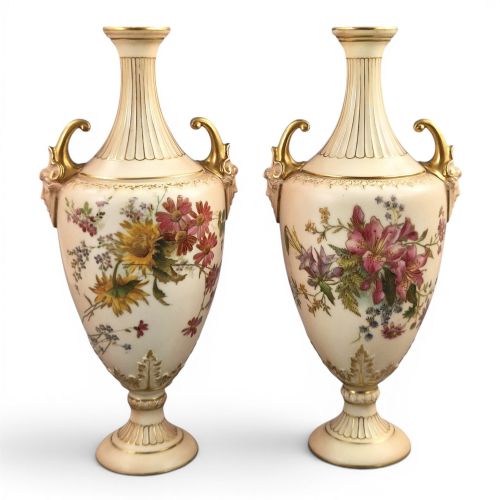


Twin Handle Ceramic Vase
These twin handle ceramic vase examples bring substantial presence to a room, offering refined symmetry and decorative utility across various historical periods.
Twin Handle Ceramic Vase
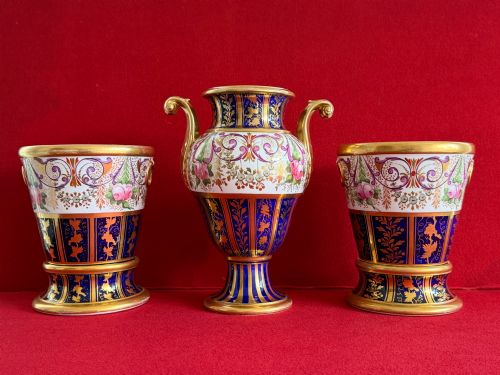
A twin handle ceramic vase bridges functional earthenware and decorative display, taking forms such as urns, garnitures, and table lamps across this selection. Buyers find these vessels shaped primarily during the Victorian and Edwardian eras, alongside pieces from the late nineteenth century.
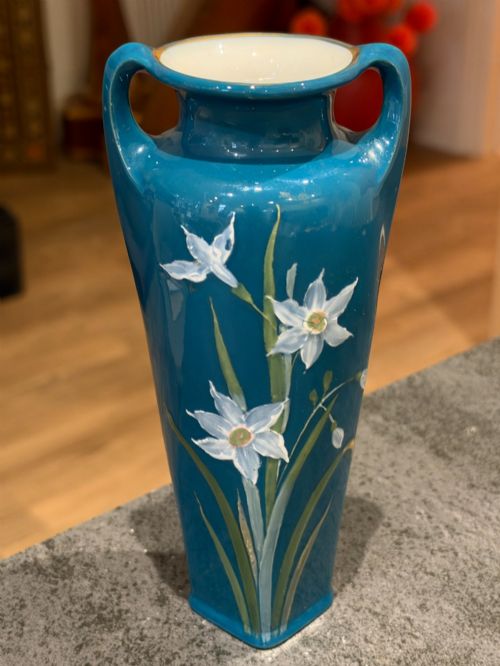
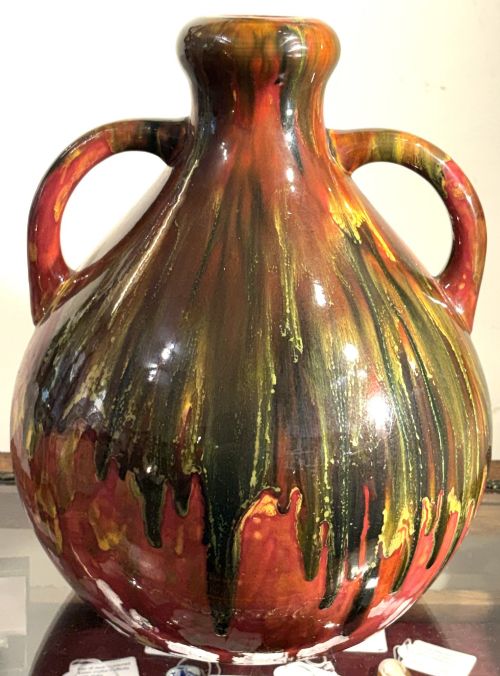
The objects span porcelain and earthenware bodies, decorated with hand-painted flora, birds, or abstract motifs. Most examples utilise balanced loop or scroll handles flanking a central ovoid or baluster body.
Makers ranged from major English potteries like Royal Worcester and Spode to continental porcelain works and Japanese export studios. These pieces suited parlour mantels and grand dining sideboards.
Materials and Techniques
Potters formed these bodies using porcelain, earthenware, and ironstone, shaping the clay either by wheel or mould before firing. Handles were separately attached by hand using slip as an adhesive.
Surface decoration involved underglaze painting, enamelling, and gilding with gold leaf, often finished with a clear glaze. Techniques like pâte-sur-pâte involved building up layers of slip to create low-relief cameos on the ceramic surface.
Twin Handle Ceramic Vase Retail Price Guide 2026
Typical asking prices for twin handle ceramic vase among the pieces listed under this phrase on Sellingantiques today, from the lower quarter to the upper quarter. They describe what is for sale here now, not the wider market.
Listings feature porcelain and earthenware bodies decorated with gilt, enamel, and hand-painted motifs across the nineteenth and twentieth centuries.
Judging Quality and Execution
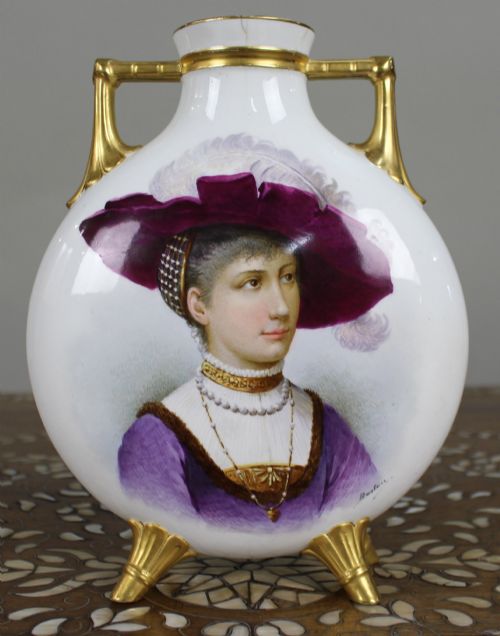
Quality rests upon the crispness of the ceramic moulding and the fineness of the hand-painted brushwork. Superior pieces display detailed pictorial scenes by named artists rather than generic transfer printing.
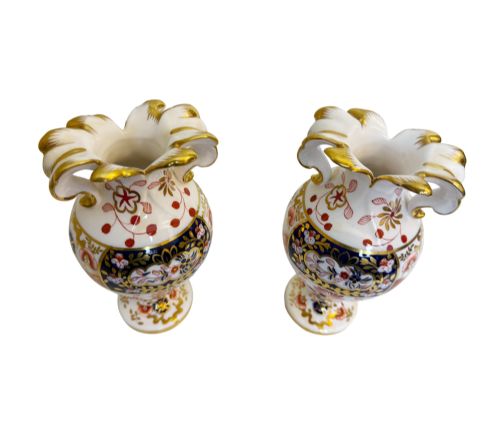
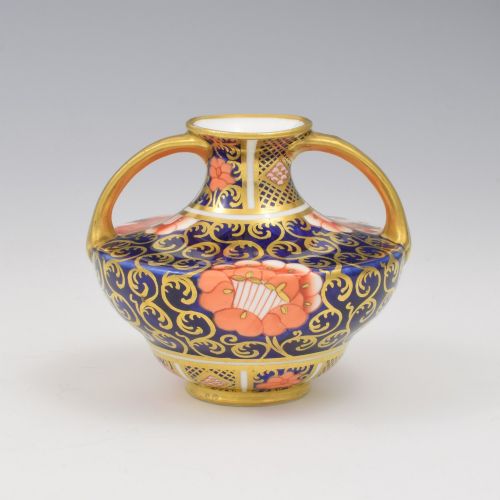
The application of gilding and enamel work reveals the skill involved in the finishing process, with higher-grade vessels showing precise, raised enamel and burnished gold leaf.
Gebrüder Heubach·Spode·Burmantofts·Royal Crown Derby·Royal Worcester·Derby Porcelain·Minton·William Moorcroft·Samson Paris·Hadley s Worcester·Alexandra Porcelain Works Ernst Wahliss·Macintyre Co
The Twin Handle Ceramic Vase Glossary
- Pâte-sur-pâte
- A method of applying successive layers of liquid white clay to a coloured ceramic body to build a cameo relief. This technique requires considerable skill to achieve translucent detail.
- Garniture
- A set of matching vases or urns designed to be displayed together on a mantelpiece or sideboard. They typically comprise a central tall vessel flanked by smaller matching pieces.
- Blush ivory
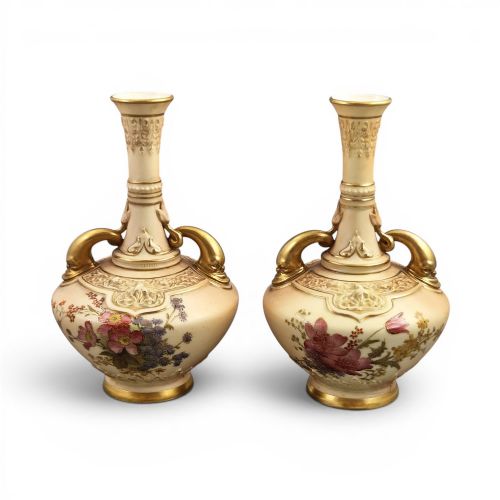
- A matte cream ceramic ground developed by Royal Worcester, often decorated with delicate floral sprays in pastel colours and gold. It became a defining look of the late Victorian and Edwardian periods.
- Ironstone
- A heavy, durable type of earthenware patented in the nineteenth century to imitate porcelain. It provides a sturdy body for decorative table vessels.
- Amphora
- A classical two-handled vessel shape with an ovoid body, adapted by late nineteenth-century potteries for ornamental use.
Twin Handle Ceramic Vase: Frequently Asked Questions
How were twin handle ceramic vase designs used?
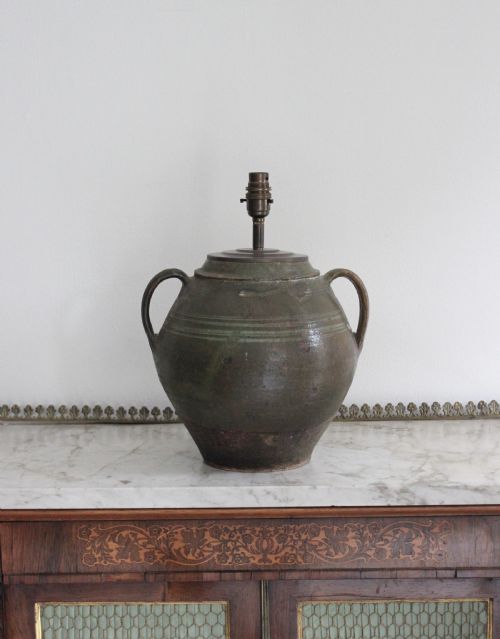
These vessels functioned primarily as decorative garnitures on mantelpieces, sideboards, and drawing-room tables during the nineteenth and early twentieth centuries. Some were later adapted into table lamps while retaining their original ceramic bodies.
Larger forms held cut flowers for formal rooms, while smaller vessels and pot pourri jars served to scent domestic interiors with dried botanical mixtures.
How do I date a twin handle ceramic vase?
Dating relies on maker marks stamped or painted on the base, combined with stylistic cues from periods like the Victorian Aesthetic Movement or Art Nouveau. Factory date ciphers often pinpoint the exact year of manufacture.
The choice of materials, glaze colours, and painting styles also align with specific decades, such as the blush ivory finishes popular around nineteen hundred.
What is the difference between porcelain and earthenware?
Porcelain is fired at a higher temperature, resulting in a vitrified, non-porous body that can be translucent when held to the light. Earthenware remains more porous and opaque, requiring a glaze to hold liquids.
Victorian potteries used both materials, reserving fine porcelain for delicate cabinet pieces and sturdy earthenware for larger art pottery and decorative lamps.
How should I clean a antique vase?
Dusting gently with a dry, soft brush is the safest method for preserving delicate hand-painted surfaces, raised enamels, and fragile gilt accents. Moisture can damage old adhesives or unglazed ceramic interiors.
Avoid commercial cleaning agents entirely, as harsh chemicals easily strip nineteenth-century gilding and delicate overglaze decorations.