


Twin Fusee Mantel Clock
A twin fusee mantel clock brings precise mechanical movement and substantial period presence to a room, driven by a dependable chain-and-cone drive system.
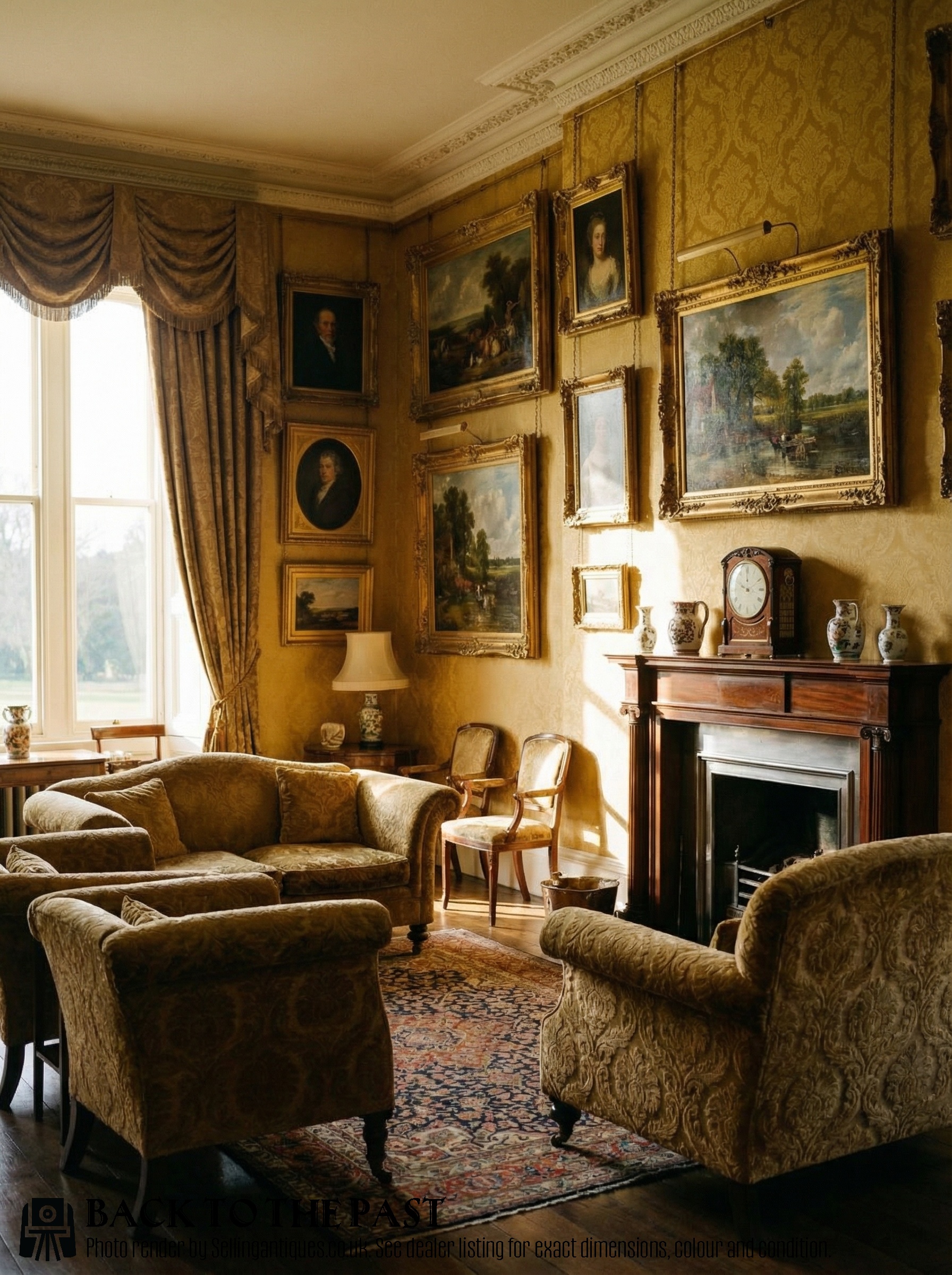
Twin Fusee Mantel Clock
A twin fusee mantel clock houses two separate fusee movements within a substantial table or bracket housing, maintaining even tension as the mainspring unwinds to secure reliable timekeeping.
The pieces appearing on this page span the eighteenth, nineteenth, and twentieth centuries, taking the form of mahogany bracket clocks, rosewood table clocks, and bronze Gothic designs.
Makers such as William Payne, John Leroux, and Mappin & Webb represent the standard of craftsmanship found across these domestic timepieces.

Materials and Construction
Cases rely heavily on dense timbers like mahogany, rosewood, and ebonised wood, often enhanced with fine inlay or brass mountings.
The internal mechanics integrate brass, steel, and glass components, paired with patinated bronze or cast bronze for decorative architectural details.
Listings feature eighteenth and nineteenth-century designs, incorporating mahogany, rosewood, and patinated bronze across bracket and table clock formats.
Evaluating Quality and Detail
The calibre of the movement and the crispness of the engraved backplate distinguish finer examples from standard production pieces.
Cabinetwork quality shows in the selection of timber, the precision of the joinery, and the integration of cast bronze or ormolu mounts.
Mappin And Webb·William Payne·John Leroux·John McGregor·William Smith·Barraud And Lund·Peter Le Gros·Samuel Jefferson·F Baetens
The Twin Fusee Mantel Clock Glossary
- Fusee
- A conical pulley used in mechanical clocks to equalise the torque of the mainspring as it winds down. This ensures consistent power delivery to the escapement throughout the running period.
- Bracket clock
- A portable domestic clock originally designed to sit upon a matching wall bracket. These pieces typically feature robust wooden or metal cases with carrying handles.
- Escapement
- The mechanical linkage that converts rotational force into controlled impulses for the pendulum or balance wheel. It governs the speed at which the clock releases its stored power.
- Backplate
- The rear brass plate of a clock movement, often engraved with the maker's signature and decorative scrollwork. It protects the train of gears and supports the pivots.
- Striking clock
- A timepiece equipped with a secondary train that chimes the hours or quarters on a bell or gong. The mechanism relies on a separate spring or weight drive.
Twin Fusee Mantel Clock: Frequently Asked Questions
What is a twin fusee movement?
A twin fusee movement uses two conical pulleys and chains to regulate the power delivered from the mainsprings. This system ensures constant tension on the gear train for accurate timekeeping.
The setup typically powers both the time-recording train and the striking train independently. It marks a standard of traditional clockmaking found in better quality period bracket clocks.
How do I wind my mantel clock?
Winding requires inserting the appropriate key into the designated dial holes and turning it gently until resistance is felt. Care must be taken not to overwind the mechanism.
Most eight-day models require winding once a week to maintain consistent operation. Regular maintenance preserves the tension of the internal chains and springs.
Where should I place a bracket clock?
A bracket clock needs a stable, level surface such as a sturdy mantelpiece, sideboard, or dedicated wall bracket. A solid foundation helps the pendulum swing evenly.
Placement should avoid areas subject to direct sunlight, heavy vibrations, or drastic temperature changes. Stable indoor conditions protect both the timber case and the sensitive metal movement.
How do I identify the period of a clock?
Dating relies on stylistic clues in the case design, such as Regency brass inlay, Victorian Gothic bronze work, or Georgian mahogany proportions. Cabinet styles evolved significantly across the centuries.
Signatures engraved on the brass backplate or dial often provide the maker's name and operating era. Comparing these details with documented records confirms the approximate decade of production.