



Twentieth Century Seascape
Twentieth century seascape paintings capture the raw movement of coastal water, offering buyers a window into maritime history and changing artistic moods.
Twentieth Century Seascape
A twentieth century seascape represents coastal views, open water, and harbour scenes created across various decades of the past century. Buyers seek these works to bring atmospheric maritime energy and historical coastal topography into domestic spaces.
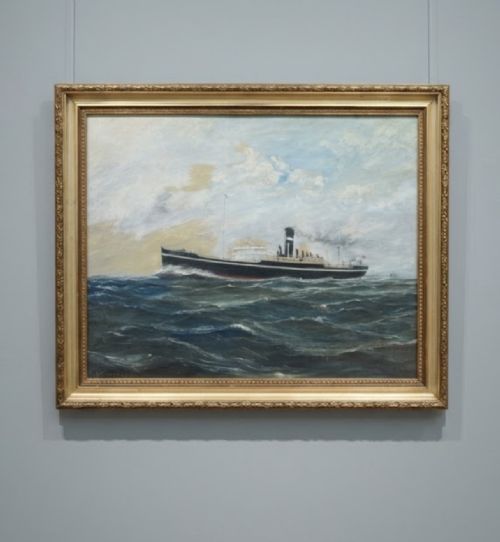
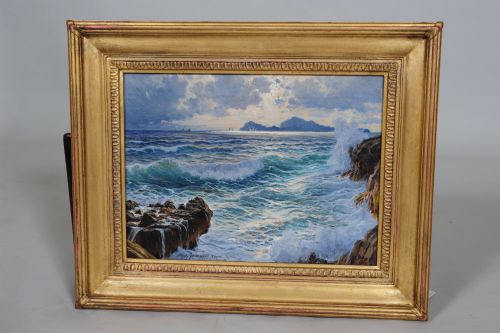
The pieces on this page span from the nineteen-tens through to the nineteen-sixties, reflecting shifting artistic interpretations of British and international waters. Works range from calm harbour depictions to dynamic studies of surf and naval vessels.
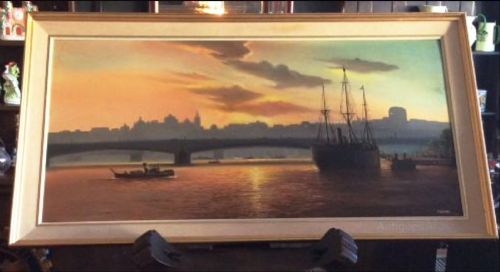
Mediums vary from oil on canvas to delicate watercolours on paper, framed in wood, often with gilt accents. Collectors encounter everything from topographical Yorkshire coastlines to panoramic views of the Thames.
Materials and methods
Artists painted these seascapes using oil on canvas or watercolour on paper, frequently housed within wooden frames. Oil paints allowed for rich texture in depicting turbulent waves and atmospheric skies, while watercolour offered translucent immediacy for coastal light.
Many works incorporate gouache highlights alongside watercolour to capture the sharp glint of light on sea spray. Wooden frames, sometimes finished with gilt, enclose the paintings to complement the maritime subject matter.
Twentieth Century Seascape Retail Price Guide 2026
Typical asking prices for twentieth century seascape among the pieces listed under this phrase on Sellingantiques today, from the lower quarter to the upper quarter. They describe what is for sale here now, not the wider market.
Geographical subjects range from the Yorkshire coast and Scottish borders to Devon bays and the London Thames.
Distinctions in quality
Quality rests upon the artist's command of light, movement, and atmospheric perspective in capturing water. Superior examples demonstrate confident brushwork that conveys the weight and momentum of the sea rather than a stiff, formulaic rendering.
The handling of maritime architecture, vessel rigging, or coastal topography distinguishes accomplished works from simpler decorative pieces. Provenance and historical context also elevate certain works, particularly those depicting specific naval vessels or named locations.
Clifford Hanney·Vincenzo D’Esposito·Robert Leslie Howey·Frank H. Mason·Dion Pears·Ernest F. Hill·Frank Wood·Owen Bowen·Fred Mayor·Edmund Gouldsmith·Hirst Walker·Alfred Egerton Cooper·Harry John Pearson
The Twentieth Century Seascape Glossary
- Watercolour
- A paint consisting of pigment suspended in a water-based solution, applied to paper. It allows for luminous, transparent washes ideal for capturing sea and sky.
- Gouache
- An opaque water-based medium often used alongside watercolour to add solid highlights and dense colour to waves and foam.
- Impressionism
- An art style focused on accurate depiction of light in its changing qualities, heavily influencing early twentieth century marine painters.
- Gilt
- A gold leaf or gold paint finish applied to wooden frames, adding a traditional decorative border to the artwork.
Twentieth Century Seascape: Frequently Asked Questions
What periods do these seascapes cover?
The listings encompass works created across the twentieth century, specifically drawing from decades such as the nineteen-tens, twenties, thirties, fifties, and sixties.
These periods show a transition in British art from traditional maritime realism towards Impressionism and modern interpretations of coastal life.
Are these paintings framed?
Many of the works retain their original or period wooden frames, occasionally featuring gilt details that complement the canvas or paper within.
Framing styles typically reflect the decade in which the painting was produced or later twentieth century conservation choices.
What subjects appear in these works?
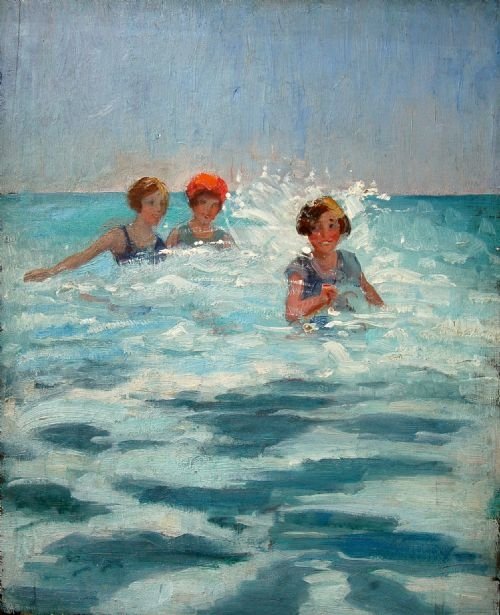
Subjects range from tranquil harbour views and fishing boats to dramatic sea battles, naval carriers, and figures playing in the surf.
Specific locations include Yorkshire coastal villages, Scottish borders, Devon bays, and the London Thames.
How do oil and watercolour seascapes differ?
Oil on canvas allows for heavy impasto and rich textures that physically mimic the churn of water and the weight of stormy skies.
Watercolour paintings utilise the white of the paper to generate luminosity, offering a lighter, more transient impression of light upon coastal air.