




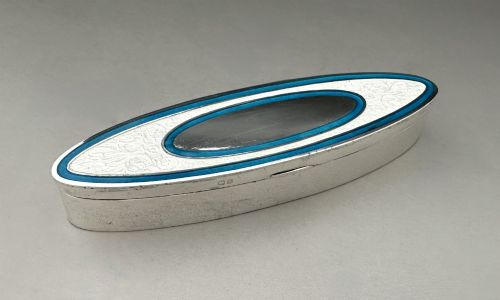


Turquoise Guilloche Enamel
Turquoise guilloche enamel pieces combine precise engine-turned metalwork with vibrant translucent glaze, offering enduring appeal for collectors of fine antique smalls.
Turquoise Guilloche Enamel
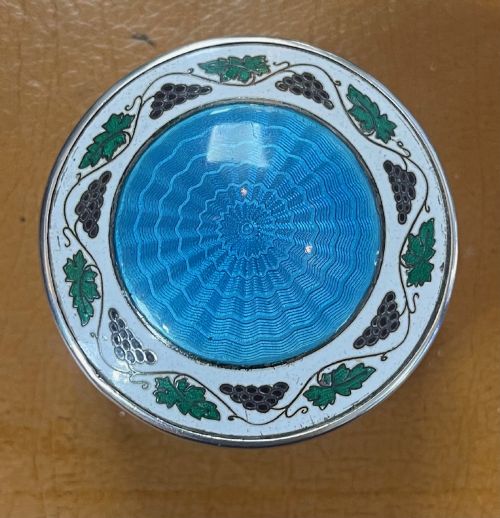
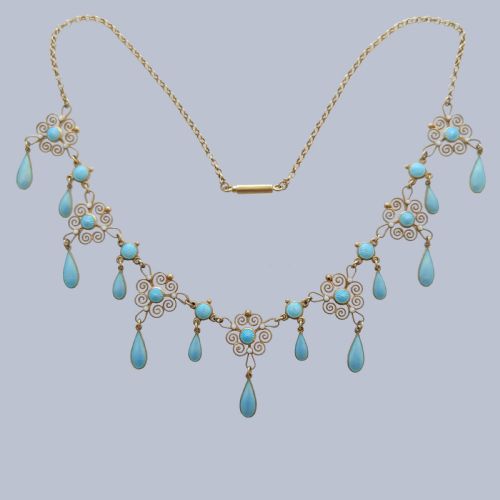
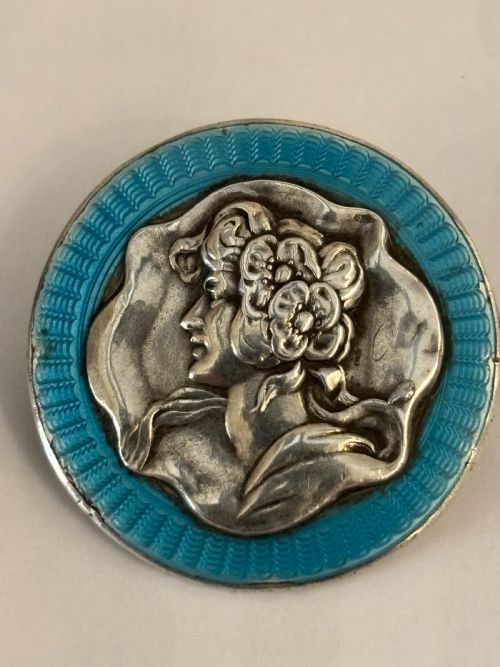
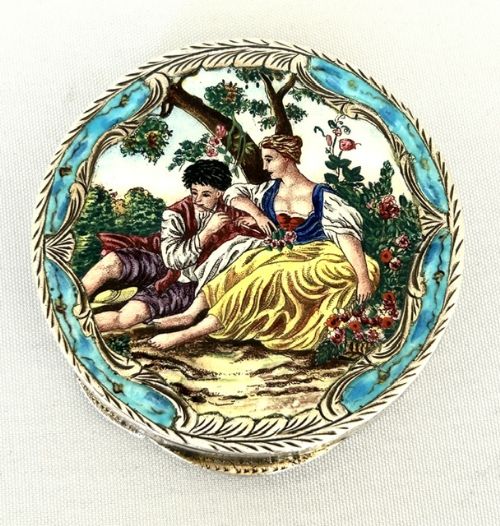
When you search for turquoise guilloche enamel, you encounter a focused selection of decorative items spanning from the eighteenth century through to the mid-twentieth century. The material record includes brooches, powder compacts, trinket boxes, necklaces, bracelets, belt buckles, buttons, and tea wares.
The most common formats you will meet on this page are Edwardian boxes and brooches alongside Art Deco compacts and Norwegian silver-gilt pieces. The selection ranges from soft-paste porcelain tea bowls to sterling silver trinket containers and personal adornments.
The design vocabulary shifts across these eras, moving from Rococo Revival and Georgian ceramic borders to sinuous Art Nouveau festoons and geometric Art Deco patterns. Each object demonstrates how makers applied coloured glass over mechanically etched metal grounds across different decades.
How they were made
Artisans produced guilloche patterns by securing metal blanks, primarily sterling silver or silver gilt, into a rose engine lathe to cut precise, repetitive geometric motifs into the surface. This mechanical etching created the characteristic shimmering background texture that catches light beneath translucent colour layers.
Vitreous enamel, composed of powdered glass fused by heat, was applied over the engraved metal substrate in translucent turquoise coats so the underlying pattern remained visible. Soft-paste porcelain pieces integrated similar decorative borders through hand-painted enamel work fired onto ceramic bodies.
Turquoise Guilloche Enamel Retail Price Guide 2026
Typical asking prices for turquoise guilloche enamel among the pieces listed under this phrase on Sellingantiques today, from the lower quarter to the upper quarter. They describe what is for sale here now, not the wider market.
Tiny metal buttons catch the light just as brightly as full powder compacts, proving grand style comes in miniature scales.
What varies in quality
Quality rests upon the precision of the engine-turned engraving beneath the glaze, where deeper, sharper machine cuts yield a more brilliant optical depth through the turquoise surface. The regularity of the underlying geometric pattern distinguishes finer items from simpler productions.
The application of the enamel itself dictates the standard of the piece, with superior examples showing an even thickness and freedom from discolouration across the entire decorated area. The execution of metal mounts, such as filigree work or gilt settings, also marks the distinction between standard items and masterwork outputs.
Marius Hammer·Henry Matthews
The Turquoise Guilloche Enamel Glossary
- Guilloche
- An ornamental technique where a mechanical lathe engraves a precise, intricate geometric pattern into a metal substrate. This engraved texture serves as the visual foundation beneath translucent enamel glazes.
- Vitreous Enamel
- A material made by fusing powdered glass to a metallic or ceramic base through high-temperature firing. It provides a durable, glossy coloured surface that resists fading.
- Silver Gilt
- Silver that has been coated with a thin layer of gold on its exterior surfaces. This finish is frequently observed in Scandinavian and period revival items.
- Soft-Paste Porcelain
- A ceramic composition fired at lower temperatures than hard-paste porcelain, featuring a slightly glassy body. Eighteenth-century tea wares often utilise this material for decorated borders.
- Festoon
- A decorative chain or garland suspended in a curve between two points. This style appears frequently in period necklaces and jewellery mounts.
Turquoise Guilloche Enamel: Frequently Asked Questions
What is turquoise guilloche enamel?
It is a decorative technique combining mechanical metal engraving with translucent turquoise glass coatings, creating a shimmering patterned surface.
Items utilising this method range from early ceramic tea ware borders to twentieth-century silver compacts and brooches.
How do I identify an Edwardian piece?
Edwardian examples often feature hallmarks associated with early twentieth-century assay offices, such as Birmingham marks from the nineteen-hundreds.
Stylistic cues include delicate silver mounts, belt buckles, and small trinket boxes reflecting the tastes of that period.
Are these items made of solid silver?
Many items in this category are constructed from sterling silver or silver gilt, though some examples incorporate silver filigree.
Ceramic objects like eighteenth-century tea bowls use porcelain bodies with enamel borders rather than metal foundations.
How should I care for enamel items?
Enamel consists of fused glass and requires gentle handling to prevent chipping or scratching against harder materials.
Keep pieces away from harsh chemicals and store them individually to protect the vitreous surfaces.