


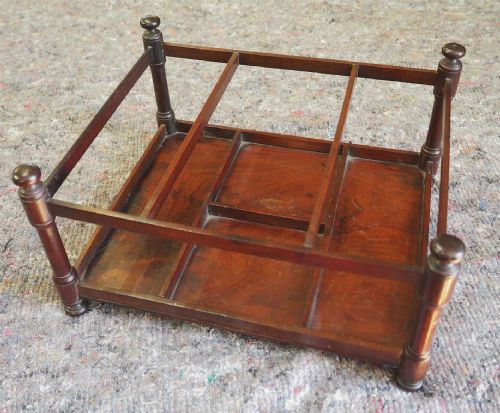
Turned Wooden Wine Bottle
Turned wooden wine bottle items are functional treen and serving accessories designed to hold or pour drinkware, prized for their rich timber grains and period craftsmanship.
Turned Wooden Wine Bottle
When you search for turned wooden wine bottle items, you are looking at treen and serving accessories shaped on a lathe from dense timbers. These objects include bottle holders, cradles, and treen containers carved to resemble wine bottles.
The versions most likely to appear on this page date from the Georgian, Regency, and nineteenth-century Victorian periods. They reflect domestic dining traditions where bottles and decanters were kept close at hand on the dining table.
Makers utilised woods such as mahogany, rosewood, and flame mahogany to produce these serviceable items. Their forms range from simple turned coasters to engineered pouring cradles fitted with metal hardware.
How they were made
Craftsmen shaped these pieces using a lathe, turning raw timber into symmetrical cylinders and curved profiles. This method produced the smooth walls seen on treen nutmeg graters and bottle holders alike.
Makers combined turned wood with brass and silver plate to create functional joints and mounts. Cork inserts and metal hardware were added to secure bottles and facilitate pouring actions on Regency cradles.
Turned Wooden Wine Bottle Retail Price Guide 2026
Typical asking prices for turned wooden wine bottle among the pieces listed under this phrase on Sellingantiques today, from the lower quarter to the upper quarter. They describe what is for sale here now, not the wider market.
One curious treen piece hides a nutmeg grater entirely inside the convincing shape of a turned wooden wine bottle.
What varies in quality
The calibre of a turned wooden wine bottle piece rests upon the selection of timber and the precision of the lathe work. Figured woods like flame mahogany display greater depth of grain than plain utility timber.
Refinement in turning profiles and the integration of secondary materials such as brass or silver plate elevate the standard of manufacture. Pieces showing crisp mouldings and balanced proportions command greater attention from collectors.
Mein of Kelso
The Turned Wooden Wine Bottle Glossary
- Treen
- Small handmade wooden objects for domestic use. These items range from kitchenalia to decorative treen nutmeg graters shaped like bottles.
- Cellarette
- A lockable container or box used to store wine bottles near the dining table. Georgian examples often feature fitted interiors and turned wooden or mahogany construction.
- Coaster
- A small stand or tray designed to protect the table surface beneath a decanter or bottle. They frequently incorporate turned wood alongside metal rims.
- Flame mahogany
- A decorative veneer cut from timber where the branches join the trunk. This creates a distinctive fiery pattern highly prized by Regency cabinet makers.
Turned Wooden Wine Bottle: Frequently Asked Questions
What is a turned wooden wine bottle item?
These pieces are historical treen and serving accessories shaped on a lathe to hold, pour, or resemble wine bottles. They include turned holders, cradles, and treen containers.
Items date across the Georgian, Regency, and nineteenth-century periods, reflecting traditional dining room habits of the eras.
How were these wooden items used?
They served practical functions on the dining table, from cradling champagne bottles for pouring to holding decanters safely in place.
Treen novelties also served specific domestic purposes, such as housing spices like nutmeg for seasoning drinks.
What woods were used for them?
Makers selected dense hardwoods capable of taking a smooth finish on the lathe. Mahogany, rosewood, and flame mahogany appear frequently.
These timbers provided both the structural strength needed for holding heavy glass and the rich grain patterns valued by buyers.
How do I date these pieces?
Dating relies on observing the timber choice, turning style, and accompanying hardware. Regency and Georgian items often display specific moulding profiles.
Comparing the turned shapes and metal fittings against documented period examples helps establish an approximate date of manufacture.