









Turned Treen Container
These turned treen container pieces are small wooden objects shaped on a lathe, offering functional utility and tactile charm for domestic spaces.
Turned Treen Container
A turned treen container encompasses small wooden domestic items shaped on a lathe, ranging from spice towers and string holders to lidded cups and jars. Buyers searching this phrase look for functional woodenware that combines everyday historical use with decorative character.
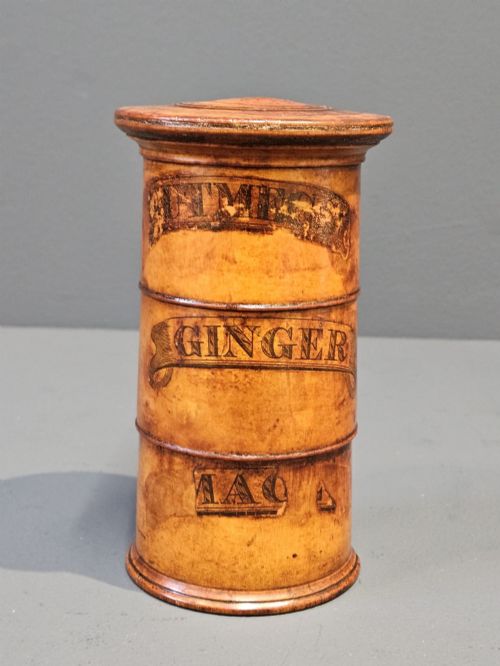
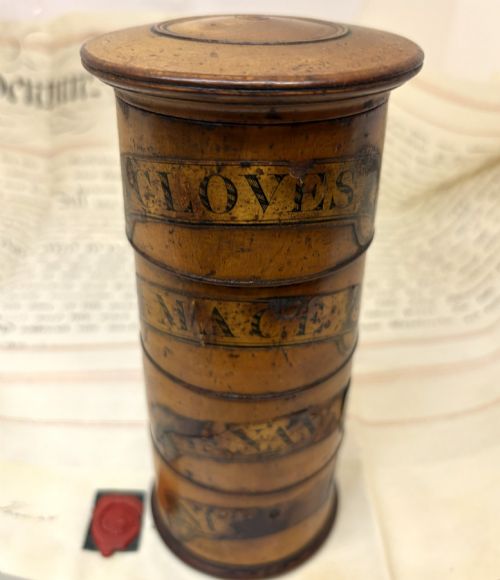
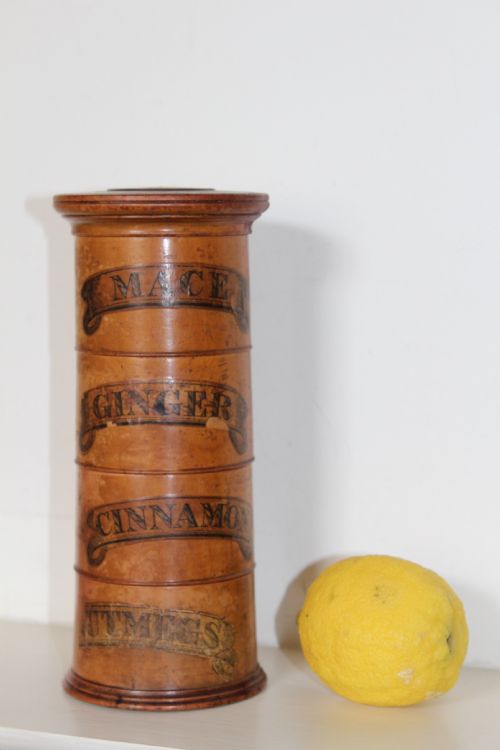
The pieces seen here span the Georgian, Victorian, and Edwardian periods, including styles such as Victorian country and folk art. Spice towers with multiple stacked compartments and barrel-shaped string holders represent the most frequent forms encountered on this page.
Origins include English country pieces alongside continental examples, often fashioned from native timbers. These objects survived through generations due to their robust turned construction and domestic utility.
How they were made
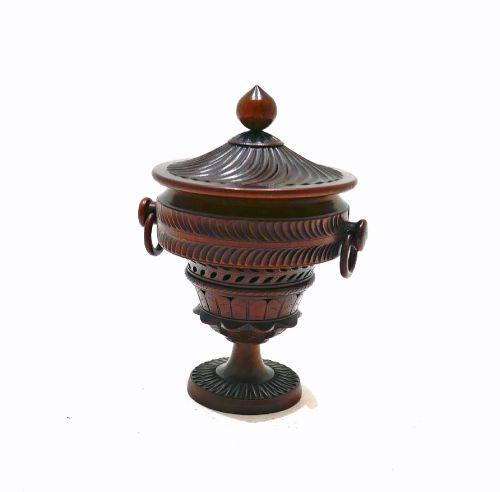
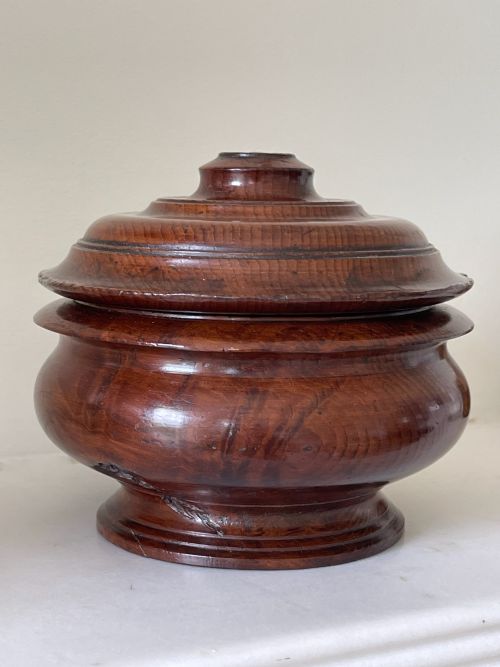
Craftsmen shaped these items on a lathe using dense hardwoods like boxwood, fruitwood, yew wood, sycamore, and lignum vitae. Turning allowed makers to achieve precise symmetrical profiles, tightly fitted lids, and nested multi-tier compartments.
Surface finishes rely on natural grain patterns and simple polishing rather than heavy applied decoration. Working closely with the timber's natural properties ensured durability for objects designed to hold spices, string, or small valuables.
Turned Treen Container Retail Price Guide 2026
Typical asking prices for turned treen container among the pieces listed under this phrase on Sellingantiques today, from the lower quarter to the upper quarter. They describe what is for sale here now, not the wider market.
Listings feature items produced across the Georgian, Victorian, and Edwardian eras, utilising boxwood, fruitwood, yew wood, and sycamore.
What varies in quality
Quality rests in the crispness of the lathe turning, the precision of fitted lids, and the complexity of the form, such as multi-tiered spice towers versus simple jars. Better examples display balanced proportions and sophisticated profiles that showcase the natural qualities of the wood.
The choice and figuring of the timber also define standard variations, with dense boxwood or richly grained yew wood and burr walnut achieving greater visual depth. Preserved surface patination accumulated through handling adds considerable character to superior specimens.
The Turned Treen Container Glossary
- Treen
- Small wooden domestic objects made by hand or on a lathe. The term derives from an old word for tree.
- Spice tower
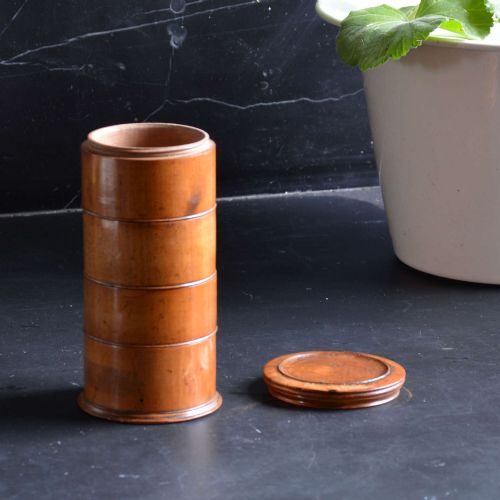
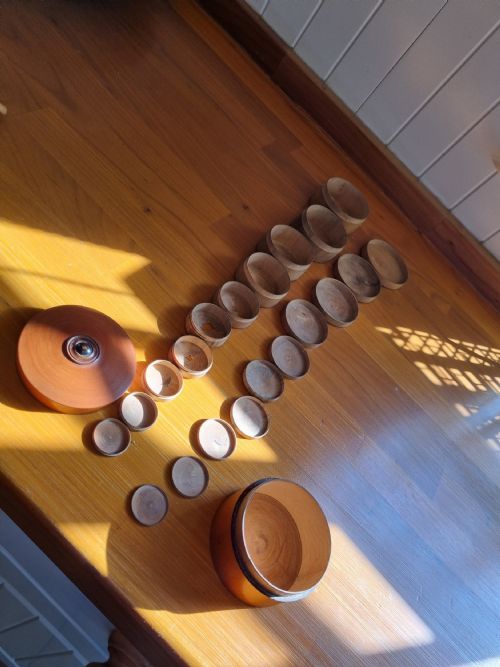
- A multi-tiered turned wooden container with stacked compartments designed to hold various spices. Each section fits snugly onto the one below.
- String holder
- A hollow turned vessel with a small aperture at the top for dispensing twine or string. These often take a barrel or spherical shape.
- Lignum vitae
- A dense, heavy hardwood traditionally used for turned items requiring high durability. Its natural oily resins provide a smooth, resilient finish.
- Sycamore
- A light-coloured British hardwood frequently utilised for turned kitchen collectables and dairy items. It provides a pale, uniform surface that darkens gracefully over time.
Turned Treen Container: Frequently Asked Questions
What were turned treen containers used for?
These wooden vessels served specific domestic tasks in Georgian and Victorian households, holding kitchen spices, sewing accessories, string, or snuff. Their practical designs kept perishable goods contained or handy for daily tasks.
Over time, many transitioned from utility items to decorative mantel or tabletop curiosities collected for their craftsmanship and material warmth.
How do I date a turned treen container?
Dating relies on identifying the timber species, turning style, and tool marks left by the lathe. Georgian pieces often display different proportions and wood selections compared to later Victorian folk art examples.
Examining the wear patterns, surface patination, and construction methods helps place an object within the nineteenth or early twentieth century.
How do I care for antique treen?
Keep wooden pieces away from direct sunlight and sudden temperature shifts to prevent the timber from splitting or warping. Gentle dusting with a dry cloth preserves the natural surface patination.
Avoid using modern liquid polishes or water, which can damage the historic surface and grain of the turned wood.
What is a spice tower?
A spice tower is a specialised turned wooden container composed of several tightly fitting sections stacked vertically. Each tier lifts off to reveal a separate compartment for an individual spice.
These clever vessels conserved valuable kitchen space while keeping aromatic ingredients organised and sealed during the Georgian and Victorian eras.