

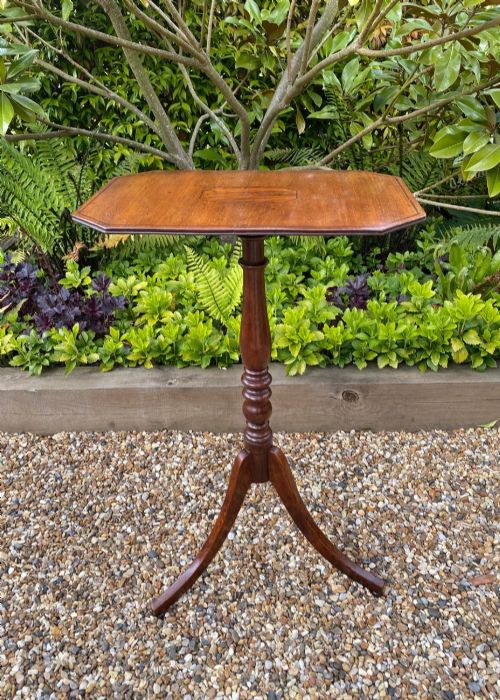
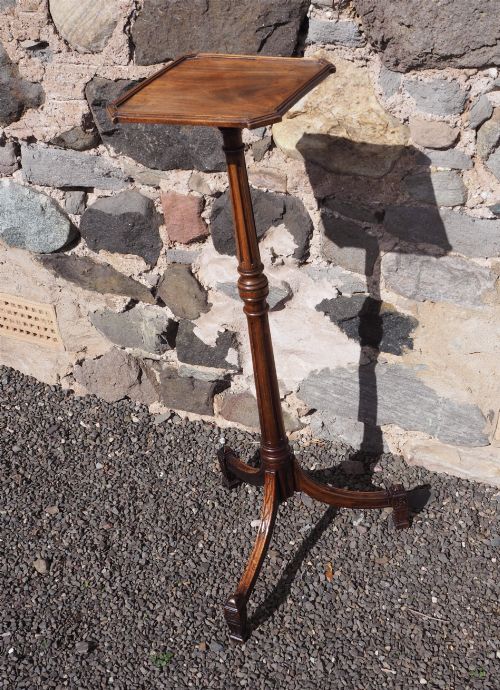
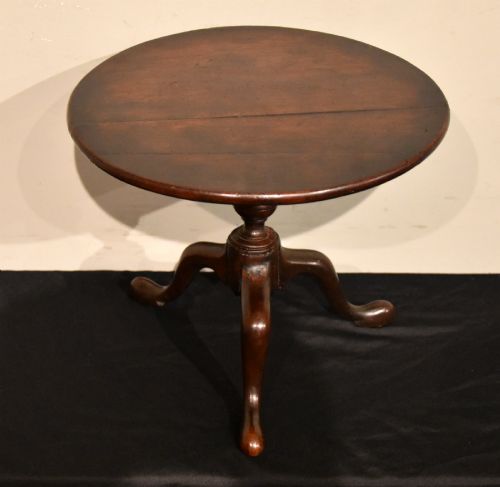
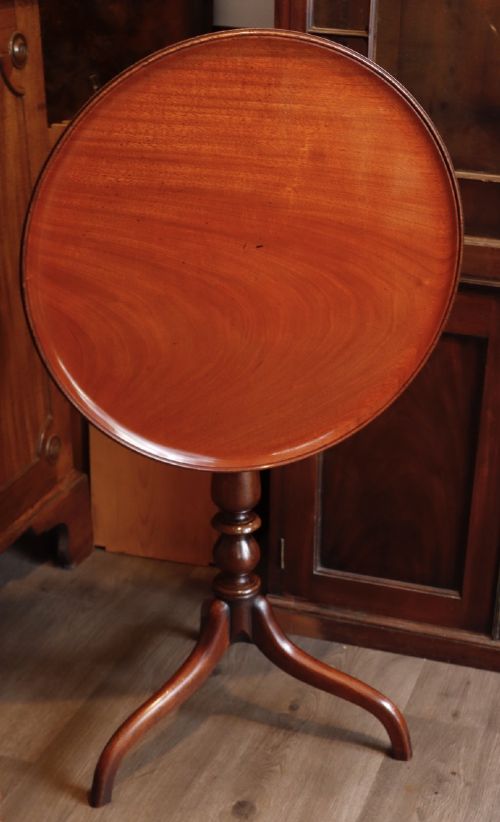
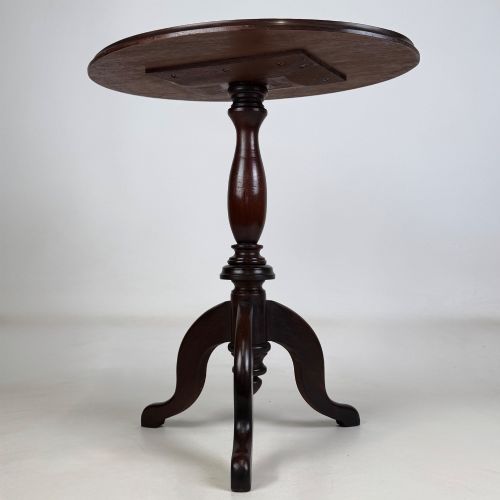
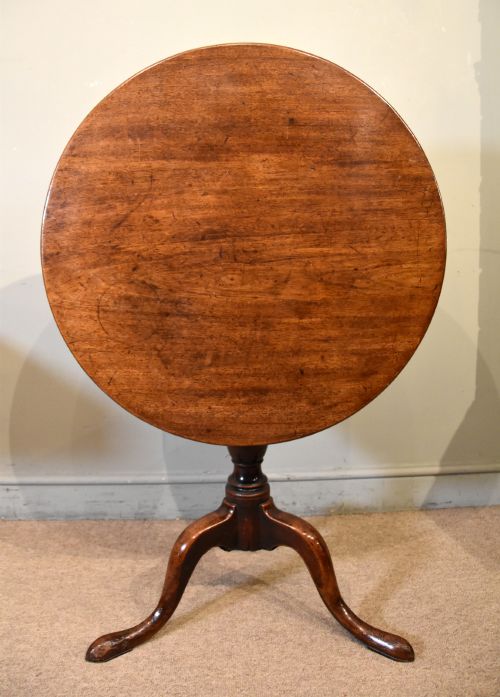
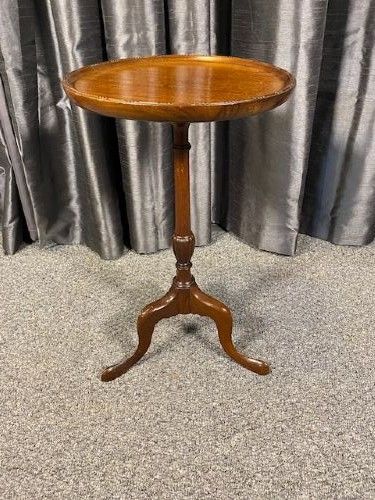
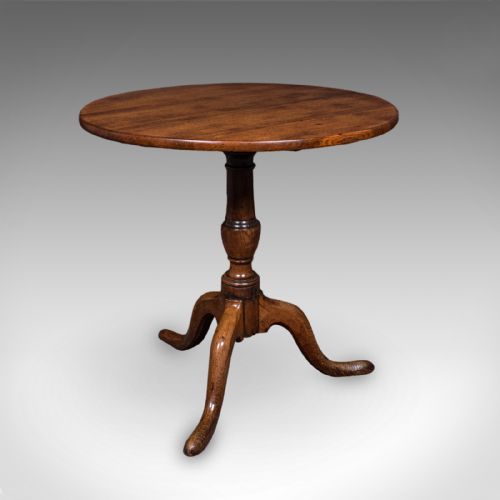
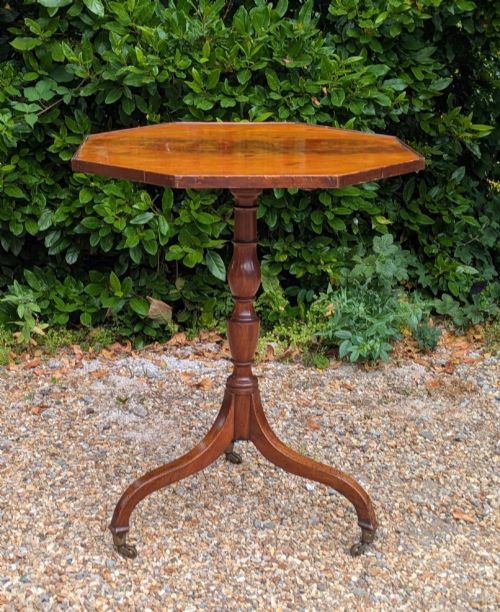
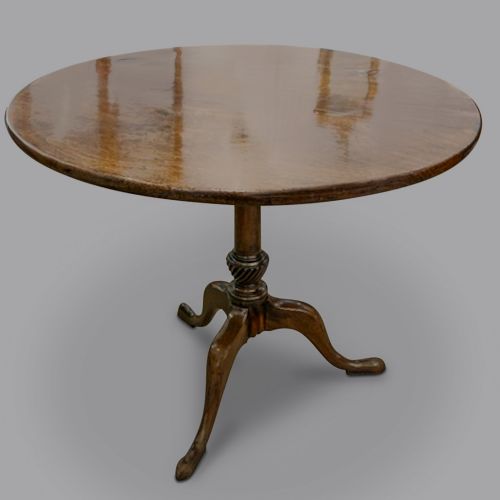
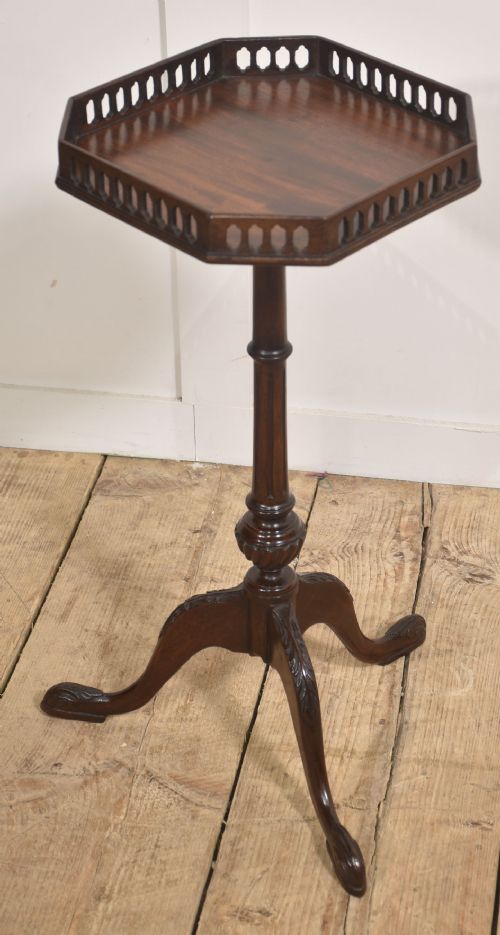
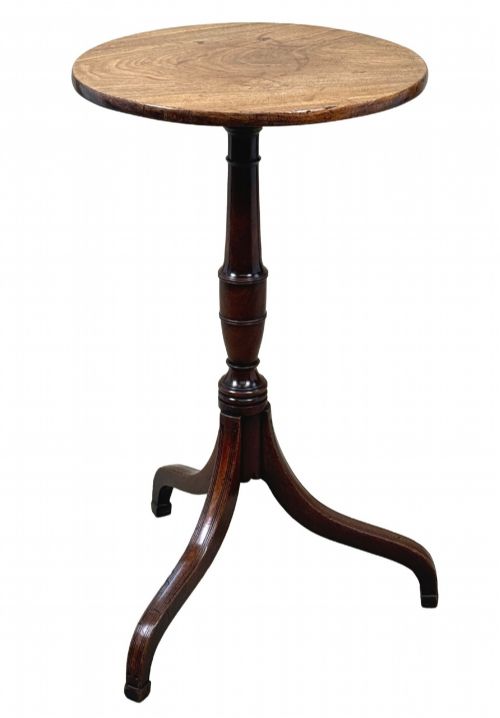
Turned Stem Tripod Stand
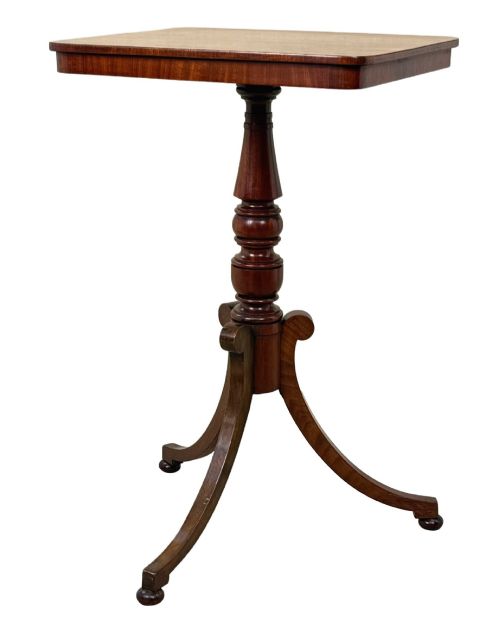
A turned stem tripod stand balances stability and poise, offering a compact surface raised on three splayed legs.
Turned Stem Tripod Stand
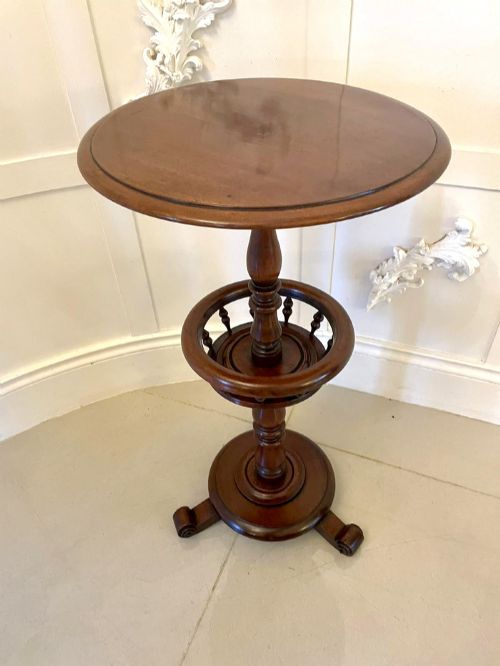
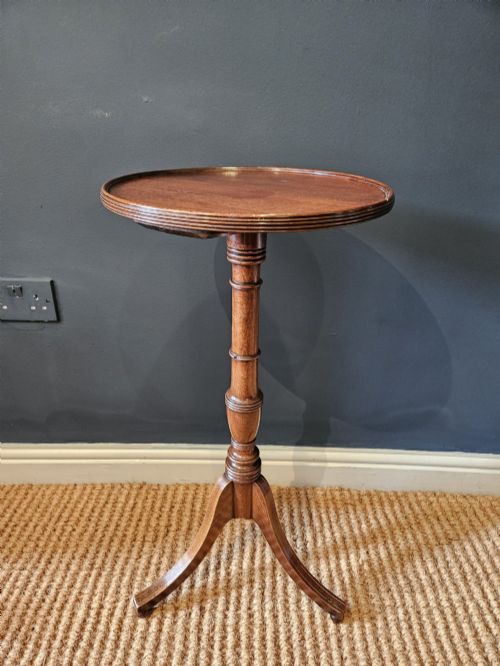
A turned stem tripod stand serves primarily as a small occasional table, wine table, or candle stand designed to hold portable items near seating or beds. Most examples encountered here date from the Georgian, Regency, and Victorian periods, manifesting as circular or occasionally oval tops supported by a central pillar and three legs.
The form appears in various secondary guises, including kettle stands, torcheres, plant stands, and reading stands. These occasional pieces range from utilitarian country furniture in oak, elm, and fruitwood to formal parlour tables in figured mahogany, walnut, and rosewood.
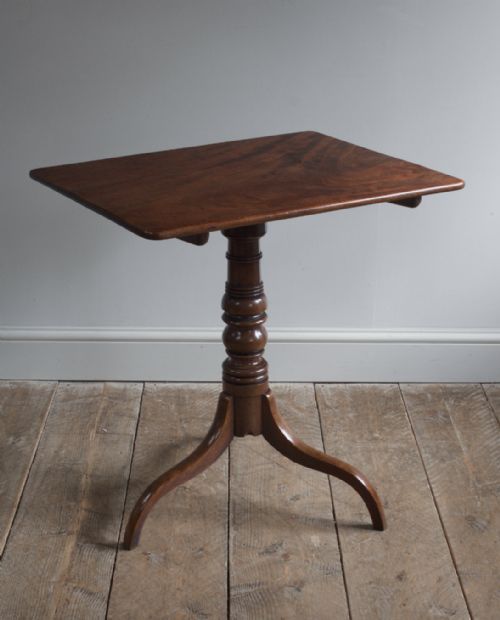
Makers designed these items for easy relocation around a room, often incorporating tilt-top mechanisms to save space when not in use. The proportions remain slender, prioritising a balanced silhouette over heavy load-bearing capacity.
How they were made
Cabinet makers utilised dense hardwoods such as mahogany, oak, and walnut, frequently turning the central pillar on a lathe to create balanced baluster or urn profiles. The top connects to the stem via a birdcage or block mechanism, allowing the surface to pivot or tilt on a horizontal axis.
The three splayed legs typically join the central stem using traditional dovetail or bridle joints, secured with wooden pegs or concealed glue blocks to maintain structural integrity across the tripod base. Iron brackets or brass hinges appear on specific mechanisms like tilt-top actions or reading ledges.
Secondary timbers such as beech, ash, and pine often form internal blocks or lesser components, while decorative surfaces rely on book-matched veneers, penwork decoration, or carved edge details like pie crust moulding.
Turned Stem Tripod Stand Retail Price Guide 2026
Typical asking prices for turned stem tripod stand among the pieces listed under this phrase on Sellingantiques today, from the lower quarter to the upper quarter. They describe what is for sale here now, not the wider market.
Listings span the eighteenth, nineteenth, and early twentieth centuries, featuring woods from native oak and elm to imported mahogany and rosewood.
What varies in quality
Quality reveals itself in the choice of timber and the precision of the turning on the central stem, where crisp proportions distinguish fine workshop production from simpler country alternatives. Plum pudding mahogany, figured walnut, and unblemished yew wood command greater appreciation than plain secondary hardwoods.
The stability of the tripod base depends entirely on the accuracy of the joinery connecting the three legs to the pillar. Superior examples maintain firm ground contact across all three feet without wobble, while retaining original tilt mechanisms that lock securely into place.
Surface treatment and finishing also divide the range, from patinated wax finishes over aged timber to later decorative overpainting or replacement brass hardware.
The Turned Stem Tripod Stand Glossary
- Tripod base
- A support structure comprising three splayed legs radiating from a central vertical pillar. This arrangement ensures the table remains stable on uneven historic floorboards.
- Tilt-top action
- A mechanical hinge system allowing the tabletop to pivot from horizontal to vertical. This feature enabled the stand to be stored flat against a wall when not in use.
- Birdcage
- A small wooden frame beneath the tabletop that allows the surface to both rotate and tilt. It is typically found on finer Georgian pedestal tables.
- Dish top
- A circular tabletop with a raised, concave rim carved directly from the solid timber. This profile prevented small items like wine glasses from sliding off the edge.
- Torchere
- A tall, slender stand originally designed to support a candle or lamp. In later periods, these served primarily to display decorative plants or urns.
Turned Stem Tripod Stand: Frequently Asked Questions
What is a turned stem tripod stand?
A turned stem tripod stand is a small movable table supported by a central turned pillar and three splayed legs. These pieces were historically used for holding tea, wine glasses, or lighting.
They appear in various forms throughout the eighteenth and nineteenth centuries, ranging from simple country pieces to highly decorative parlour furniture.
How were tilt-top tables used?
Tilt-top tables served as versatile occasional furniture that could be moved around a room as needed. When not in use, the mechanism allowed the top to fold flat so the stand could be pushed against a wall.
This space-saving design made them particularly popular in smaller drawing rooms and parlours.
How do I date a tripod stand?
Dating relies on examining the timber species, construction methods, and turning style of the central stem. Earlier eighteenth-century pieces often feature oak, walnut, or dense mahogany with hand-cut joinery.
Later Victorian and Edwardian examples introduce machine-turned elements, rosewood, or different secondary woods beneath the surface.
Where should I place one at home?
These stands function well beside armchairs, sofas, or in corners as lamp tables. Their compact footprints allow them to fit into tight spaces where larger tables cannot go.
They also suit entryways or hallways for holding small decorative items or keys.