


Turned Stem Brass Candlesticks
Turned stem brass candlesticks bring substantial weight and warm metallic reflection to a room, offering the clean geometry of turned stems.
Turned Stem Brass Candlesticks
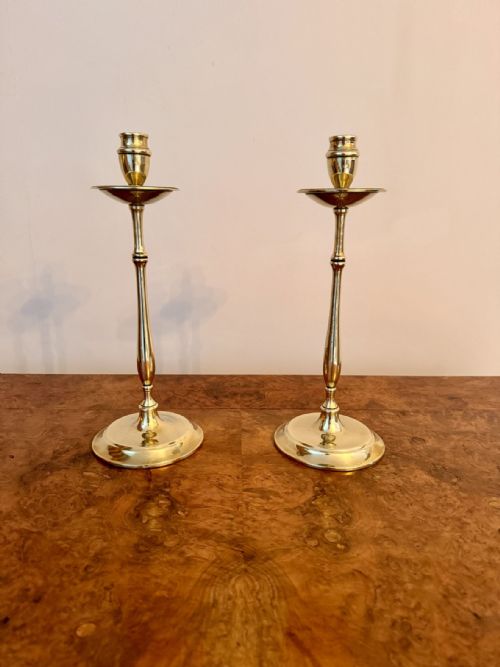
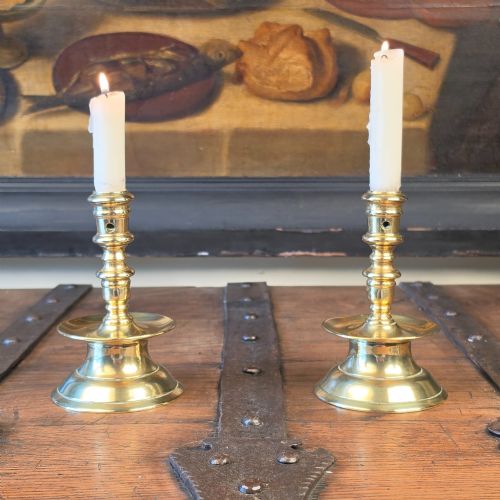
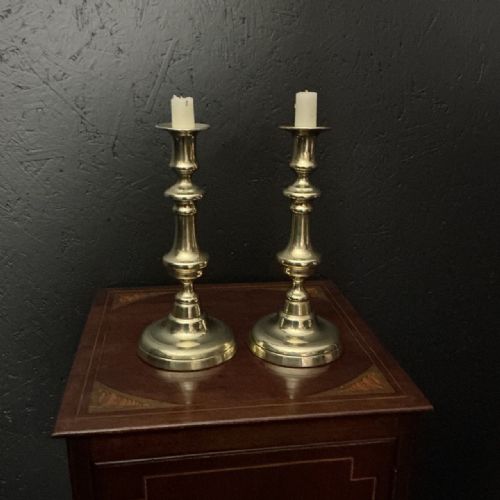
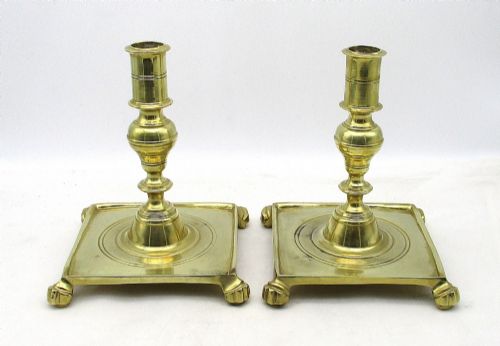
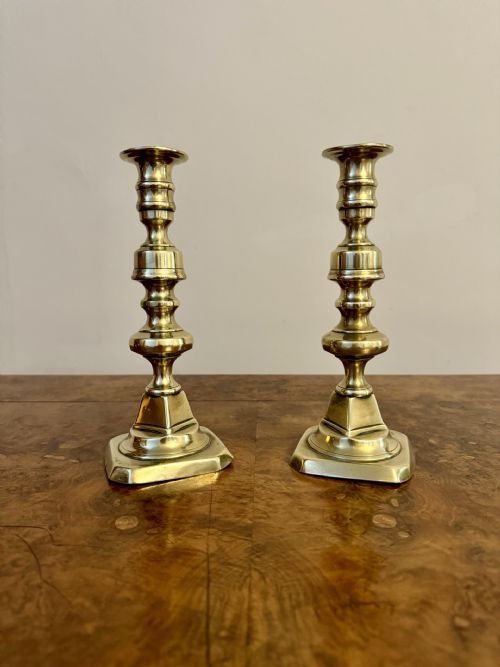
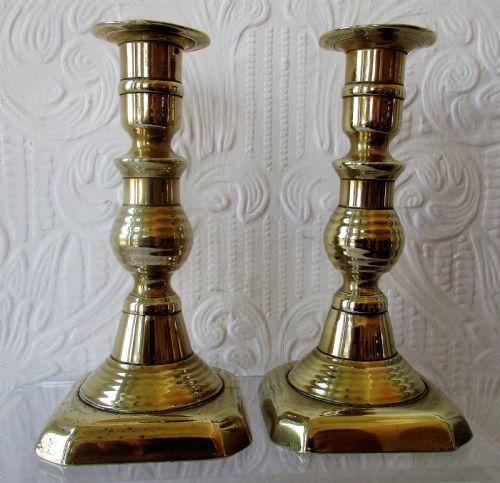
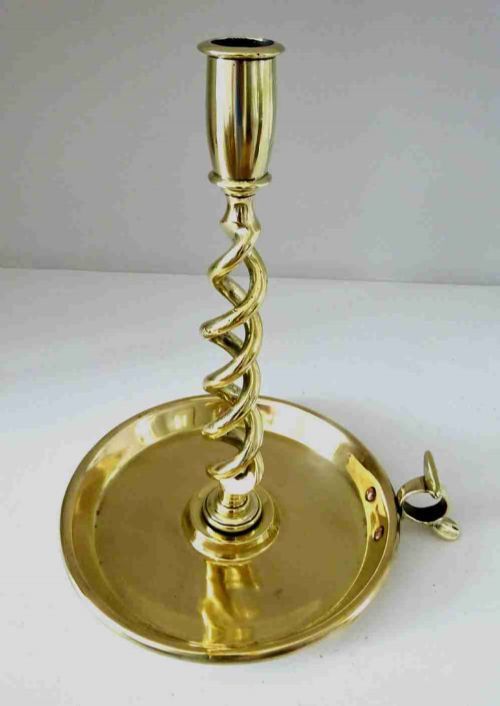
Turned stem brass candlesticks encompass pieces from the eighteenth and nineteenth centuries, alongside revival interpretations drawing on earlier eras. You will frequently encounter Victorian pairs displaying columns shaped on a lathe, ranging from straight profiles to twisted and tear drop designs. Georgian and Edwardian examples also appear, often showing hexagonal bases or simpler columnar forms.
These items serve primarily as table lighting, though some have been adapted as table lamps with fabric elements. The selection relies heavily on nineteenth century production, supplemented by earlier eighteenth century forms and seventeenth century revival pieces. Buyers seek them for their proportion, utility, and the tactile quality of cast and turned metal.
How they were made
The manufacture of these pieces centres on casting and turning brass, sometimes incorporating mahogany components for mixed media support. Makers shaped the metal on lathes to achieve consistent profiles such as twists and tear drop columns, or cast them in sections before assembly. Surface finishing relied on hand polishing to bring out the bright alloy, whilst bases were occasionally weighted or fitted for stability.
Materials are strictly limited in the evidence to brass, fabric, and mahogany. The primary substance remains cast and turned brass, which provides both the structural strength and the characteristic warm hue of the candlesticks. Subsidiary materials appear in fitted bases and lamp adaptations.
Some nineteenth century makers added tear drop columns to catch the candlelight just right.
What varies in quality
Quality in turned stem brass candlesticks rests upon the crispness of the turning and the heft of the metal casting. Superior examples display sharply defined mouldings on the stem and well proportioned bases, whereas lesser pieces show softer contours and thinner metal gauge. The integrity of the joins between base, stem, and drip pan also marks the distinction between standard production and finer workshop output.
The choice of form dictates visual success, with hexagonal bases and complex twists requiring greater skill from the metalworker. Surface patination and the preservation of original cast details without excessive cleaning further divide ordinary domestic items from those of higher merit.
The Turned Stem Brass Candlesticks Glossary
- Turned stem
- A column shaped on a lathe to create symmetrical profiles such as twists, reeding, or plain tapered cylinders. This method defines the primary visual interest of the candlestick shaft.
- Hexagonal base
- A six sided footplate that provides stable support and adds architectural geometry to the design. This form is frequently seen on earlier eighteenth century pieces.
- Tear drop column
- A stem design featuring bulbous, droplet shaped swelling sections along the vertical axis. It provides a tactile and decorative variation to standard straight columns.
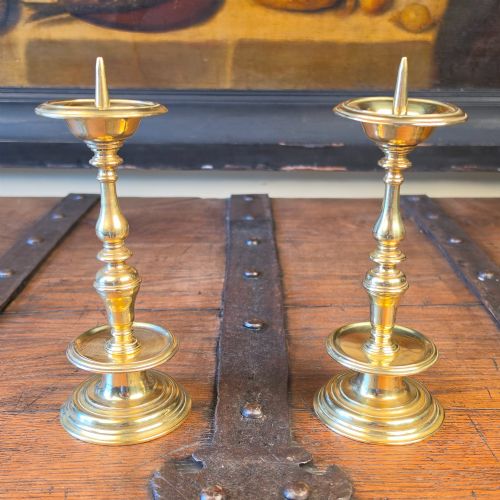
- Drip pan
- A horizontal flange positioned below the nozzle to catch molten wax before it reaches the surface below. Many traditional designs incorporate this practical element directly into the upper shaft.
- Revival style
- A design approach that imitates the aesthetic of an earlier historical period, such as seventeenth century Baroque. These pieces adopt the forms of the past while utilising later manufacturing techniques.
Turned Stem Brass Candlesticks: Frequently Asked Questions
How do I clean brass candlesticks?
Maintenance requires gentle dusting and occasional cleaning with a mild, non abrasive polish to preserve the metal surface. Avoid harsh chemical dips that strip away the natural age and accumulated warmth of the brass.
Keeping the finish intact ensures the pieces retain their historical character and subtle tonal variation over decades of domestic use.
Are these candlesticks safe for daily use?
These items function reliably with standard taper candles provided they sit on a level surface away from drafts. Ensuring the candle fits snugly into the nozzle prevents movement during burning.
For pieces adapted as table lamps with fabric elements, standard electrical checks by a professional ensure safe operation in modern living spaces.
How can I tell the period of a brass candlestick?
Dating relies on observing base shapes, casting methods, and stem profiles relative to established historical styles. Hexagonal bases and heavy proportions often point toward the eighteenth century, whilst slender turned twists are frequently Victorian or Edwardian.
Examining the construction seams and wear patterns underneath provides further clues to the manufacturing era.
What is a Chester candlestick?
Chester candlesticks refer to a specific nineteenth century Victorian form identified within the maker or style tradition of the period. They share the characteristic turned brass construction of their contemporaries.
Such named groupings help collectors categorise regional variations and specific foundry outputs from the Victorian era.