




Turned Spindle Shelves
Turned spindle shelves are timber wall units and tiered stands that bring practical display space to a room.
Turned Spindle Shelves
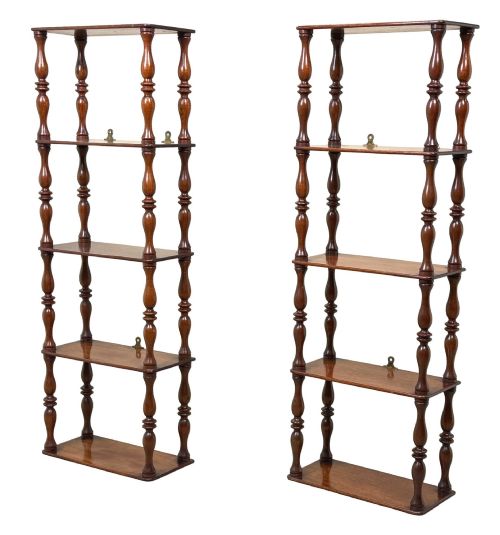
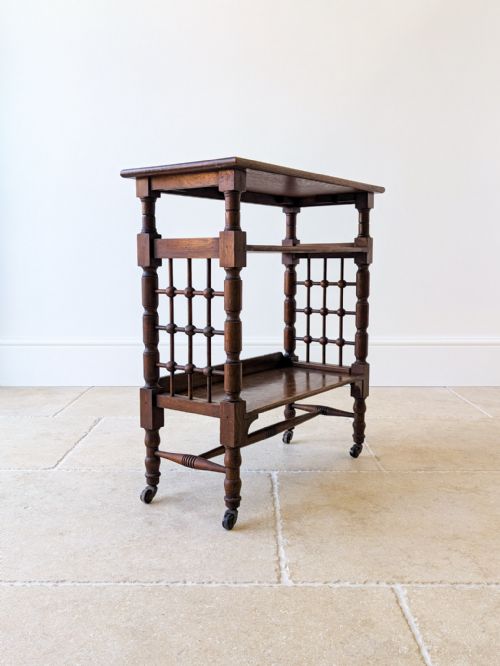
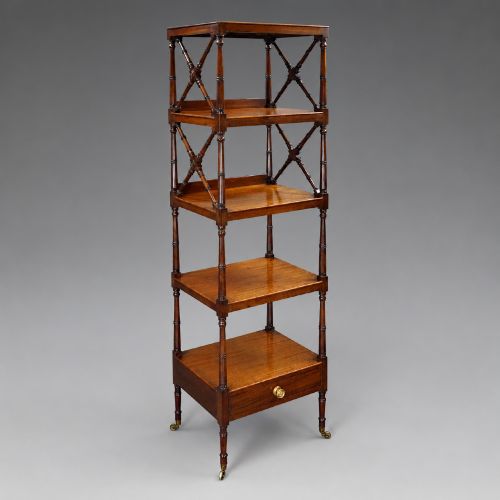
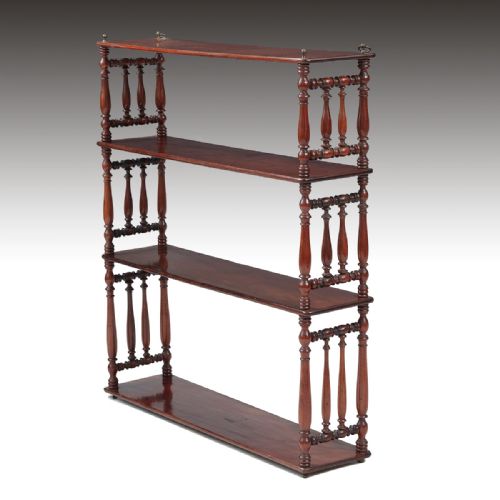
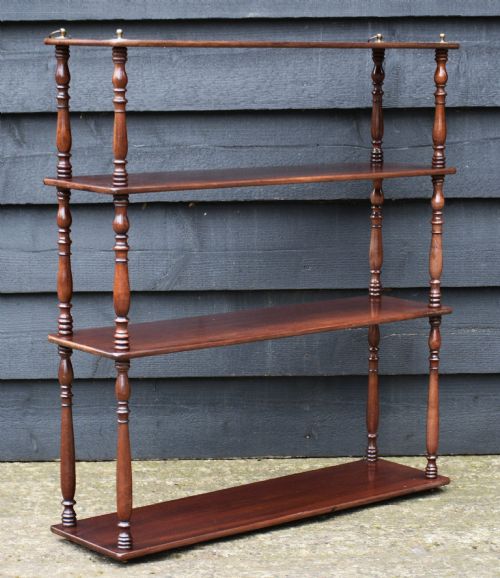
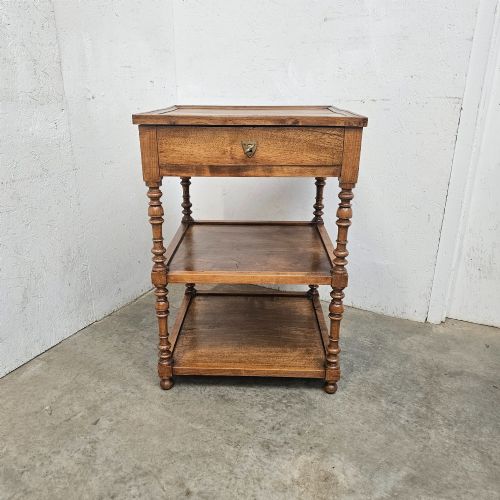
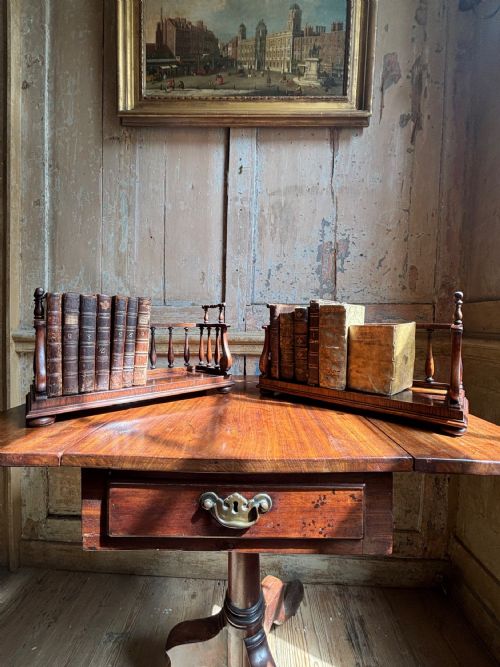
Turned spindle shelves encompass wall hanging shelves, whatnots, etageres, and book stands built with turned wooden supports. These pieces emerge across the Georgian, Regency, William IV, and Victorian periods, reflecting shifting domestic needs for open display.
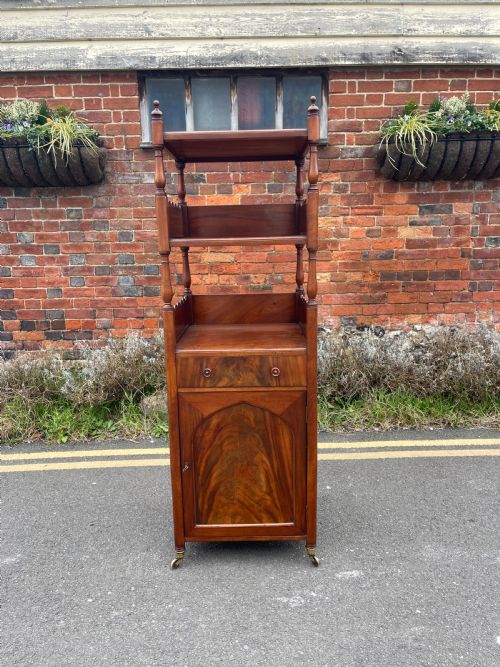
Buyers most frequently meet Victorian mahogany wall shelves and multi-tiered whatnots on this page. These variations range from compact wall-hung versions in cherry wood or rosewood to larger floor-standing pieces incorporating cupboard bases or cellarettes.
How they were made
Cabinetmakers utilised dense timbers including mahogany, walnut, rosewood, and satin birch, shaping upright supports on a lathe to create the characteristic turned spindles. Lighter woods such as cherry and oak also appear, sometimes treated with ebonisation.
Construction relies on traditional joinery to secure tiers of shelves to the vertical spindles or uprights, balancing the weight of books and decorative objects. Wall-hanging variants integrate sturdy hanging brackets, while floor-standing whatnots employ steady footed bases.
Listings feature mahogany, walnut, rosewood, cherry wood, satin birch, ebonised wood, and oak across the nineteenth century.
What varies in quality
The sophistication of the timber figure and the crispness of the spindle turning define the upper tier of these pieces. Select hardwoods show rich grain patterns and precise lathe work that maintains uniform thickness along each spindle.
Gillows
The Turned Spindle Shelves Glossary
- Etagere
- A French furnishing term for a piece comprising a series of open shelves for displaying small articles. These units share structural similarities with whatnots.
- Spindle
- A cylindrical, turned piece of wood forming a support or decorative baluster. These components provide the vertical structure between tiers in hanging or standing shelves.
- Cellarette
- A lockable compartment or fitted box incorporated into the base of certain larger storage furniture. It was historically used to hold bottles of wine or spirits.
Turned Spindle Shelves: Frequently Asked Questions
What are turned spindle shelves used for?
These pieces serve as open storage and display units for books, ceramics, and ornaments. They allow items to be stored within easy reach while remaining visible.
Floor-standing versions often accommodate larger collections across multiple tiers, whereas wall-hanging variants utilise vertical wall space in smaller rooms.
How do I hang antique wall shelves safely?
Secure hanging shelves directly into wall studs or utilise appropriate heavy-duty wall anchors rated for the weight of hardwood. The structure must be evenly fastened to prevent tilting under load.
Check the integrity of the original hanging brackets and joints before mounting to ensure the timber supports the weight securely.
What is the difference between a whatnot and an etagere?
The terms describe similar multi-tiered shelving units, with whatnot originating as an English designation and etagere as a French one. Both formats emphasise open display.
In practice, etageres often feature more decorative French provincial or chateau styling, while whatnots frequently appear in sturdy English mahogany or walnut.
How do I care for antique mahogany shelves?
Maintain the timber by dusting regularly with a soft, dry cloth and avoiding silicone-based polishes that build up over time. Natural wax applied sparingly preserves the finish.
Keep the shelves away from direct heat sources and strong sunlight to prevent the wood from drying out or the polish from fading.