


Turned Spindle Country Chairs
Turned spindle country chairs are sturdy domestic seats shaped by provincial hands, prized for their honest grain and straightforward vernacular comfort.
Turned Spindle Country Chairs
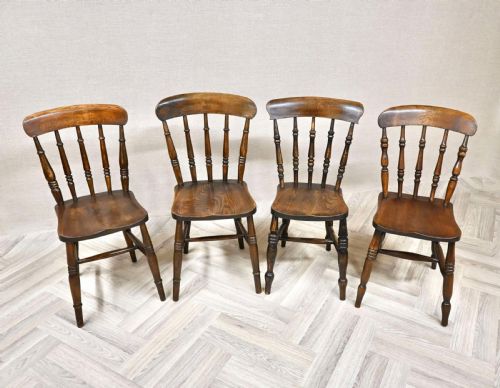
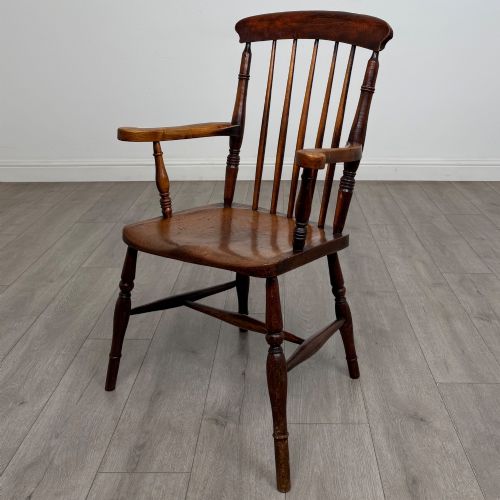
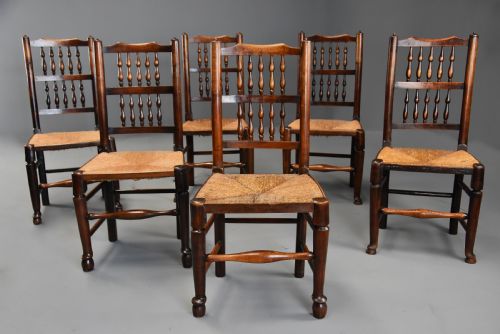
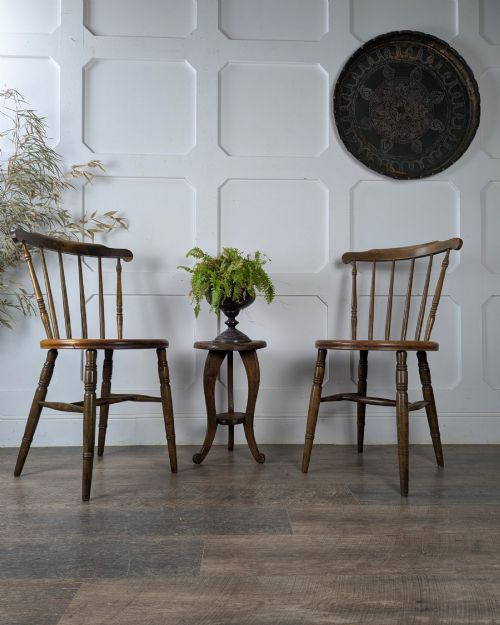
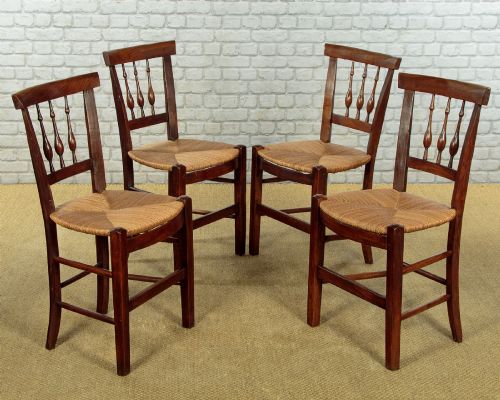
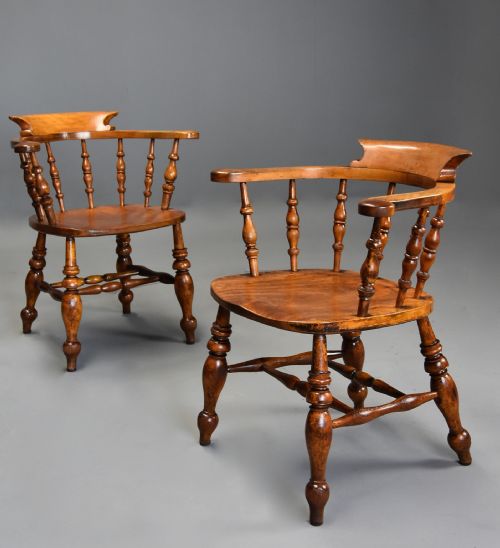
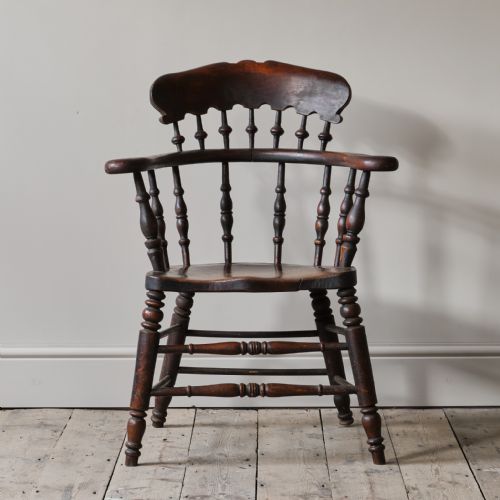
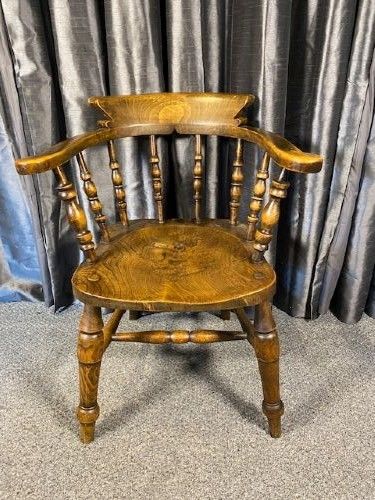
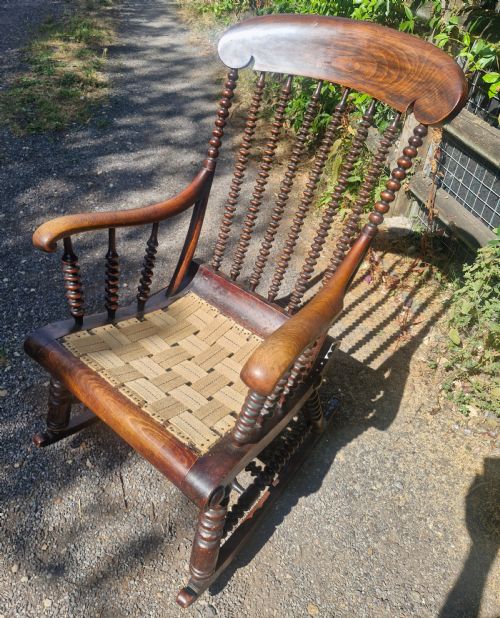
Turned spindle country chairs comprise a diverse group of domestic seating designed for everyday farmhouse and kitchen use. These pieces primarily date from the nineteenth century, including Victorian, Edwardian, and Regency eras. Buyers encounter various forms on this page, ranging from single armchairs and rocking chairs to sets of dining chairs.
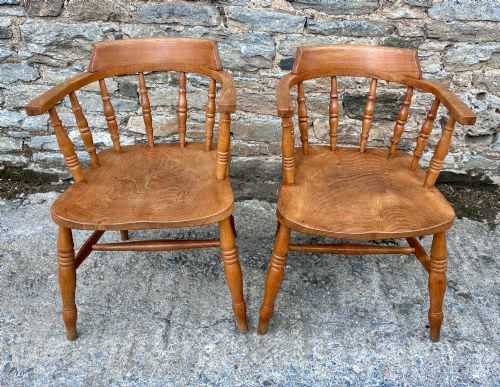
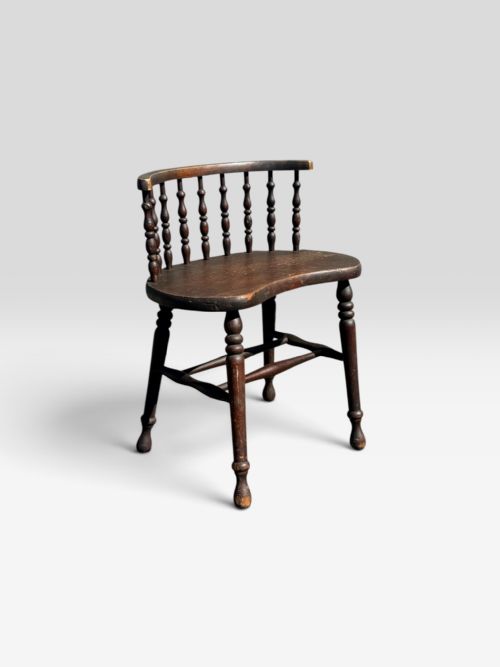
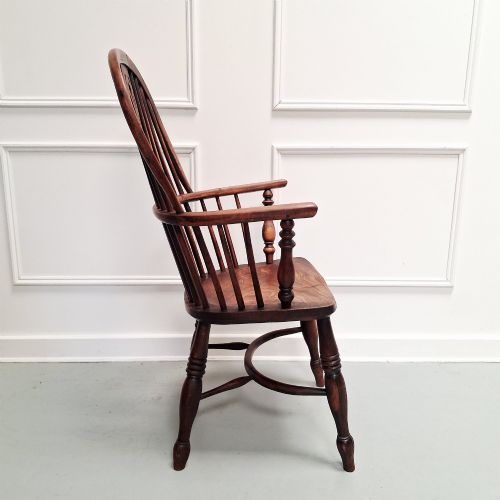
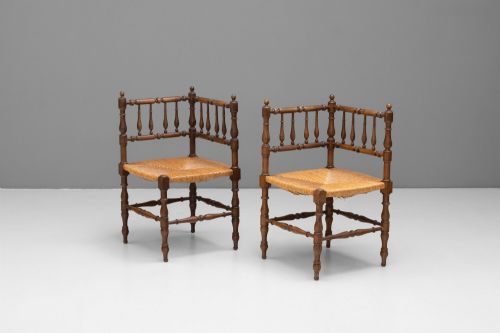
The regional variety spans English country workshops, Thames Valley makers, and Scandinavian country origins. Common configurations include Windsor chairs, smokers' bows, captains' chairs, and rush-seated ladder backs. They serve as practical seating that brings rustic character into modern rooms.
Materials and Construction
Makers utilised a combination of native timbers, frequently pairing resilient elm seats with ash, beech, oak, or birch for the spindles, legs, and frames. This mix of woods provided structural strength where needed while allowing the seat board to be carved from a single solid piece of elm. Some examples incorporate laburnum or fruitwood.
Turnery lathes shaped the vertical spindles and legs, while steam-bending techniques formed the curved backs of Windsor and captain's chairs. Rush seating appeared on ladder-back and Sussex style chairs, woven tightly onto wooden frames. Individual components were often joined using traditional pegged mortise and tenon joints.
Regional forms on this page include Thames Valley, Lancashire, Cheshire, and Scandinavian country styles.
Factors That Separate Examples
The distinction between ordinary and superior turned spindle country chairs rests on timber selection and structural integrity. Pieces featuring rich, untouched patination on elm seats and well-matched grain show greater character. Original surface treatments, such as early paint or polished wax, elevate an example above later stripped finishes.
Execution of the turnery and the survival of original components also define the grade of the piece. Tight joinery that remains rigid without excessive modern reinforcement indicates careful initial manufacture. Matched sets command attention for their consistency across multiple chairs.
J Spencer·E W Godwin
The Turned Spindle Country Chairs Glossary
- Smoker's bow
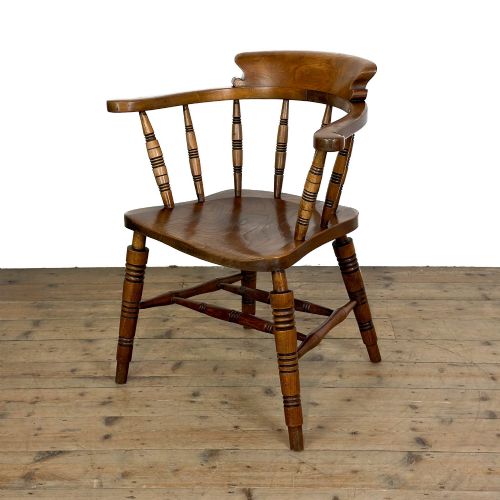
- A low-backed Windsor armchair with a continuous curved arm rail and turned spindles, designed for domestic comfort.
- Windsor chair
- A wooden chair featuring a solid carved seat into which the legs and back spindles are directly inserted.
- Crinoline stretcher
- An arched under-stretcher connecting the legs of a chair, providing lateral stability and resembling the shape of a hoop skirt.
- Rush seat
- A seating surface woven from dried marsh rushes, commonly found on traditional country and Arts and Crafts chairs.
- Bobbin turning
- A form of lathe work producing a series of rounded spheres resembling spools along the length of a wooden spindle.
Turned Spindle Country Chairs: Frequently Asked Questions
How do I identify a genuine nineteenth-century country chair?
Examine the construction methods and the wear patterns on the wooden seat. Nineteenth-century examples typically display hand-turned spindles and minor tool marks beneath the seat boards.
Look for honest patination and the natural darkening of native timbers like elm and ash over decades of use.
Were these chairs used only in kitchens?
While many served in farmhouse kitchens and dining spaces, heavier armchair variants were placed in parlours and studies. Rocking chairs and children's seating also existed for domestic comfort across different rooms.
Their robust construction suited heavy daily employment rather than formal display.
How should I care for a rush-seated chair?
Keep rush seats dry and away from direct heat sources to prevent the natural fibres from becoming brittle. Regular dusting with a soft brush maintains the material without introducing excess moisture.
Avoid heavy weight loads if the seating shows signs of loosening or fraying.