
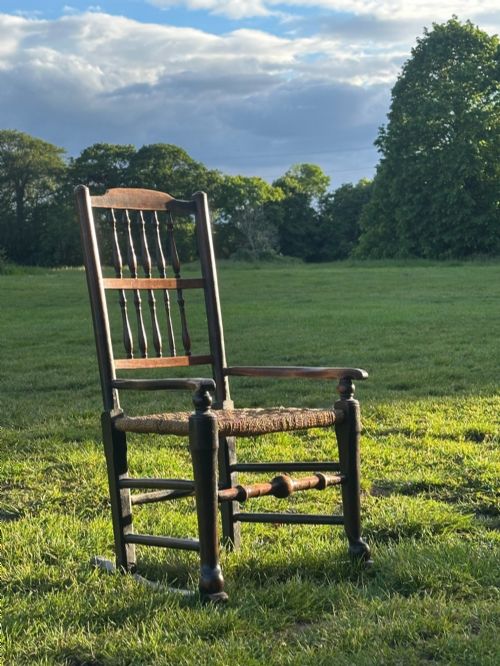
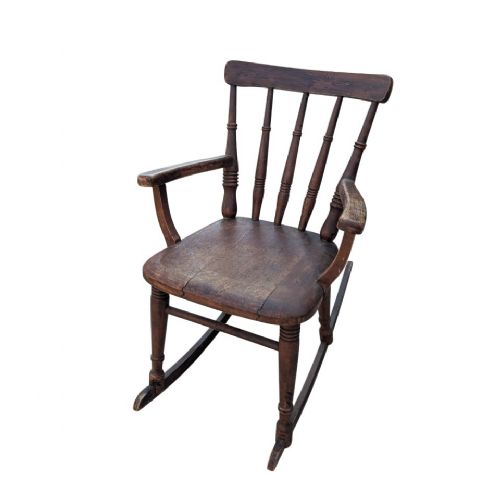


Turned Spindle Back Rocker
A turned spindle back rocker offers the steady comfort of traditional country seating combined with the gentle motion of an armchair.
Turned Spindle Back Rocker
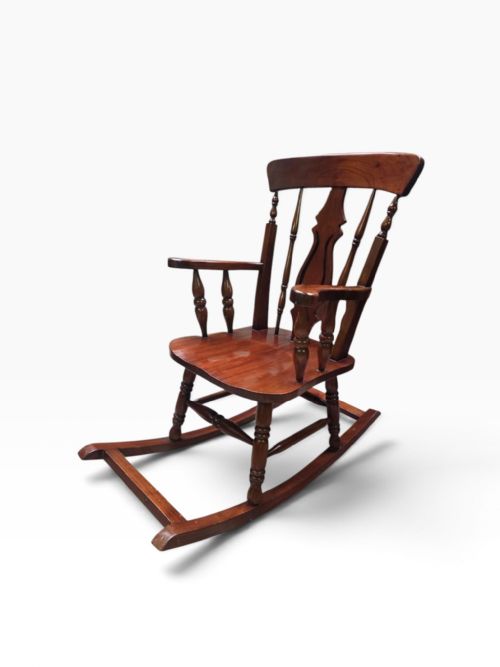
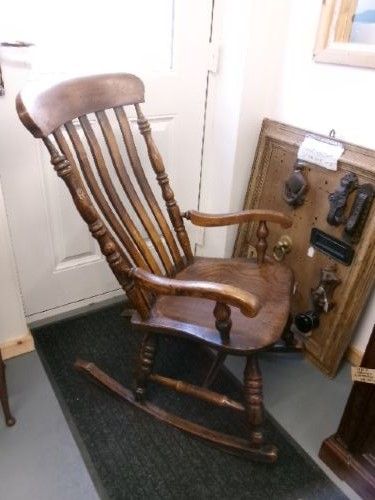
A turned spindle back rocker is a traditional seating form built for fireside and nursery use. These chairs emerge from various periods including the 18th Century, Regency, and Victorian eras, carrying distinct regional and country characteristics.
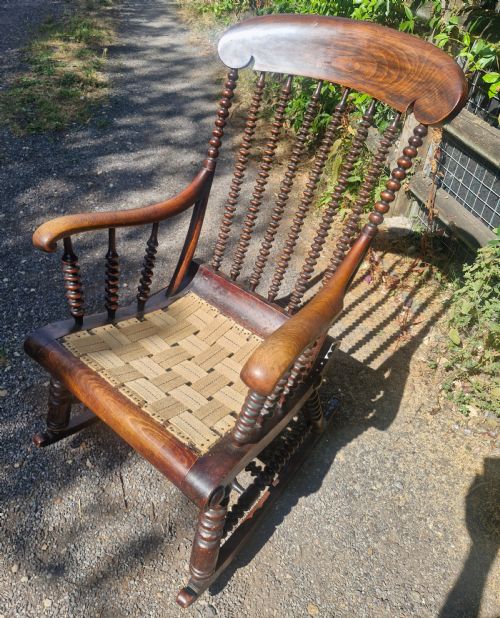
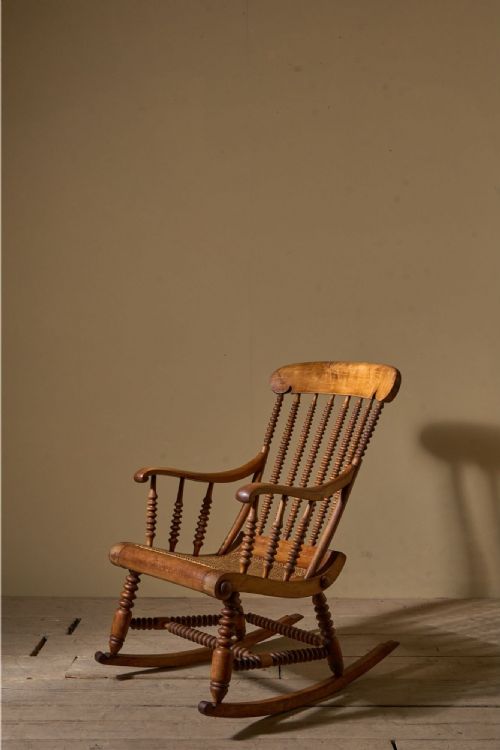
Buyers will encounter several variations on this page, ranging from English farmhouse examples to Swedish and American versions. Windsor designs and bobbin turned frames appear frequently among the listings.
Makers constructed these chairs for everyday utility in domestic settings. The survival of pieces in original paint or with early rush and cane seats points to their enduring appeal.
Materials and construction
Craftsmen built these rocking chairs using native hardwoods such as elm, beech, ash, and oak. Fruitwood also appears in smaller examples intended for children.
The defining structural elements involve turned spindles and frames, utilising bobbin turning or Windsor construction techniques. Seats are formed from solid timber or woven from rush, cane, and sea grass.
Original painted surfaces and leather upholstery survive on select pieces, showing the diverse finishing methods applied to country furniture.
Listings feature pieces spanning from the 18th Century through the Victorian period, constructed in elm, beech, ash, and oak.
Factors of quality
Quality in a turned spindle back rocker rests on the proportion of the turning and the integrity of the timber frame. Fine examples maintain tight joinery in the spindles and rockers without excessive replacement parts.
The choice of woods influences the character of the chair, with dense elm seats and well-figured ash or beech framing marking superior construction. Original surfaces, whether polished wood or early paint, hold greater interest than later refinishing.
The Turned Spindle Back Rocker Glossary
- Spindle
- A slender, turned wooden rod forming part of the backrest or undercarriage. Spindles are shaped on a lathe to provide structural support and decorative detail.
- Bobbin turning
- A form of lathe turning that creates a series of rounded spheres resembling bobbins or spools along the length of the wood. This technique appears frequently on 19th-century frames.
- Windsor
- A chair style featuring a solid wooden seat into which the legs and back spindles are inserted directly. These chairs often incorporate a bowed top rail.
- Rush
- Dried marsh grass twisted into cord and woven to form a resilient seat. Rush seating is traditional in many country chairs.
Turned Spindle Back Rocker: Frequently Asked Questions
How do I care for an old wooden rocker?
Keep the chair away from direct heat sources and sudden temperature changes to prevent the wood from splitting. Dust regularly with a soft cloth and occasionally apply a suitable wax to nourish the surface.
Check the joints periodically for movement, but avoid aggressive repairs that might compromise original timber or construction methods.
Were these chairs used outdoors?
Traditional turned spindle back rockers were designed strictly for interior domestic use, primarily in parlours, bedrooms, and firesides. Their construction relies on interior adhesives and unweathered timbers.
Placing them outside exposes the wood and woven seats to moisture and damaging humidity levels.
How can I tell a regional style apart?
Regional differences appear in the choice of wood and the shaping of the turnings. English farmhouse chairs often utilise elm and ash, whilst Scandinavian and American versions display distinct local proportions and paint finishes.
Comparing the turning profiles and seat shapes helps identify the likely origin of an individual chair.
Are children's rockers contemporary with adult chairs?
Smaller rocking chairs were produced across the 18th and 19th centuries specifically for nurseries and children. These scaled-down pieces follow the same stylistic developments as full-sized versions.
Makers employed identical turning techniques and timber selections for both adult and child-sized seating.