



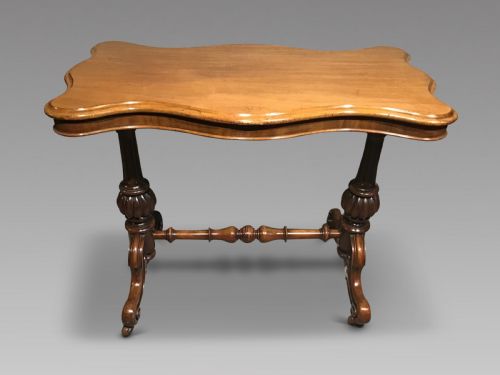


Turned Pedestal Centre Table
A turned pedestal centre table is a freestanding anchor for a room, prized for its ability to be approached from all sides.
Turned Pedestal Centre Table
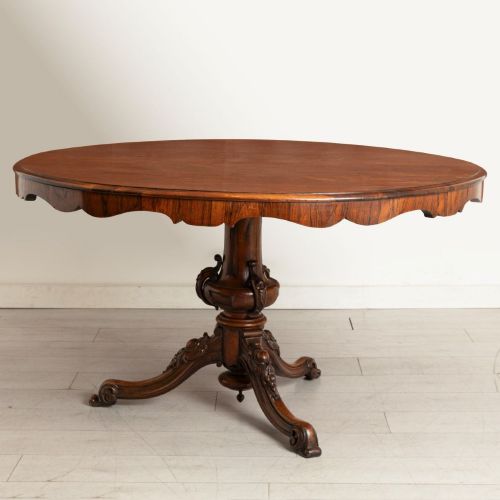
A turned pedestal centre table stands free in a room rather than pushed against a wall, designed to display decorative objects or serve multiple daily uses. The listings here include nineteenth-century, Victorian, and Georgian examples spanning dining, library, and occasional forms.
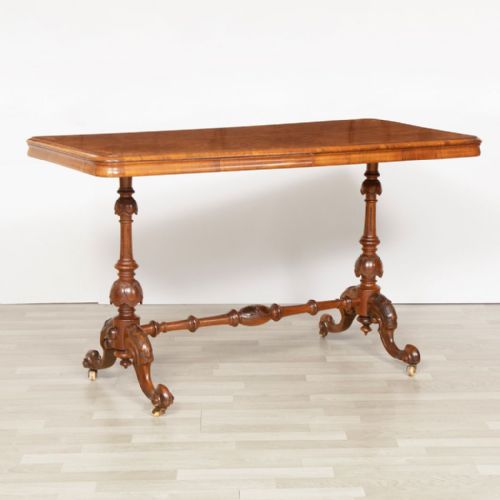
Most pieces encountered on this page rely on a single central column or pedestal supporting circular, oval, octagonal, or rectangular tops. Walnut, mahogany, and rosewood dominate the construction, often paired with secondary elements like brass castors or leather insets.
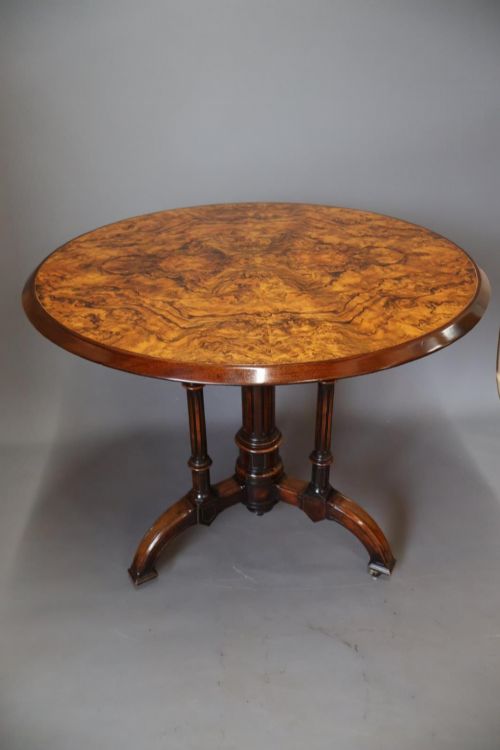
Makers and designers adapted the form across various aesthetic movements, producing everything from heavy Reformed Gothic library tables to inlaid burr walnut side tables. The overarching function remains the same: a substantial piece meant to anchor the middle of a parlour or hall.
How they were made
Cabinet makers utilised dense hardwoods such as mahogany, walnut, and rosewood, often selecting burr veneers for decorative impact on table tops. Timber was turned on large lathes to form the central columns and pedestals, then joined securely to splayed legs or robust plinths.
Fine detailing involved hand-carving on solid bases, inlay work, and the integration of functional elements like brass castors and tooled Moroccan leather insets. Tilt-top mechanisms required precise joinery to allow the timber surface to pivot securely on its central column.
Listings feature nineteenth-century and Victorian walnut, mahogany, and rosewood, incorporating occasional, library, and dining forms.
What varies in quality
The choice of timber sets the baseline for quality, with figured burr walnut and dense, well-grained mahogany marking the upper end of production. Secondary woods and simpler elm construction appear in more utilitarian or regional pieces.
Execution of the turning and carved elements dictates the visual success of the pedestal, where crisp, deep cutting contrasts with softer, worn detailing. Original fittings, such as unpolished brass castors and intact leather inserts, elevate the integrity of a piece.
Gillows of Lancaster
The Turned Pedestal Centre Table Glossary
- Tilt-top table
- A table with a hinged top that pivots to a vertical position when not in use. This mechanism saved floor space in smaller rooms.
- Gueridon
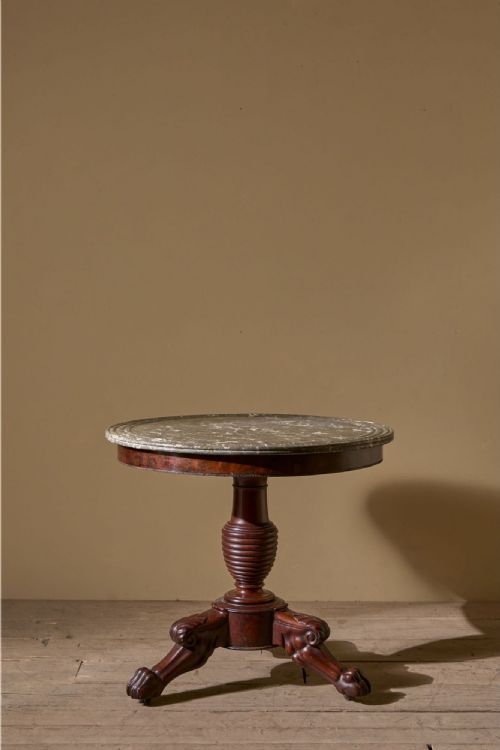
- A small circular table on a pillar or column, originating in seventeenth-century France. These often feature marble inserts or tripod bases.
- Reformed Gothic
- A nineteenth-century design style favouring structural clarity and medieval motifs over heavy ornamentation. It appears frequently in library and centre tables.
- Brass castor
- A small swivelling wheel attached to the base of table legs, usually made of cast brass. They allowed heavy freestanding tables to be moved easily across carpets.
- Occasional table
- A small, versatile table intended for intermittent use around a room. They often feature burr walnut veneers and octagonal tops.
Turned Pedestal Centre Table: Frequently Asked Questions
Where should a centre table go?
A turned pedestal centre table belongs in the middle of a room, allowing people to walk entirely around it. It functions well in large hallways, libraries, or drawing rooms as a focal point.
Because these pieces are finished on all sides, they do not need to rest against a wall. Placing one centrally often organises the surrounding seating arrangement.
How do I use a tilt-top table?
The top of the table releases via a brass catch underneath, allowing the surface to pivot ninety degrees vertical. This design originally saved floor space when the table was pushed to the side.
Today, leaving the top tilted displays the turned pedestal and underside construction as a decorative feature when the table is not in active use.
What is a Gueridon table?
A Gueridon is a small freestanding pedestal table, often topped with marble or fine wood veneer. Nineteenth-century versions frequently incorporated French design influences.
These tables suit smaller spaces where a full dining table is impractical, serving as stands for lamps or decorative ceramics.
How do I identify Victorian styles?
Victorian tables span several distinct movements, from heavy rosewood dining pieces to inlaid burr walnut occasional furniture. Examining the timber choice and decorative carving helps place the piece within the era.
Later Victorian examples sometimes embrace Reformed Gothic or Aesthetic Movement ideals, showing simpler lines and inset leather surfaces.