



Turned Oak Corner Chair
A turned oak corner chair brings vernacular form and substantial timber presence into a room, offering both structural interest and compact seating.
Turned Oak Corner Chair
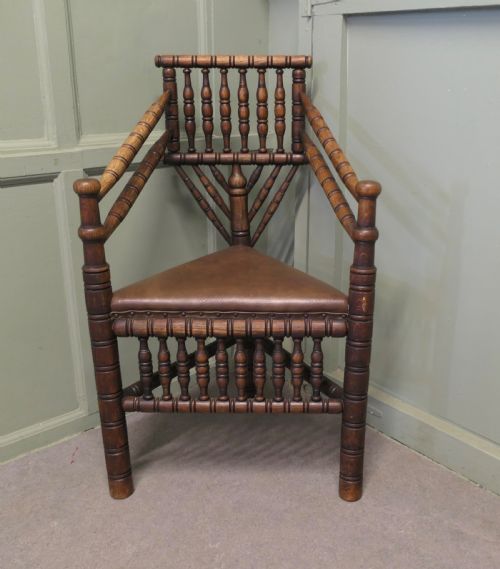
A turned oak corner chair draws upon historic forms like the turners chair or Old Saxon chair, adapting to tight spaces with angled seats and multiple upright supports. The examples seen span the Victorian and Edwardian periods, reaching back through nineteenth-century revivals into rustic country interpretations.
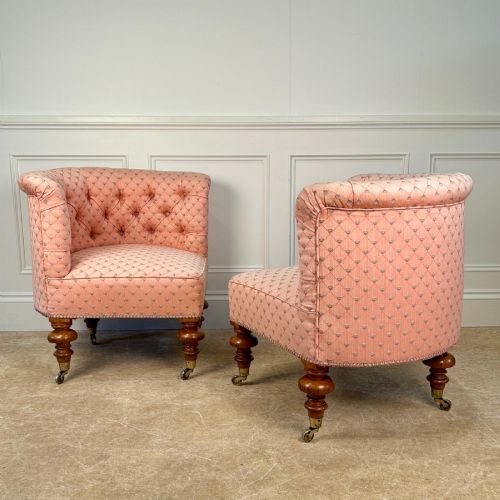
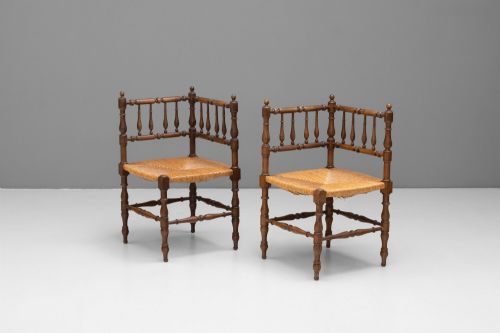
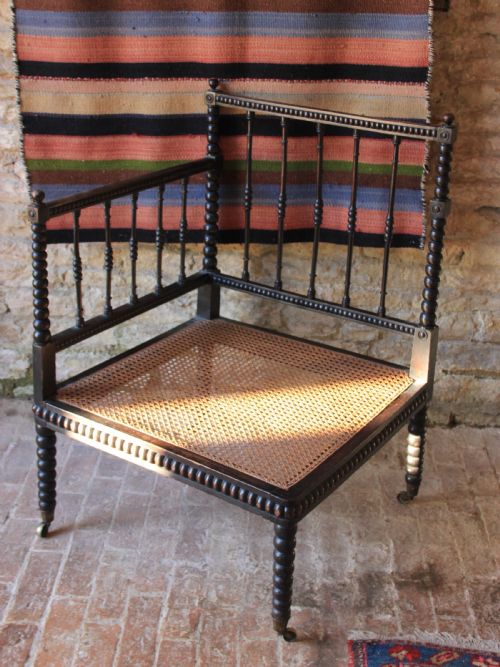
Most pieces meet the eye as robust armchairs or elbow seats designed to fit snugly into room junctions, frequently utilising bobbin turning or heavy spindle work. The forms range from simple vernacular seating with rush or woven sea-grass bases to upholstered library armchairs carrying heavier stylistic revivals.
Makers drew on English country and Gothic influences to produce sturdy accent chairs that functioned as both utilitarian furniture and decorative focal points. The selection balances straightforward vernacular carpentry against more ornate Victorian interpretations featuring carved elements.
Materials and construction methods
Construction relies primarily on solid oak, shaped through lathe turning to create distinctive bobbin, spindle, and pillar components that form the structural framework. Additional timbers like beech occasionally support the internal framing or secondary supports.
Seating areas integrate traditional materials such as natural rush, woven sea-grass, leather, and various upholstery fabrics to provide comfort within the rigid wooden frames. Metal elements like brass appear selectively in hardware or decorative detailing.
Woodworking techniques depend upon accurate turning and secure joinery to stabilize the complex angles inherent in a corner-fitting seat. Ebonised finishes sometimes alter the natural surface of the wood for specific stylistic effects.
Listings feature oak as the primary timber, complemented by materials such as rush, woven sea-grass, leather, and brass across Victorian and Edwardian periods.
Distinctions in quality and execution
Superior examples demonstrate tighter turning profiles and cleaner execution in the lathe work, where bobbin and spindle details remain crisp and well-proportioned. The integration of the corner geometry feels deliberate, maintaining structural harmony without appearing overly bulky.
The choice of seating material influences the overall integrity, with tightly woven rush or sea-grass demonstrating durable craftsmanship alongside finely fitted upholstery or leather. Subtleties in carving and the selection of figured oak distinguish standard vernacular pieces from finer library armchairs.
The Turned Oak Corner Chair Glossary
- Turned chair
- A form constructed almost entirely from lathe-turned wooden members, utilising spindles, posts, and stretchers fitted together without extensive panels.
- Bobbin turning
- A decorative lathe technique producing a series of rounded, bead-like shapes resembling spools of thread along the length of a wooden leg or stretcher.
- Rush seat
- A traditional seating surface woven from dried marsh grasses, offering a durable and slightly elastic support across the frame.
- Old Saxon chair
- A nineteenth-century revival term applied to sturdy, turned-wood armchairs inspired by ancient vernacular seating traditions.
- Elbow seat
- A historical term for an armchair with low arms designed to support the user's elbows while sitting.
Turned Oak Corner Chair: Frequently Asked Questions
What is a turned oak corner chair?
A turned oak corner chair is a specialised seating form featuring an angled design intended to fit into room corners, constructed using lathe-turned wooden spindles and uprights.
These pieces draw on nineteenth-century vernacular and revival styles, combining sturdy oak frames with rush, sea-grass, or upholstered seats.
How were these chairs used historically?
Historically, these chairs served as compact seating options for studies, libraries, and parlours where space efficiency mattered. Their angled frames allowed them to occupy unused corner spaces while providing a supportive elbow seat.
They functioned both as utilitarian seating and as decorative elements reflecting regional English country and revival aesthetics.
What materials make up these chairs?
The primary structural material is solid oak, frequently shaped on a lathe into bobbin or spindle components. Secondary timbers such as beech also appear in the framing.
Seating surfaces typically consist of woven rush, sea-grass, leather, or various upholstery fabrics, sometimes complemented by brass details.
How do I date a turned oak corner chair?
Dating relies on stylistic indicators, construction methods, and materials associated with the Victorian and Edwardian eras. Pieces often incorporate revival motifs from Gothic or vernacular traditions typical of the nineteenth century.
Subtle variations in turning techniques and the choice of upholstery materials help place the chair within specific nineteenth or early twentieth-century decades.
How do I live with a corner chair?
Living with a turned oak corner chair involves placing it in an entryway, bedroom, or study to utilise its unique geometry. The compact footprint makes it ideal for filling awkward wall junctions without overcrowding the room.
Care involves regular dusting of the turned wooden components and mindful maintenance of natural seating materials like rush or leather.