
Turned Oak Accent Table
A turned oak accent table brings solid character to a room, offering sturdy utility shaped by centuries of domestic woodworking traditions.
Turned Oak Accent Table
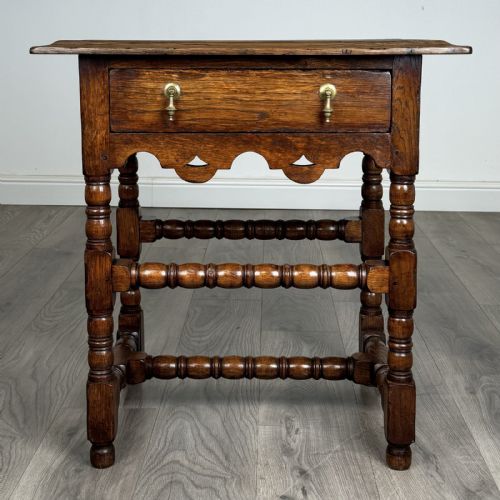
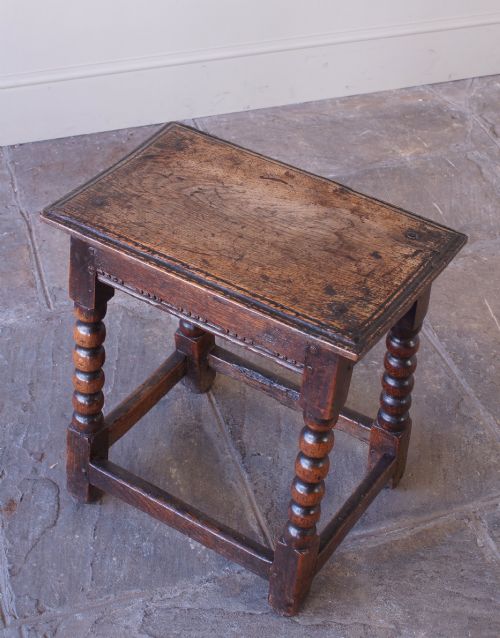
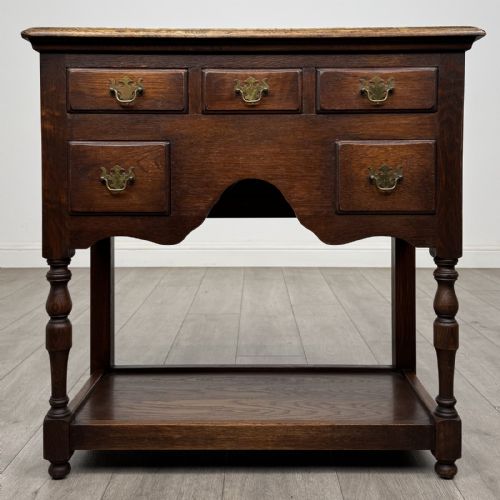
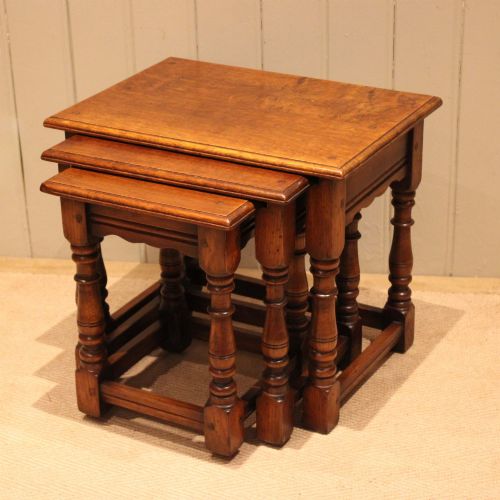
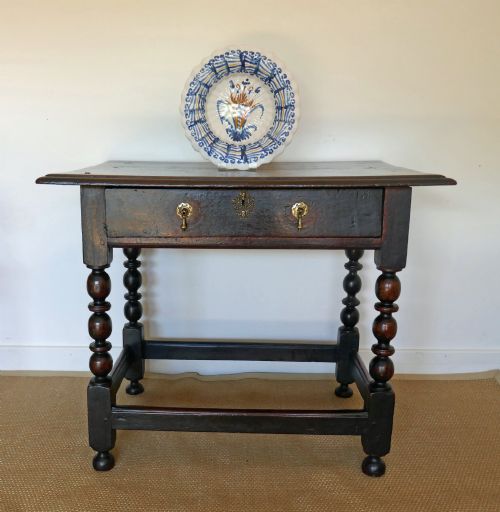
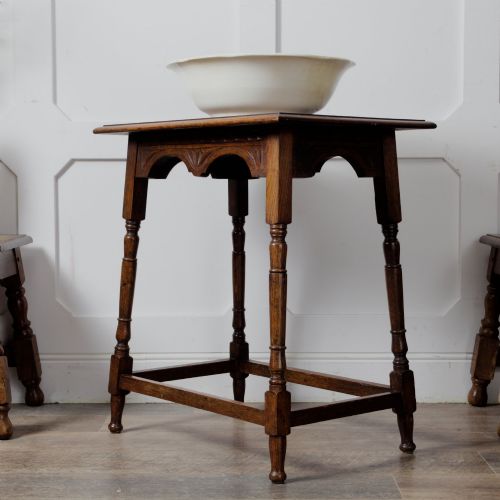
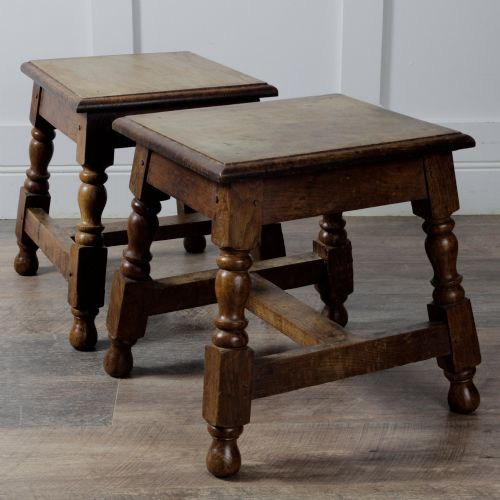
A turned oak accent table is a compact surface built primarily for domestic convenience, taking the form of side tables, wine tables, small occasional stands, and compact stools that double as display surfaces. Buyers searching for a turned oak accent table encounter items spanning several centuries, from seventeenth-century provincial work to Edwardian and later twentieth-century interpretations.
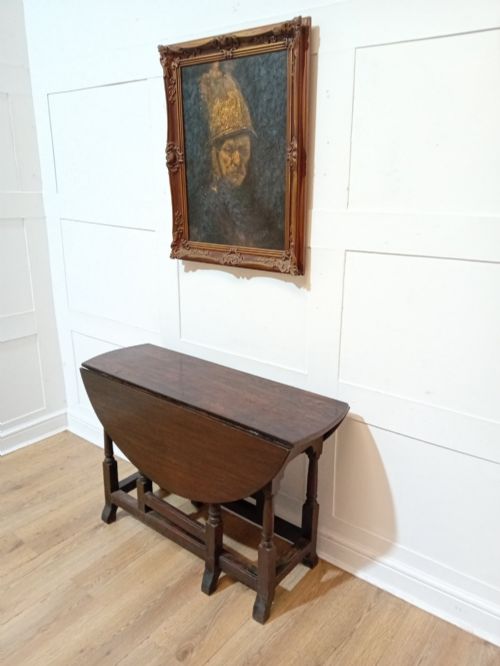
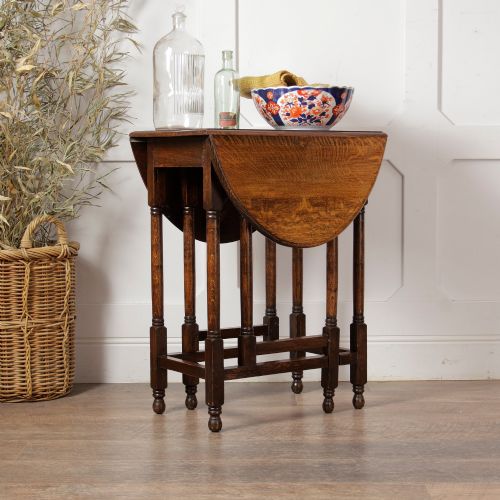
The regional English vernacular tradition dominates these listings, with provincial joinery and regional turning styles evident across side tables, cricket tables, and gateleg forms. Seventeenth-century examples display robust proportions and structural turning, whereas later nineteenth and twentieth-century versions adapt these vernacular cues into lighter domestic items.
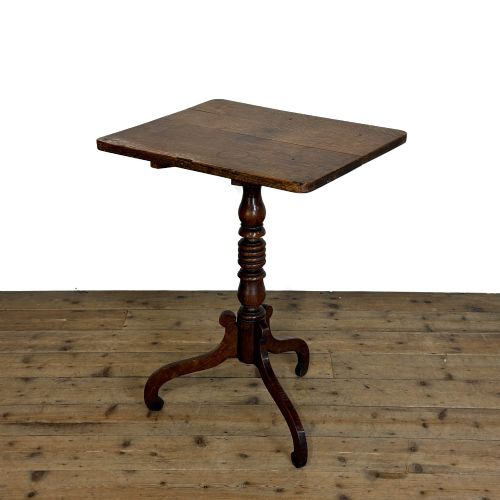
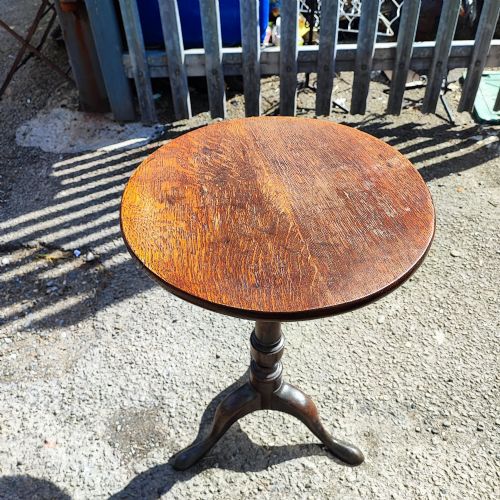
Occasional tables and tripod wine tables represent the most frequent formats on this page, serving as adaptable furniture for corners and beside seating. These smaller pieces allow buyers to integrate historical timber and turned legs into contemporary interiors without demanding excessive floor space.
How they were made
Makers utilised solid timber construction, relying primarily on oak complemented by secondary woods such as elm, beech, and burr oak veneer for decorative top surfaces. Joinery techniques involved traditional methods like mortise and tenon joints, pegged frames, and hand-turned supports produced on pole lathes or early mechanical lathes.
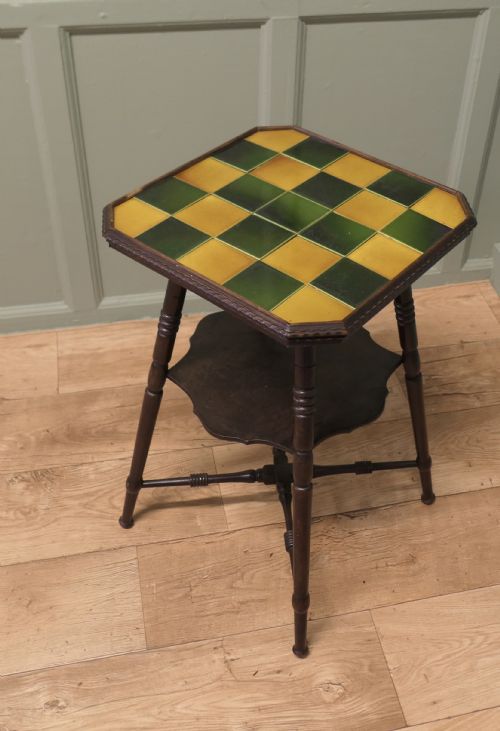
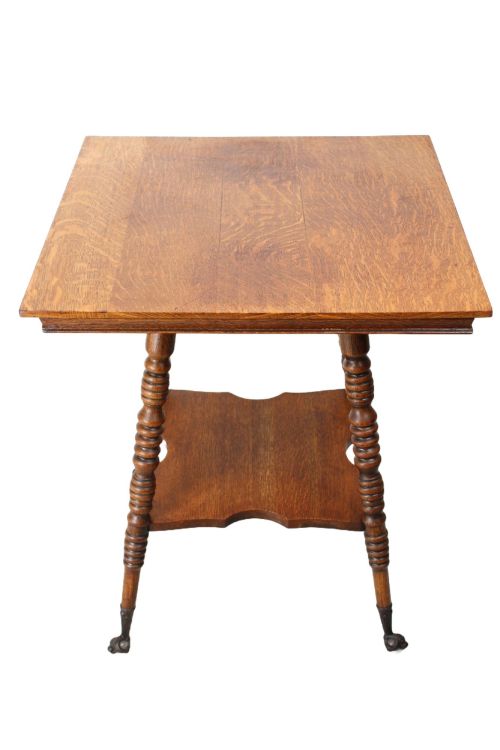
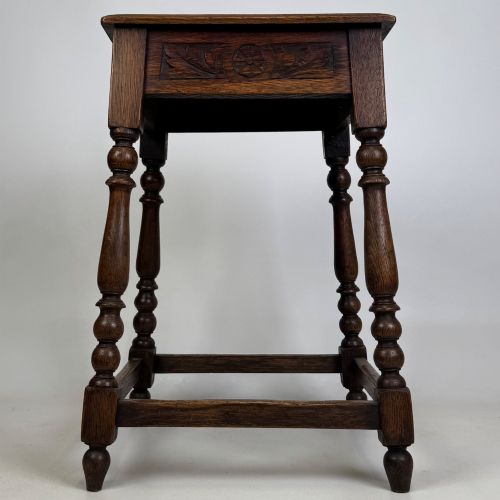
Surface ornamentation on these pieces relies on structural carpentry rather than heavy applied decoration, featuring bobbin or columnar turning, carved friezes, and occasionally inlaid timber or ceramic tile inserts. Finish application typically involved natural waxes and oils that built up rich patination over decades of domestic use.
Listings feature turned oak accent tables spanning the seventeenth century through to the Edwardian period and nineteen-twenty.
What varies in quality
The distinction between ordinary and superior pieces rests on the crispness of the timber turning and the integrity of the original joinery. Tables featuring well-balanced proportions and untouched surface patination command attention through their material honesty and structural harmony.
Depth of colour and wood selection set finer examples apart from standard utility items, particularly where timber exhibits strong medullary rays or unusual burr figuring. Original fixings, unaltered structural heights, and minimal replacement timber preserve the historical integrity that defines the better examples in this category.
Shapland & Petter·William Birch·Baillie Scott·Liberty of London
The Turned Oak Accent Table Glossary
- Joint stool
- A sturdy wooden stool constructed with pegged mortise and tenon joints rather than turned legs driven into a solid seat. These pieces often doubled as small side tables in early domestic interiors.
- Gateleg table
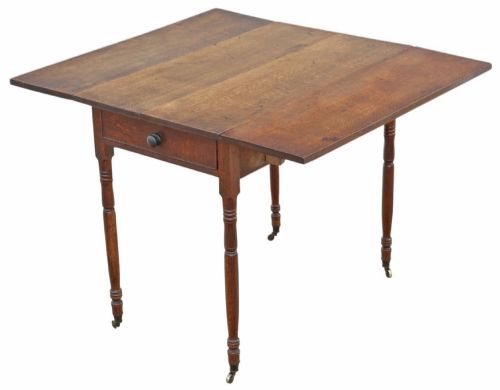
- A drop-leaf table with hinged flaps supported by swing-out legs that resemble a swinging gate. This design allowed furniture to fold down compactly when not in use.
- Tripod table
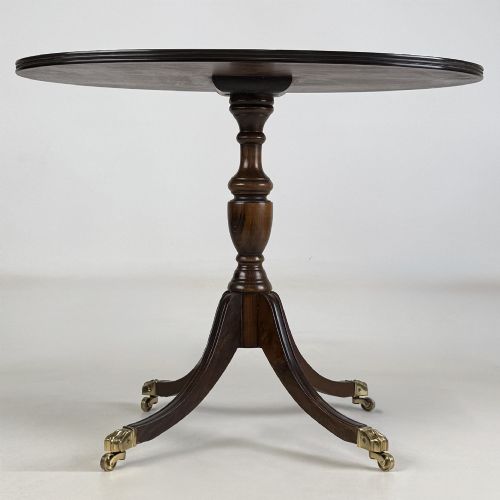
- A small occasional table supported by a central turned pillar standing on three splayed legs. They frequently feature tilt-top mechanisms for storage against walls.
- Cricket table
- A small round table featuring three legs and a lower triangular shelf for stability on uneven floors. The name derives from their traditional use in domestic kitchens and inglenooks.
- Medullary ray
- A cellular ribbon running radially across the growth rings in oak timber. When quarter-sawn, these rays produce a distinctive speckled or silvery figuring known as silver grain.
Turned Oak Accent Table: Frequently Asked Questions
How do I date an oak table?
Dating relies on observing construction methods, tool marks, and hardware types used in the frame. Hand-cut peg holes, joined rather than screwed rails, and timber shrinkage patterns provide reliable indicators of age.
Early pieces from the seventeenth century display heavy oak scantlings and robust hand-turning, whereas Edwardian and later revivals utilise more uniform machinery milling and lighter assemblies.
Where were these tables used originally?
These compact surfaces served multiple utilitarian purposes in historic domestic spaces, acting as surfaces for dining, reading, and holding lighting. Smaller tripod and side variants moved easily around rooms to wherever a stable surface was required.
In larger houses they stood against parlour walls or beside seating, while provincial examples functioned as heavy-duty work surfaces in farmhouse kitchens.
How do I care for antique oak?
Maintaining antique oak involves feeding the timber periodically with traditional beeswax to preserve the moisture balance in the wood. Avoid placing pieces near direct heat sources or strong sunlight, which causes timber shrinkage and finishes to fade.
Regular dusting with a dry cloth prevents surface grime accumulation while allowing the natural patina to continue developing over time.
What is the difference between a side table and an occasional table?
A side table traditionally stood permanently against a wall or beside furniture for holding lamps and objects. An occasional table implies a lighter, more portable piece moved into use only when needed.
Both forms utilise turned oak supports across these listings, though occasional tables frequently adopt circular tripod designs for easier placement.